The Credit Mission, also known as the Credit Indian Indian Village, was located on the site of what is now the Mississaugua Golf & Country Club on Mississauga Road. It was built in 1826 under the direction of Revered Peter Jones (Kahkewaquonaby) and the Superintendant of Indian Affairs for the Government, Colonel Givens, for the Native Mississaugas. The money for the project came from the sale of lands within the Credit Indian Reserve, and the village originally consisted of some twenty to thirty government-built log houses. The village was located on the high grounds overlooking the Credit River, while the flat valley lands along the river were cultivated for corn, wheat and rice. An early description of the villages describes: “an elevated plateau, cleared of wood, and with three rows of detached cottages, among fields surrounded with rail fences.” In 1826, some 226 Native Mississaugas called the village home.
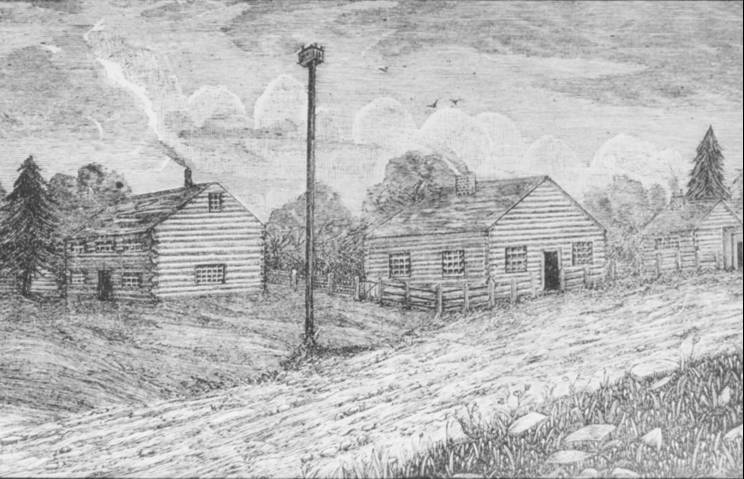
Credit Mission Village painting by Eliza Jones, c. 1930
The village grew to include a building that combined as a school, a Methodist chapel and a meeting lodge. Thanks in large part to the efforts of Edgerton Ryerson, Reverend Peter Jones, and his brother John, the Methodist faith became established in the village, despite government efforts to have the Mississaugas adopt the Anglican faith. Despite any misgivings, the Mississaugas soon proved that the “experiment” of creating an Indian Village was a success. They prospered, and early travellers’ accounts illustrate the respect and favourable acknowledgement expressed in regards to what the Mississaugas were accomplishing on their reserve:
“It is gratifying to perceive, that instead of the drunken and savage brawls, happiness and peace have sprung among them, good order, sobriety, and cleanliness in house and person. Their demeanor is moral, their attendance at divine worship regular, and their observance of the church service, grave and attentive.”
The Credit Mission prospered for many years under the guidance of Reverend Peter Jones. It grew to include some 52 family dwellings and an estimated 500-acres were cleared and cultivated. The Mississaugas used money from the sale of the Indian Lands (as originally set aside in Treaty 13A) to build and operate their own sawmill on the Credit River, and with its two saws, between two and five thousand board feet of lumber were cut daily. To help market their products, the Mississaugas built a large storehouse near the mouth of the Credit River. By the mid-1830s, the Credit Indian Village was reported as “the cleanest, neatest and most civilized of all the Indian settlements” and Native groups from around Southern Ontario visited the Credit to learn from the success of the Mississaugas.
However, time was against the Mississaugas and their prosperous village. More and more Mississaugas began to succumb to European diseases such as consumption, and to pressure from encroaching non-Native settlers. By the early 1840s it became clear that “something” had to be done. Chiefs Joseph Sawyer and John Jones commenced a council meeting in 1840 to discuss the possibility of relocation. A decision regarding relocation was not reached until the winter of 1846, under the direction of Reverend Peter Jones. The Iroquois Six Nations Confederacy, the Haundenosaunee, sent a delegation offering to the Mississaugas 4800 acres in Tuscarora Township. 266 Mississaugas moved from the Credit River in May of 1847. Their descendants still reside on the Six Nations Reserve south of Brantford, in a community appropriately named “New Credit”. Although not all of the Mississauga First Nations peoples relocated to the New Credit Reserve, the band membership now totals approximately 1375.
But what happened to the small village along the Credit River? As the Mississaugas left the village in 1847, some of the small cabins were used as early shelters by European immigrants. Among them was the Irish Catholic Dinan family, who resided in the old village for a number of years. The village itself soon deteriorated and eventually vanished. The old meeting lodge and chiefs residence was the last visible structure on the site, and was pulled down in the 1950s. Today, the village and reserve is home to the Mississaugua Golf and Country Club, and an Ontario Heritage Plaque commemorates the site of the village.
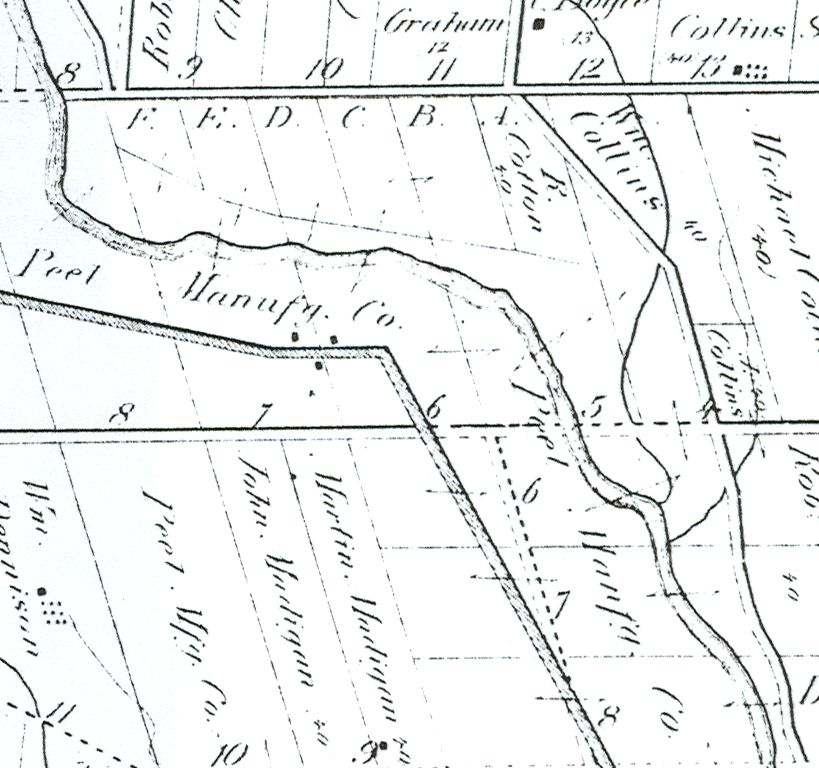
Credit Mission, 1877 Peel Atlas
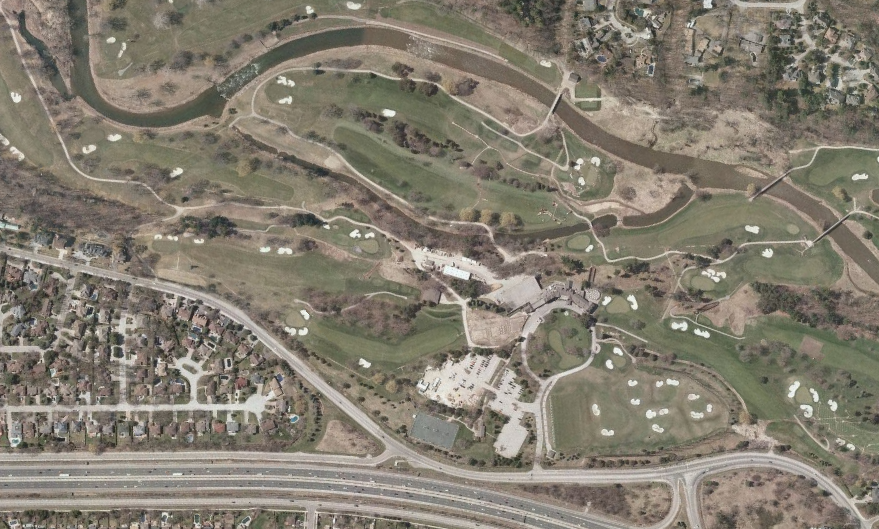
Aerial Image of the Credit Mission Site, 2013
It is even difficult to pinpoint the exact location of the Credit Mission village today, as Mississauga Road itself has been rerouted, leaving the actual village site entirely within the grounds of the golf club. However, somewhere on the property, on a high bank overlooking the river valley, likely remains the Methodist Cemetery established by Reverend Peter Jones. Although the Mississaugas also carried traditional Anishinaabe names, census records record many of the Christian family surnames that were associated with the Native Mississaugas at the Credit Indian Village. Some of those name are: Agetonce, Beaver, Brant, Cameron, David, Fawns, Finger, Harris, Halfaday, Herkimer, Hobkins, Keshego, Jackson, Johns, Johnson, Jones, King, Laform (Laforme), McCollum, McDittougal, Mike, Ordge, Peter, Sawyer, Secord, Smith, Sterling, Summerfield, Tobeco, Towah, Wabanibe, Wahbahaosa, Wesley, Wilson, and Young, amongst other surnames. Many of these family names continue within the extended families of the Mississauga of the New Credit First Nation.

