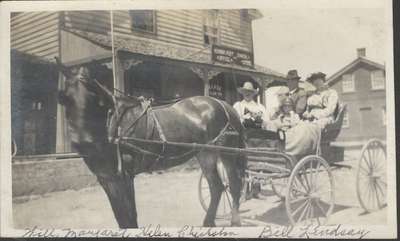
Picture this: the year is 1820. You have just arrived in a new land after a treacherous 17 week journey across the Atlantic Ocean. The world you see before you is vastly different from the land you have just left: there are no houses or roads to be seen for miles around, just dense forest and empty spaces for as far as the eye can see. You do not yet officially own the land you stand on, yet you must quickly begin work on building your house and farm before the winter comes, or else risk everything. It was a very difficult life for the earliest settlers in Canada, but after much toil they eventually overcame the hardships of the land to start their new lives. This story would have been much the same for the new settlers arriving in what would soon become known as McCurdy’s Corners.
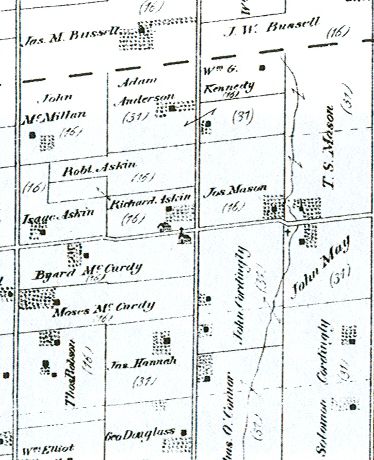
McCurdy’s Corners was located at the intersection of Ninth Line and Derry Road. The hamlet was originally part of Trafalgar Township in Halton County, until 1974 when the Mississauga border was extended to Ninth Line, placing the east half within the borders of Mississauga.
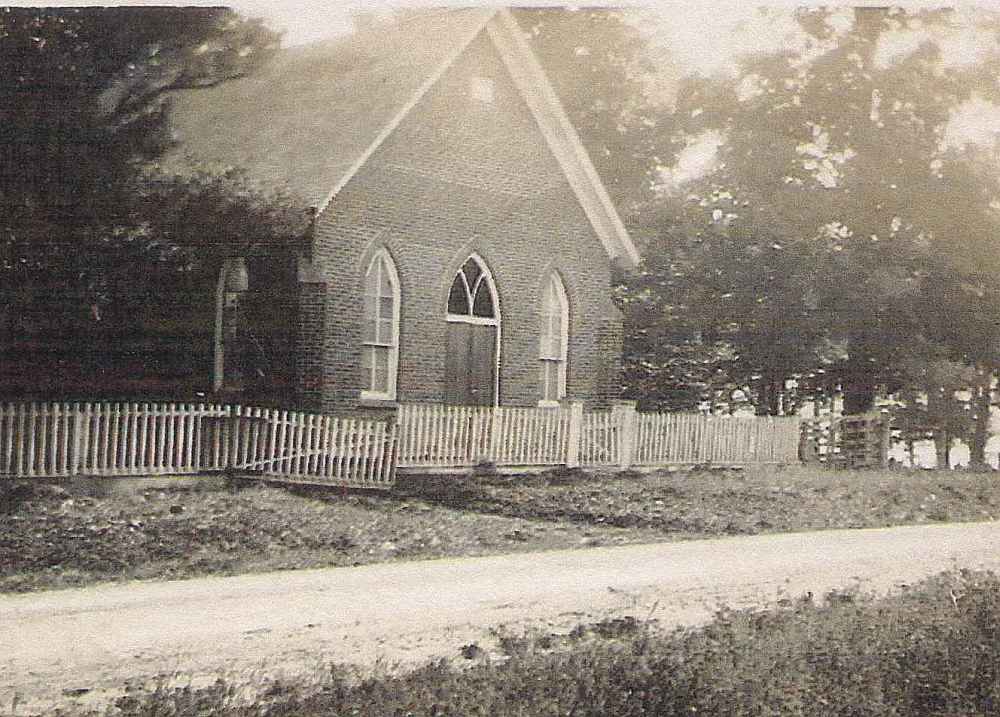
At McCurdy’s Corners there was a Methodist Church and a school. The school was officially called S.S. #8 Trafalgar, also known as McCurdy’s Corners School. Local residents John Mason, Hugh Mason, John Bussell, Isaac Askin, Robert McCurdy, David Cordingley, Bartholomew O’Connor, Adam Anderson, Henry Anderson, and Patrick McCarten all gathered together to build the first school at McCurdy’s Corners in the early 19th century. It was constructed of unhewn logs and mud brought over from Nunan’s Corners (also known as the Catholic Swamp). When the school finished there was a grand ceremony, with the whole community gathering for a picnic in the woods.
The first teacher at the McCurdy’s Corners school was Jacob Scott, often assisted by his wife. The first class attendance showed sixty pupils enrolled. During the second week of classes at the new school, there was a bear attack, forcing the new teacher up into a tree until Isaac Scott arrived on the scene along with his axe. This school served also as the church for the community until 1832, when a new frame church was built. The last teacher in the log school, and first teacher in the new brick school was Miss Rogers.
There were many teachers over the years at the school, one such teacher was Gladys McCleary Speers. She was teaching at the McCurdy’s Corners school while her younger sister, Miss Violet McCleary, was in attendance. Violet would later follow in her sister’s footsteps and take over as the teacher of the McCurdy’s Corners school. An early class photograph shows that classes were smaller and more intimate in the past, with only nine students enrolled: Byron, Jean and Joyce Bedell, J.D. Cordingley, Joan May, Bill, Jim and Mary Peterson, and Irvine Thompson. Their teacher at the time of the photograph was Miss Jean McNabb. On July 5, 1958 the school had a reunion for past students, and many memories and photos were shared on that day. The brick school was later converted to a community hall until, in 1969, it was purchased by Gerald Jensen who converted the building into a multi-storey home. Unfortunately the former schoolhouse is no longer standing, having burned down in November of 2008.
McCurdy’s Corners was also home to a literary and debating society. The society was founded in 1914 under the direction of their president, Mr. J.D. McGregor. The society’s motto was “Non-Sectarian, Non-Partisan”. The society would meet for an hour on Wednesday nights, from 7:00-8:00 PM, and in the winter the members would ride in sleighs to the meetings.
The Literary Society also founded the hamlet’s local newspaper, the “McCurdy’s Corners Herald”. The newspaper staff included Editor Miss Legatt, Associate Editors Miss Lawson and Miss Sheppley, and contributing messrs McGregor, Hamilton and Blackwell. The newspaper, which was printed at the offices of the Streetsville Review, was issued every two weeks for 5 cents per copy.
Hugh (Sandy) McGregor, who lived on Ninth Line, would write poems about the community, including its residents and local events. These poems were then set to music and played at community events.
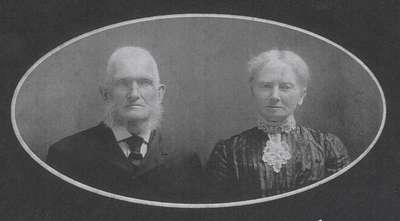
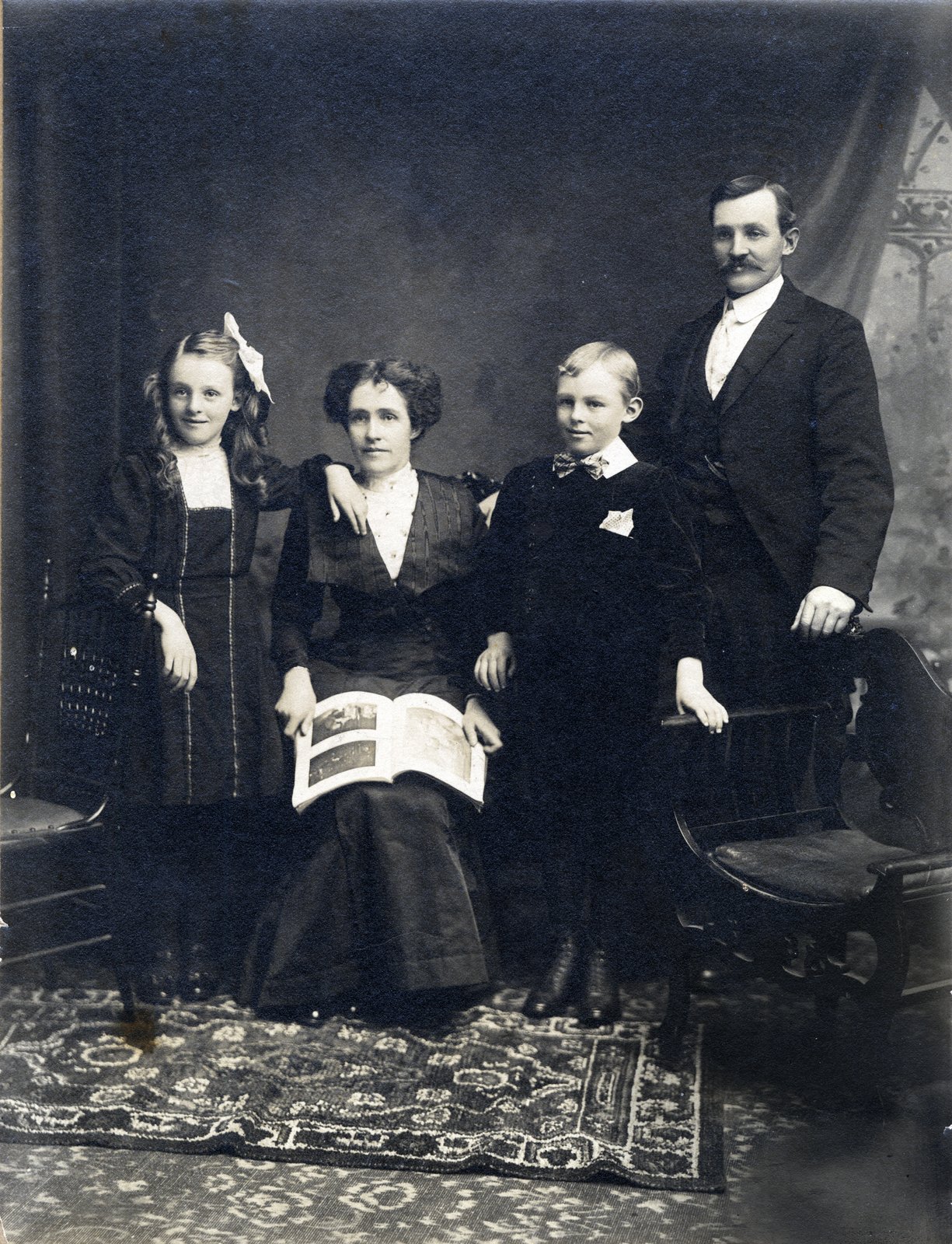
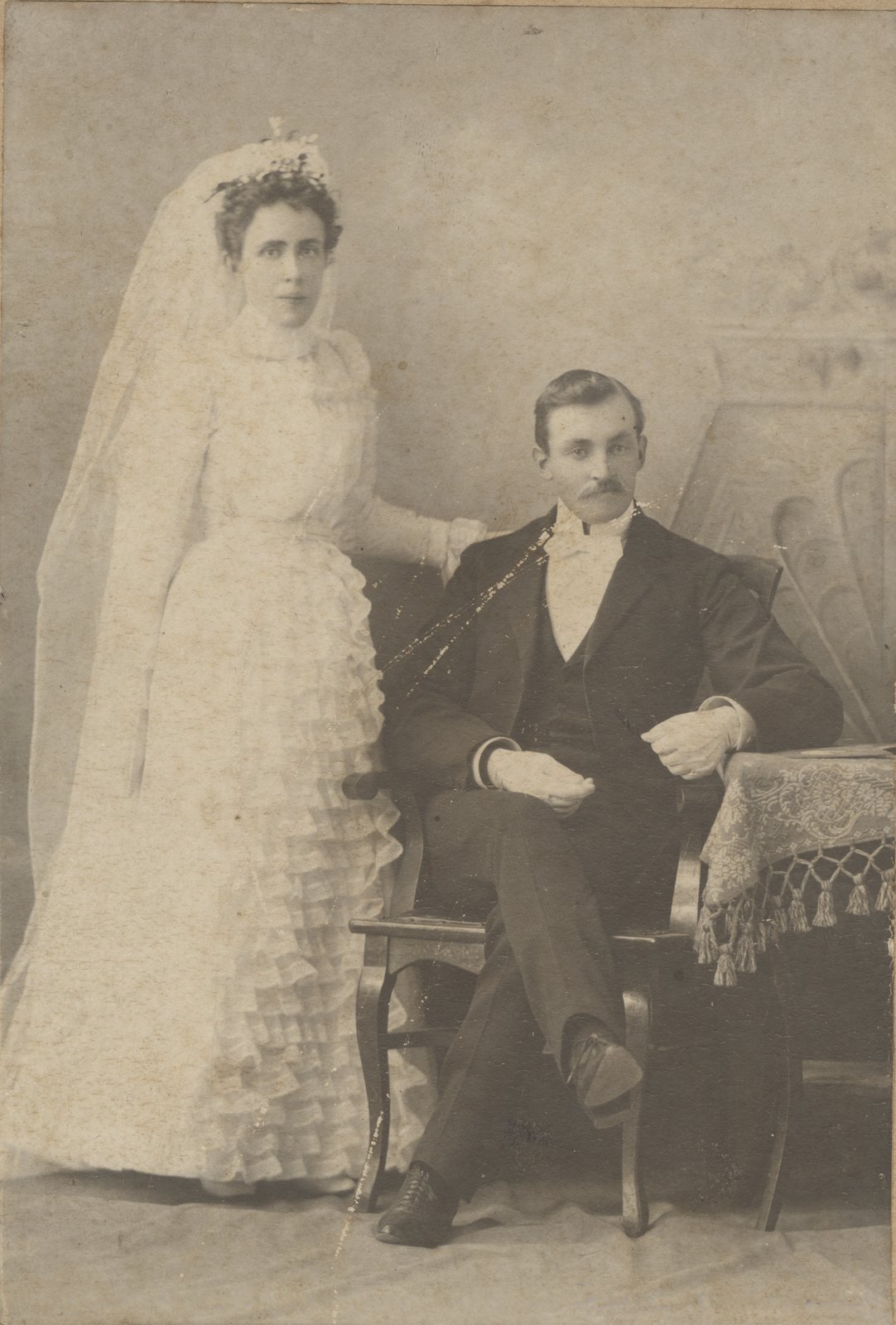
One prominent family at McCurdy’s Corners were the Cordingleys. Before travelling to Canada, David was a dyer, living with his wife and first two children in York, England. David and Mary Cordingley first came to Canada, by way of Pennsylvania, likely in the early 1820s. In 1836, the Crown officially granted 100 acres of land to David Cordingley on lot 10, concession 10 in Trafalgar Township. In 1848, this land was sold to David and Mary’s eighth of ten children, John Cordingley. David Cordingley died in 1867 at 85 years of age.
Also living at McCurdy’s Corners from the Cordingley family was Solomon Cordingley, the fifth child of David Cordingley. Like his brother John, Solomon obtained his land from his father in 1852. He married Martha Bell, in 1853. Solomon and Martha took in two children in addition to their own five children. They were John Cordingley’s daughter Rachel Hannah, following the passing of her mother Rachel Delilia, as well as John Jr. Bell, the son of Martha’s brother, John Bell, following the passing of his wife Amelia. In 1891, Solomon held an auction for one of his farm plots due to failing health. The auction was advertised in the Streetsville Review. In addition to the farm itself, which included orchards of plums, grapes and pears and three wells, he also sold off all the farm stock, livestock and farming implements. Another of Solomon Cordingley’s farm plots was sold his own son, David Cordingley.
Solomon Cordingley’s granddaughter, Ruby Cordingley, had a near death experience when a cyclone struck down in Trafalgar Township in June of 1923, while on her way home from her sister Abigail’s house:
“The sky was dark and ugly, and she hurried to the house to close the windows after the evening milking. Their hired man turned the last cow out after it was milked and it was killed. Their new barn roof was blown off in pieces and a large section just missed ruby as she clung to their lane fence near the house. Suddenly she dropped face down in their ditch and that saved her life. She later appeared soaking wet and scared at the May’s back door. Ruby always took a short cut through their farm to the Tenth Line farm. Ruby went every day to get milk from the May’s as her brother Sam didn’t have milch cows. Kathleen and ruby had good visits.”
Charles Cordingley, the eldest son of David Cordingley Sr., also had land at McCurdy’s Corners, which he purchased from his father. Charles Cordingley was born in 1815, in England, and most likely travelled to Trafalgar Township along with his parents. He married Rebecca Petch in 1844, and they had eight children. Charles Cordingley also owned land south of Dundas Street in Toronto Township. Charles was a Methodist, and worked as “road boss” or road overseer for around ten years. According to Harold Scholefield, Charles Cordingley was a devoted Methodist, and it was due to his efforts that the church at Clarkson was built. He also donated stones for the construction of the Carman Methodist East Church, where he later became a trustee. He donated an organ to the latter church as well. Charles Cordingley was also a Path master for 25 years on Lower Middle Road, and he ran a saw mill on the Halton-Peel town line near the Lakeshore highway. The mill was operated by water power. Charles Cordingley died in 1884, at 70 years of age.
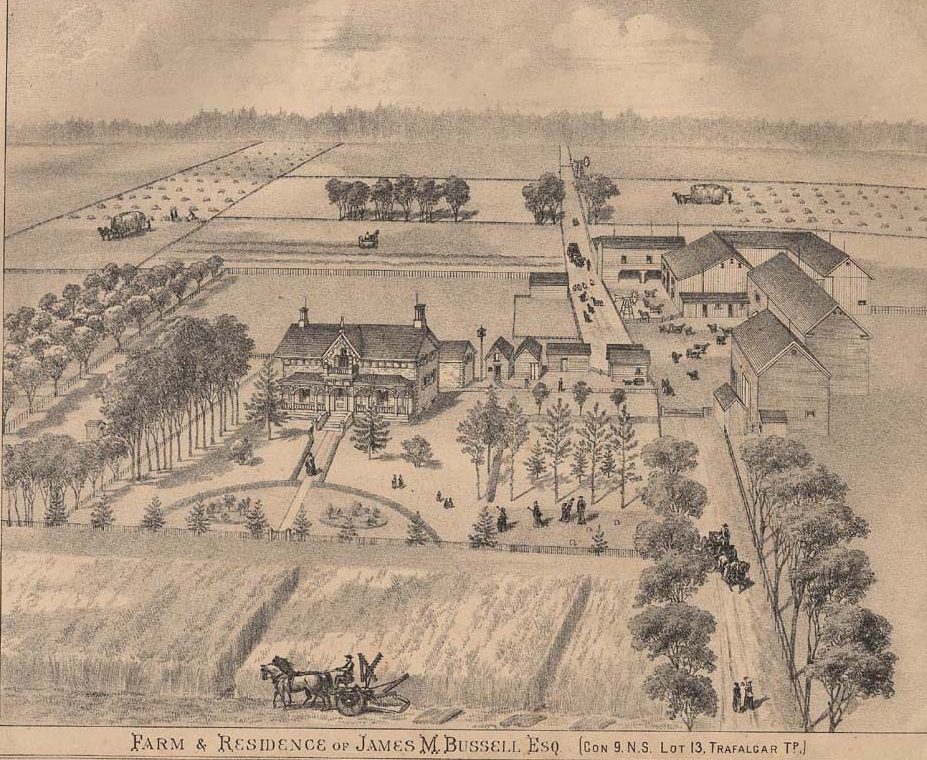
Farm and Residence of James & Margaret Bussell, Lot 13, Con 9, 1877 Halton Atlas
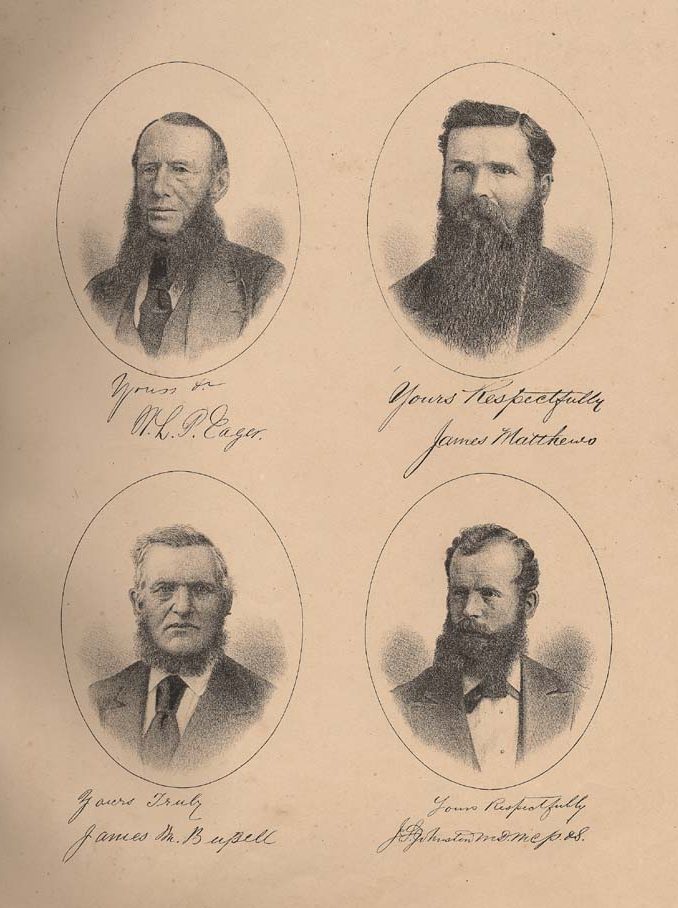
Another local who lived near McCurdy’s Corners was James Marcus Bussell, born in 1824 and died in 1907, at age 82. James M. Bussell supported the Liberal-Conservative party and was an Anglican. According to the Halton County Atlas of 1877, his had one of the finest farms in all of the county. James M. Bussell’s wife, Margaret Elliott, was born in 1839 and died in 1905 at age 66. Both she and her husband are interred at St. Stephen’s Anglican Church Cemetery in Hornby.
James M. Bussell kept a diary in the early 1870s which gives us a unique look into life at the Corners. For example, on May 11th, 1870, James wrote: “Fine morning it looks like dry wether the sun rose red I was sowing oats to day I had Pat working in the garden the minister and his wife was hear I went to Norville to night I got the money from Margaret Willoughby it is a fine night.” Later, on Decemeber 31, 1871, he remarked: “Fine morning it is a beautiful day we went to church in the afternoon Mr. Johnstin preached John Mason and Robert Askin came home with us and had their tea it turned out a very dark night they stoped all night.”
From Bussell’s diary one can be able to understand there was a sense of community at McCurdy’s Corners, neighbours often met and worked together, helping each other with tasks as needed, despite the often great distances between them.
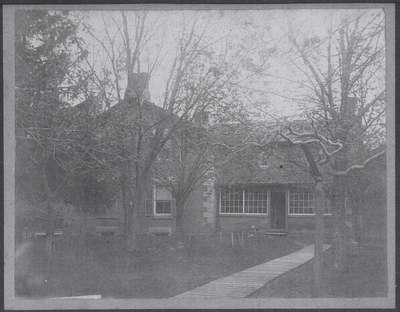
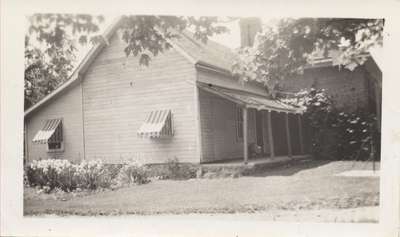
One long standing structure at McCurdy’s Corners was the Mason-Gasper house, located at Derry Road W., between Ninth and Tenth Lines. It was a fine brick house built around 1874, probably by Joseph Mason. It was later owned by the May family for 43 years, between 1926 and 1969. The house was designated in 1993 for its interior and exterior architecture. Unfortunately, despite the efforts to save the house, it was destroyed by arson shortly after in 1994. Today the Askin family home, the Bussell family home (built circa 1865), and the Cordingley family home (built circa 1884) are still standing at the former McCurdy’s Corners, a reminder of the community that has been lost to time.
Help us to keep alive those who once called McCurdy’s Corners home, the families of Anderson, Askin, Bussell, Cordingley, Hannah, Hustler, Justin, Mason, and McCurdy.