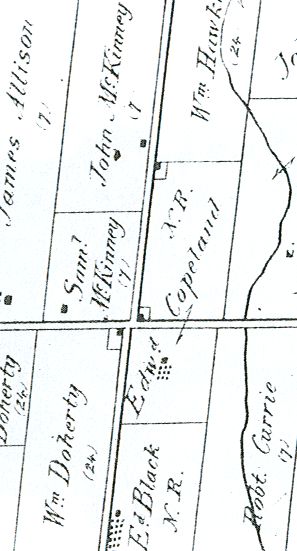
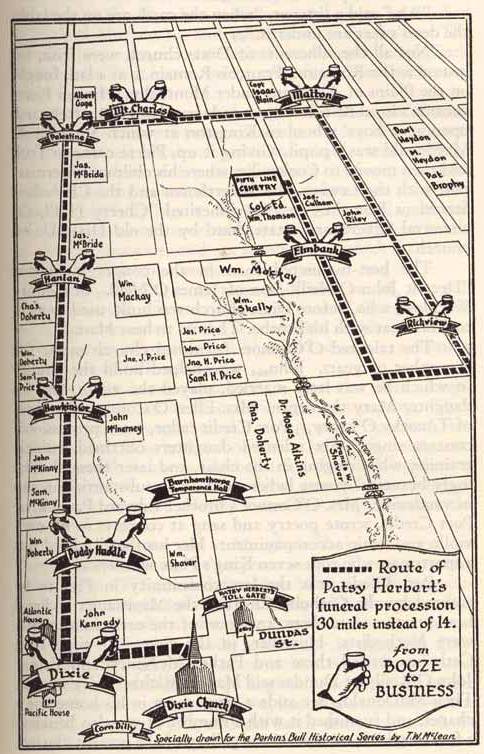
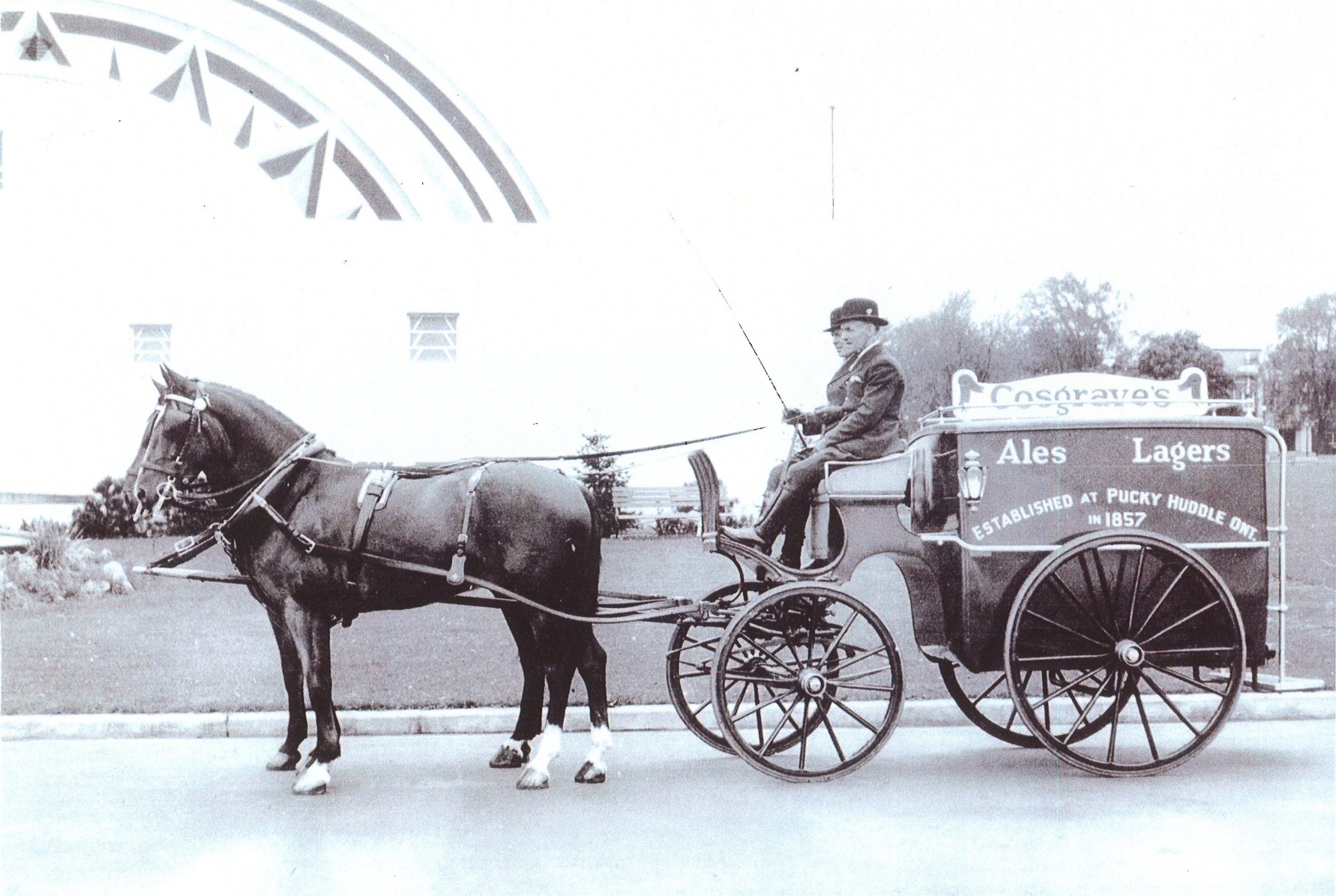
When one thinks of Mississauga 200 years ago, when it was still known as Toronto Township, one pictures quiet farming communities with little in the way of excitement or scandal, and never much out of the ordinary goings-on. Perhaps that was not always the case. For instance, the lost hamlet of Pucky Huddle, located at the present-day intersection of Tomken Road and Burnhamthorpe Road was in fact a community filled very much with interesting happenings.
The exact name of the hamlet is uncertain, though Pucky Huddle is the most commonly documented version of the name; it has also been called: Pucky’s Huddle, Pucky Fuddle, Puggy Huddle and Puddle Huddle. One possible meaning of the name is that “Pucky” is derived from an Irish phrase, “puck”, which means to hit or strike, emphasizing that Pucky Huddle was a rough-and-tumble locale. Other meanings supposedly refer to the muddy state of the roads at the crossroads. The hamlet, however, was almost certainly named for the Pucky Huddle Tavern that was located there.
According to Col. Kennedy, the Pucky Huddle Tavern was located on lot 1, concession 9, north of Dundas Street, presently the northwest corner of Tomken and Burnhamthorpe Roads. John J. Gilleece, son of Thomas Gilleece and Ann Parke, was most likely one of the first proprietors of the Pucky Huddle Tavern. John J. Gilleece, an Irish Roman Catholic, was born around 1845 and died in 1888. Gilleece was probably followed by John D. Parks and his wife, Bridget Parks. Bridget Parks lived from around 1862 to 1906 and is buried in the Port Credit Roman Catholic Cemetery. Not much is known of her husband except that John D. Parks was about eight years Bridget’s junior. In addition, there was at one time a barmaid at Pucky Huddle who a local resident described as having “hair as gold as the sun, and eyes stolen from heaven”. The last proprietor that has been documented was Patrick Herbert.
Patrick Herbert, also known as “Patsy” or “Paddy”, who was for a time an innkeeper at the Pucky Huddle Tavern, also operated several toll gates. He ran one on Dundas St. near the village of Dixie. The price of passage was five cents. According to a story told by Miss M. Graham to William Perkins Bull, a local historian, “Dundas St. was the best road around, a stone road, Paddy Herbert used to crack stone day in and day out. He would pile the cracked stone up in nice neat little piles, and we children although warned about not wearing out our boots, took great delight in climbing up over these neat heaps and of course scattering them all about”. Patrick Herbert also established a toll gate at the Erindale Bridge, but apparently a couple of boys obtained some gunpowder and blew it up.
To the residents of Dixie, Pucky Huddle Tavern was synonymous with debauchery and vice! One local legend tells of an intoxicated farmer’s fantastical journey home from Pucky Huddle one night, “full of bad whiskey and good fellowship”. According to Perkins Bull, Farmer Matt, as he is known in this tale, decided to stop and take a rest at the side of the road. As he rested a figure approached; he was described as tall and clothed in clerical attire. The man proposed they play a game of cards to pass the time, to which Farmer Matt readily, and perhaps recklessly, agreed. An hour’s worth of hands later and Farmer Matt had nothing left to bet – not one of his hands had won him anything. Seeing this, the stranger proposed one last round, suggesting offhandedly that Farmer Matt stake his soul and he stretched out his leg revealing, in place of a foot, a huge cloven hoof. “A blood-curdling yell, a smell of brimstone, a poof of smoke, and the stranger vanished.” Matt, terrified, was said to have sped home so fast that his clothes were scorched.
Although Farmer Matt may just be a figure of legend, there are a few stories of known Peel residents who frequented the Pucky Huddle Tavern. William Haugh (pronounced Hawk), a farmhand on the Charles Adamson farm, was apparently one such visitor of the Pucky Huddle Tavern. According to Geoffrey Peter Adamson, every once in awhile William Haugh would walk to Henry Harvey’s farm in the morning and ask to borrow Henry’s horse and buggy for a few days. He would then drive to “his favourite public house, ‘The Pucky Fuddle’. There he would stay with drinking friends until the ‘Demon Drink’ was satisfied.”
While alcohol played a large role in Pucky Huddle’s less than savoury reputation, it was not the only reason local residents might have objected. Pucky Huddle Tavern was also apparently a venue famous for cockfighting.
According to Perkins Bull, cockfighting was more popular in Toronto Township than anywhere else in Peel. Aside from Pucky Huddle, it was “all the rage in Streetsville” as well as Port Credit. Cockfighting came to exist at Pucky Huddle, probably in the later years, while Patrick Herbert was acting as innkeeper. Patrick’s son, Edward Herbert, who lived in Toronto, would bring in birds from Toronto stashed in barrels, one per barrel, so no suspicions would be aroused. They would pit the Toronto birds against birds from Hamilton, and men and women in fine evening wear would come down to Pucky Huddle to watch. The fights were apparently held in the barns adjoining the tavern.
Gossip often ran rampant in Pucky Huddle, as one 1899 issue of the Streetsville Review illustrates: “Billy Hawkins said that Withers told him that someone else told him that Jack Toleman said if Puggy Huddle did not get a license this spring there would a general row in camp…”.
Also at Pucky Huddle was George Tolman’s brickyard located on one acre at the northeast corner. George Tolman was later succeeded by his son Thomas H. as brick master. George Tolman made bricks for Burnhamthorpe Church, as well as a few other local community structures.
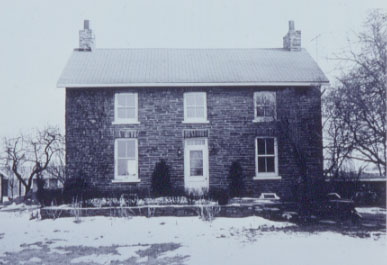
Today, Pucky Huddle is just vague memory, with not much left to mark its existence. The Pucky Huddle Tavern was said to have burned down in the early twentieth century, probably sometime between 1900 and 1915. Still surviving in the area, however, is the Copeland House, on Burnhamthorpe Road East. The Copeland House was built in the 1820’s – one of Mississaugas earliest remaining houses – and displays Georgian architectural influences. The Copeland family emigrated from Holland, via Pennsylvania, and arrived in Peel around 1808. The land where the house is located first belonged to Robert Copeland, although the house was probably built by Thomas Copeland.
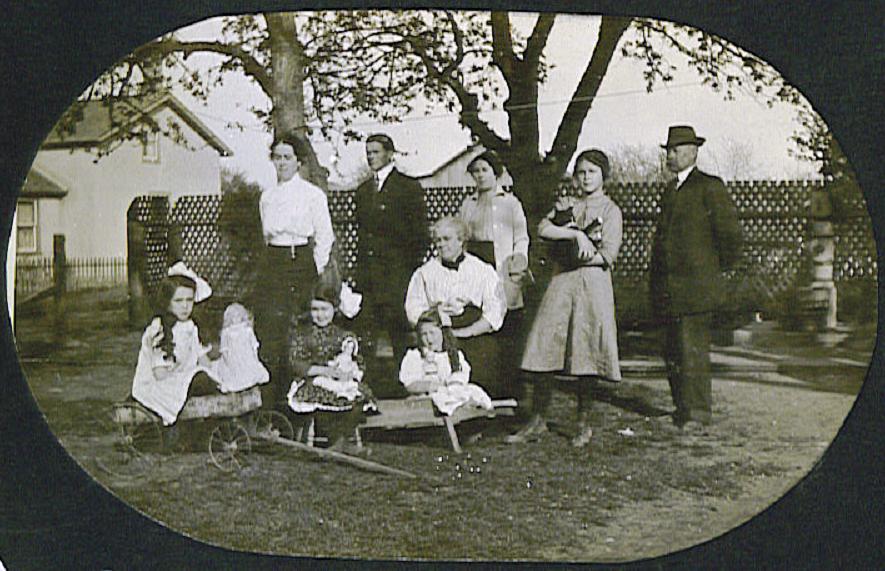
Please share your stories to help keep Pucky Huddle and its residents from being forgotten, such as the Copeland, Herbert, Doherty, Black, Parks, Gilleece and Tolman families, to name a few. Pucky Huddle, while physically gone, can still live on through stories and memories.