Over one hundred and fifty years ago the stagecoach business in Mississauga was thriving. A visitor from Toronto or Georgetown could catch a ride on one of William Harris’ efficient stages and be dropped off almost anywhere in Toronto Township. Harris’ Corners was one such stopover along the way.
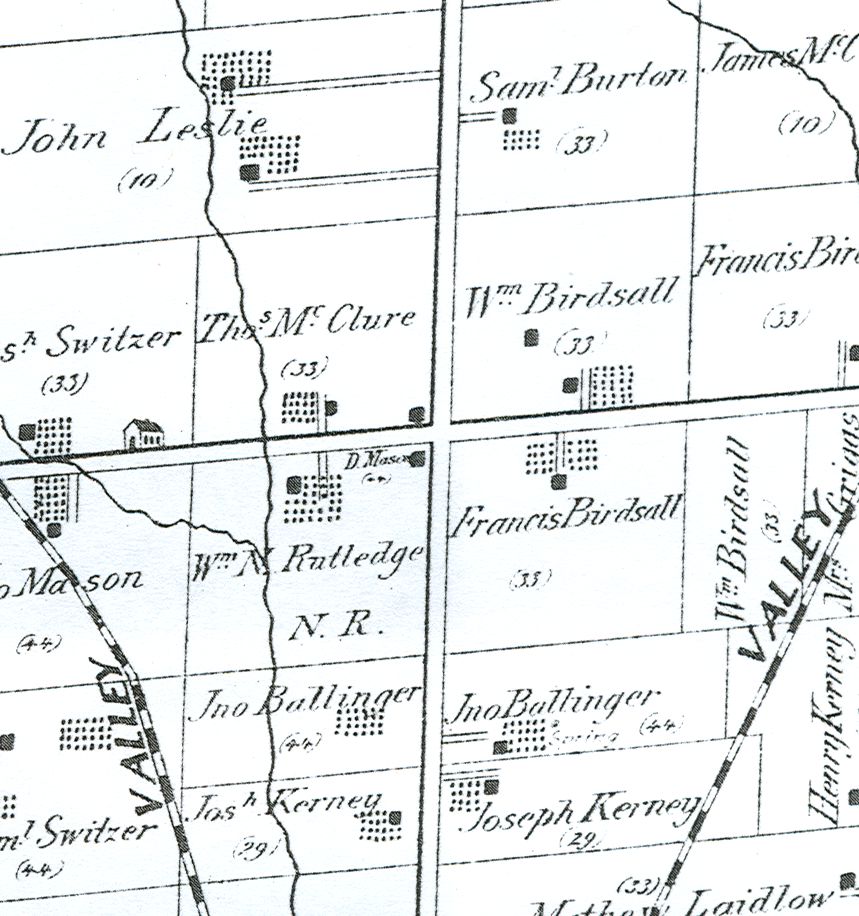
In the early nineteenth century the southwest corner of Mississauga Road and Derry Road was known as Harris’ Corners. It was named for one of its most prominent residents, William Harris. The village was a crossroads for people traveling to Meadowvale, Streetsville, Huttonville, Norval, Georgetown and beyond.
William Harris, nicknamed “Ginger” Harris and “Irish” Harris, was born in Ireland around 1800, and probably immigrated to Canada in the early 1820s with his Scottish wife Elizabeth. On early censuses “Ginger” Harris is listed as a mail contractor and a hotel keeper. He had three sons: John, Thomas and Alex.
“Ginger” Harris built a large white frame hotel and barns in 1823 at Harris’ Corners, located two miles north of Streetsville. He called it the Grand Hotel. Joseph Harris operated the hotel from 1859 to 1870; no definite connection can be found between “Ginger” Harris and Joseph Harris. David Mason also ran the Grand Hotel for time. The hotel eventually ceased operation in 1881. There is some speculation that there is a connection between the closing of the Grand Hotel and the death of “Ginger” Harris’ son, Thomas, who died of Typhoid fever. The Grand Hotel was not “Ginger” Harris’ only hotel. He also ran the Royal Exchange Hotel in Cooksville and the Globe Hotel in Streetsville.
During the great fire of 1852 in the village of Cooksville, Jacob Cook’s hotel was one of the many building destroyed in the blaze. The proprietor at the time, Moses Teeter, had insured the hotel, and it could therefore be rebuilt. “Ginger” Harris tore down the remainder of the old structure and rebuilt a new hotel from the ground up. He named it the Royal Exchange, and began advertising it in 1854 in The Brampton Standard and the County of Peel Conservative Journal. The new hotel had “a larder and bar second to none other in the Township”. Harris sold the hotel in 1859 to Francis B. Morley, and focused his attention on the Globe Hotel.
In November of 1857, “Ginger” Harris purchased the Stephens House from Robert Stephens and changed the name to the Globe Hotel to further emphasize the new management of the establishment. It was first listed under the new name in 1859, on the Tremaine map of Peel. For the first few years, from about 1860 to 1863, Daniel C. Ward acted as the innkeeper of the hotel. The Globe Hotel was described as “a good-sized hotel and a very nice place”. It also had big stables that could hold up to thirty-five horses and rigs. In 1865 Thomas Harris, and his wife, Arabella (Rutledge) Harris, began assisting at the Globe. Thomas got a license for the hotel in 1874, and started advertising the “first class house” under his own name. Despite the competing hotels in the area, the Globe was the principal hotel in Streetsville at the time, a hotel that had been managed by the same family for nearly twenty years. The Globe Hotel was destroyed by fire in 1876, a fire that wiped out most of the block, including the Telegraph Hotel.
The Harris family was also very musical. They formed a small orchestra among themselves and would go around and perform in the surrounding areas. Arabella Harris, who was also known as Patricia or Pat to avoid confusion with her mother of the same name, had a nice singing voice and sang at concerts and garden parties. It was said that her voice would always draw a crowd at any show.
As mentioned above, William “Ginger” Harris had a successful stagecoach service, with a depot at the Grand Hotel. The coaches ran along the plank road, which had been laid from Harris’s Corners to Springfield, present day Erindale, in 1847, and later to Georgetown in 1848. The traffic was so heavy on the road that the boards that made up the road wore out very quickly and, unfortunately, were never replaced. Instead, the road was covered with less expensive gravel. Many tollgates also lined the plank road, but they offered little financial success to their operators. Many travelers preferred to drive five miles around the tollgates rather than pay the ten-cent fee to pass. Harris’ stagecoaches were pulled by six horses, which were replaced once they reached Cooksville. The horses were Irish thoroughbreds, which “Ginger” Harris and his neighbours imported and bred. His coaches were large, carrying twenty or thirty people at a time, and he would personally drive them for much of the journey. They would leave Harris’ Corners at 6 AM, reach Best’s Hotel in Toronto by dinner, and then return for 8 PM. For trips beyond Harris’ Corners, such as to Georgetown and Guelph, passengers would ride with “General” Trimble.
An early account helps to recreate the scene:
“Ginger Harris was a born horseman and his stable had as fancy a bunch of road horses as any in the province. …Sharp at six o’clock every morning four blood horses held by a hostler at each bridle, came in front of the hotel. The guard’s bugle sounded. The inside passengers were stowed away, the luggage put in the boot and the overflow put on top, with the outside passengers. At the final blast of the horn the hostlers gave way and the four horses sprang to their collars. Old timers speak of these morning scenes – Ginger, with all the skill of Ben Hur, or Messala, holding the reins, with the grip of a vice, the stage, with its 25 or 30 passengers, being bowled down the grade at a swinging gallop, the blast of the guard’s horn, the salutation of the outside passengers to the passerby. All this had a charm far away beyond a mere express team (sic) or a motor car.”
The success garnered by “Ginger” Harris’s stagecoach service did not go unnoticed by the other residents of Toronto Township. His success inspired Buster Sterling to also get into the business and compete with “Ginger” Harris: “In every barroom, at every crossroad the merits of the different stages were discussed. Many were the races between them, and large crowds assembled at the Globe and Telegraph Hotels every night to see who was the winner as the eight foaming horses, guided by Ginger and Buster, galloped home.”
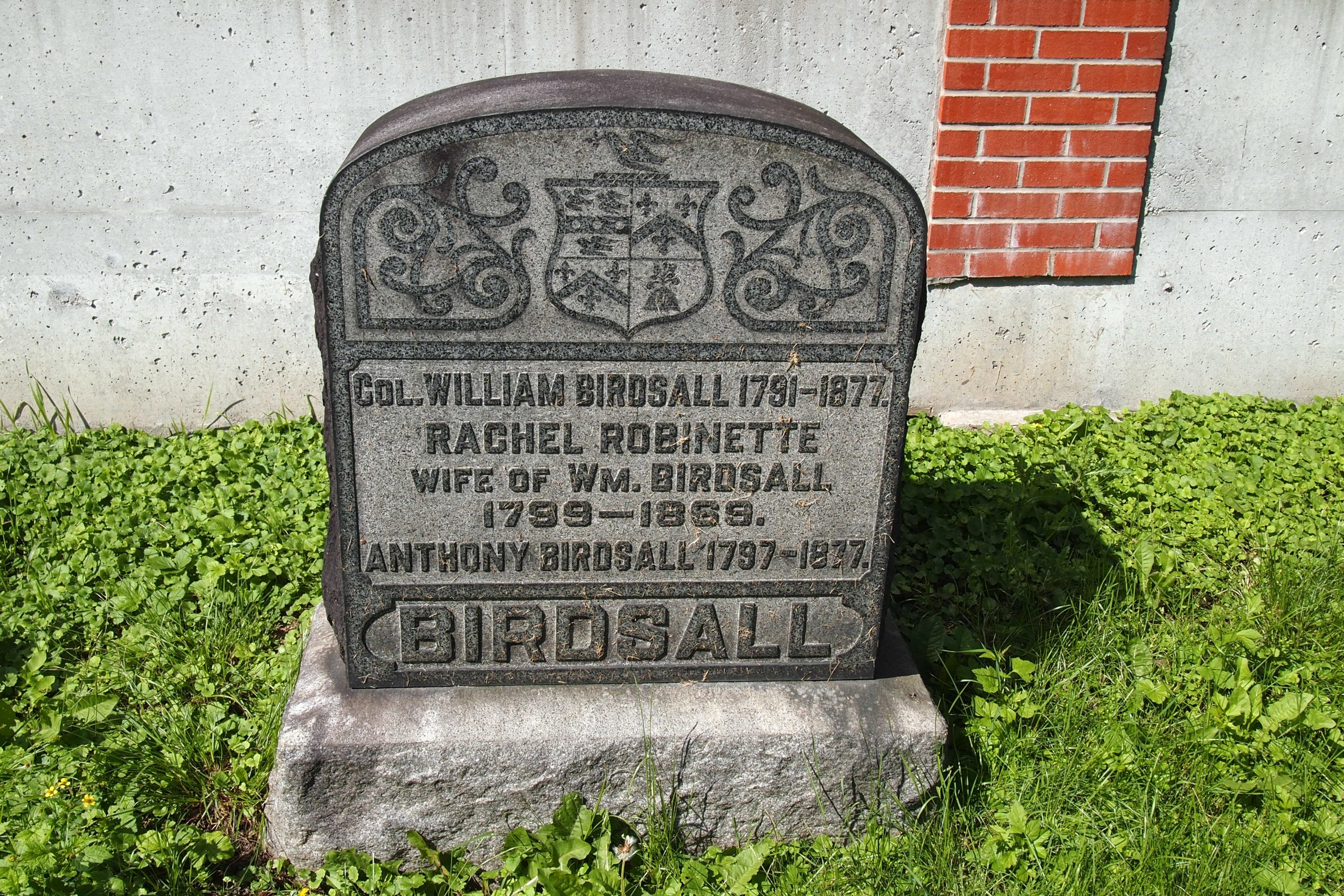
Also living at the corners was Colonel William Birdsall. Colonel Birdsall graduated in England at age eighteen, as a land surveyor. He was appointed to come to Canada in 1810 to help surveyors. Some time after his arrival William Birdsall joined the Canadian Militia at Fort York. He participated in many battles in the War of 1812, rising quickly through the ranks. After the war he picked up surveying Southwestern Ontario for fourteen years, until in 1828 when he received his own land grant of 400 acres. He was a Justice of the Peace for at least 44 years. His brothers, Frank Birdsall and Anthony Birdsall, also resided at Harris’ Corners. Colonel Birdsall died in 1877 and was buried at the Trinity Anglican Church cemetery in Streetsville, along with his wife Rachel (Robinette) Birdsall and his brother Anthony Birdsall.
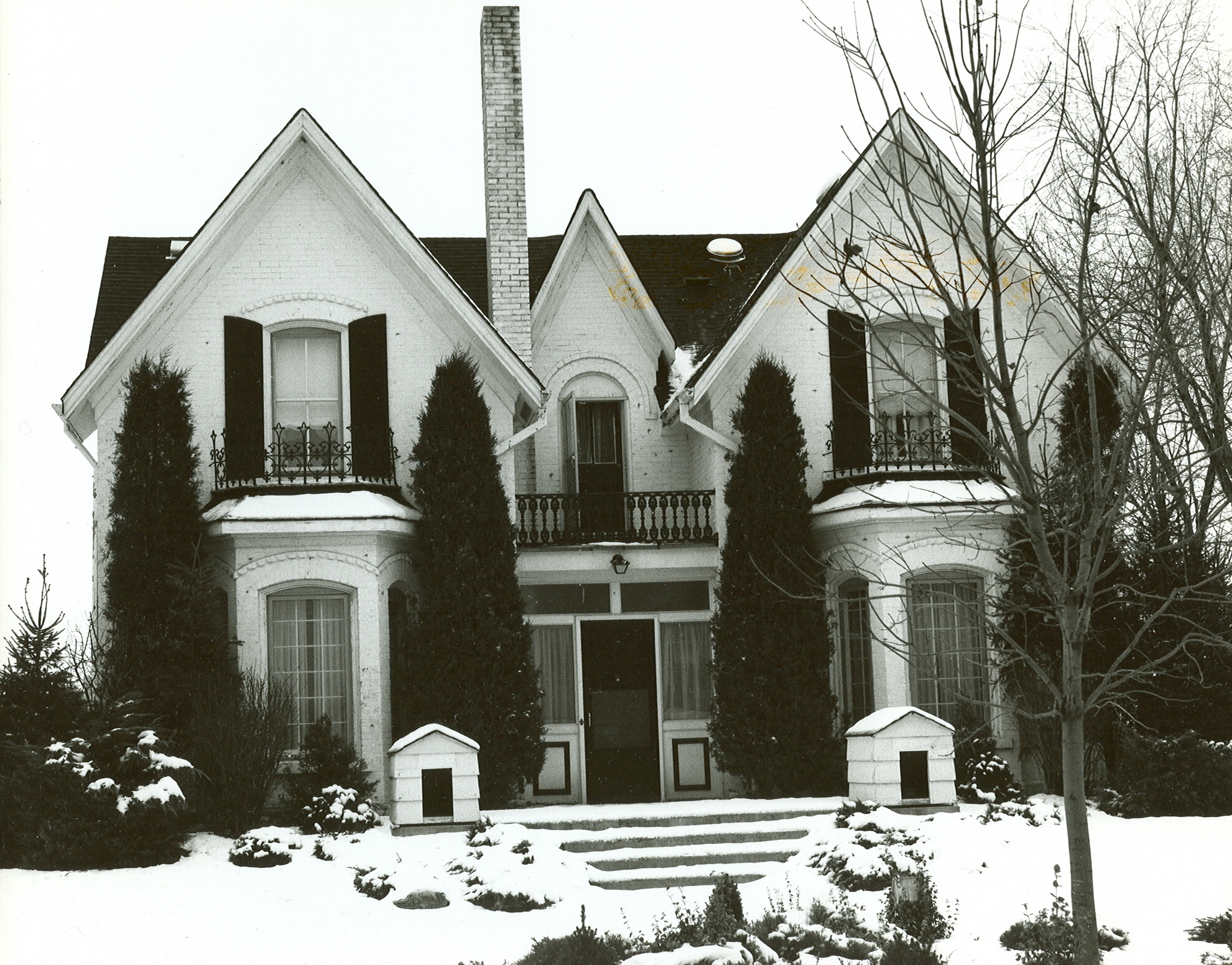
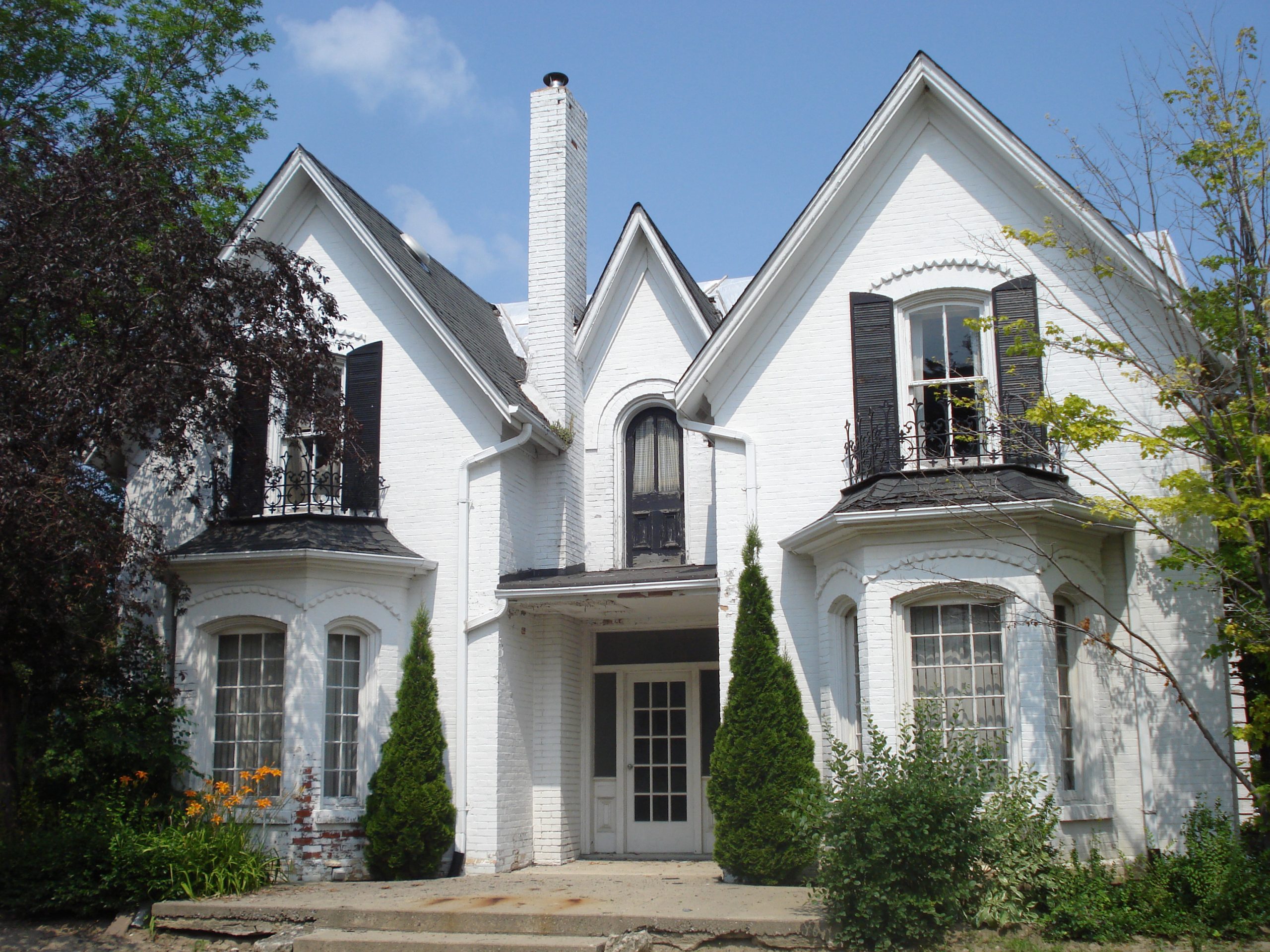
Later the corners came to be owned by the Croziers, and it was briefly known as Crozier’s Corners. Thomas Crozier owned the lot on the southwest corner, Andrew Henry Crozier owned the lot on the southeast corner, and John Crozier owned the two north corners. John Crozier and his family came to Canada in 1886. John Crozier rented a farm from William Rutledge. He then purchased Manor Farm, the former Colonel William Birdsall estate, where one of his sons, Andrew Henry Crozier, would later reside.
Andrew Henry Crozier was a published poet. He composed a new National Anthem for the British Empire in 1901, and King George V sanctioned it. It was published by the Review-Herald Publishing house in Streetsville and sold for 25 cents a copy.
Edgar Graham Shields, John Crozier’s brother-in-law, kept bees and also had a silver fox farm on the northeast corner of Harris’ Corners. The silver fox farm was the only one of its kind. His sister, Jane Ferris Shields, was married to John Crozier.
Harris’ Corners never had its own permanent post office; however, there were quite a few establishments in Harris’ Corners over the years. The hamlet had a general store. There was also Dean’s foundry, located opposite the John R. Eakins’ residence, which made ploughs, harrows and stoves. It had houses for the workers clustered around it. Edward Rutledge built a blacksmith and carriage works on the west corner of Harris’ Corners. The land and business was later taken over by George Bell, followed by Alexander Sibbald. As well, there was Henry Schooley’s wagon-making establishment and Rowe’s gristmill. The gristmill then went to J. Deady, who renamed it Alpha Mills, and produced 200 barrels of flour per day during a time when many mills were going bankrupt. During the depression following the Crimean War, the late 1850s, the Gooderhams acquired the mill.
The school in Harris’ Corners was a log schoolhouse located on the west corner of Colonel Birdsall’s farm. There is speculation that the school came to exist around 1820. Mr. Freelton was the teacher there, and he taught over 60 students. Later on, the Grand Hotel replaced the school.
Harris’ Corners is mentioned during the period before the Rebellion of 1837. Reformers from Caledon gathered at Harris’ Corners before heading to Streetsville to vote for Mackenzie. According to William Perkins Bull, a local historian, the reformers marched “to the polls beside their sleighs, bearing clubs to ward off attacks from the Town Line Blazers”.
Harris’ Corners began to fade when a railroad from Brampton to Georgetown was put in, ruining the corners. By the mid 1930s, all that remained were a cluster of rose bushes marking the once busy corners.
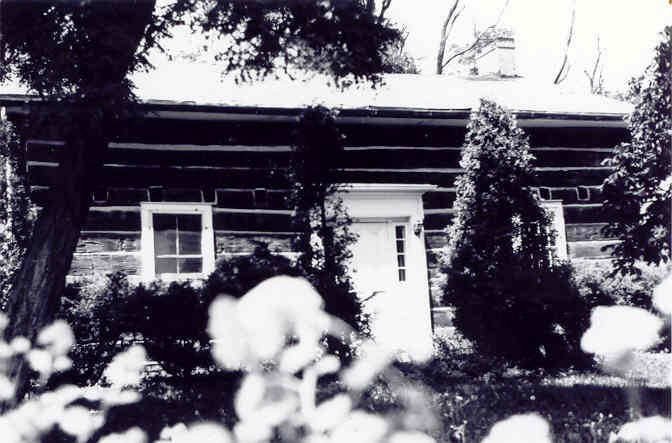
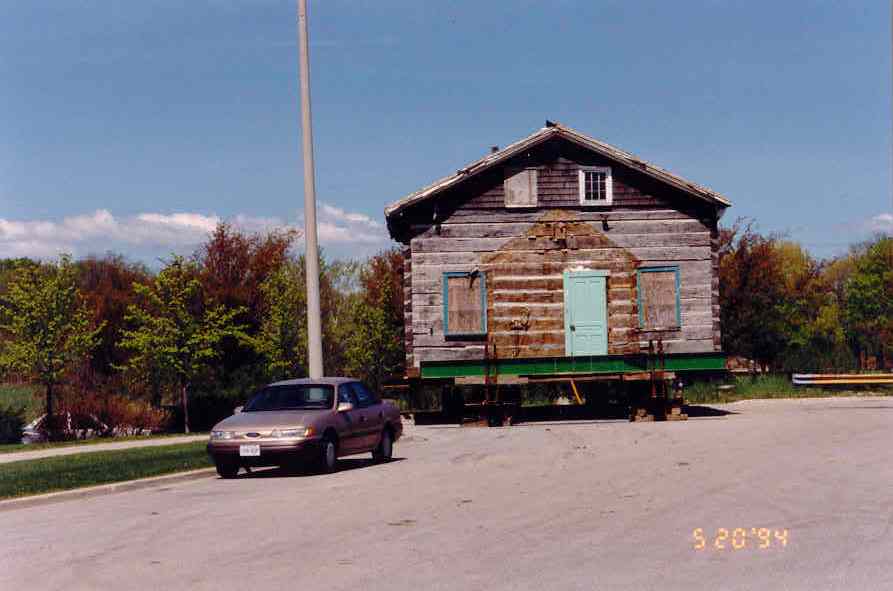
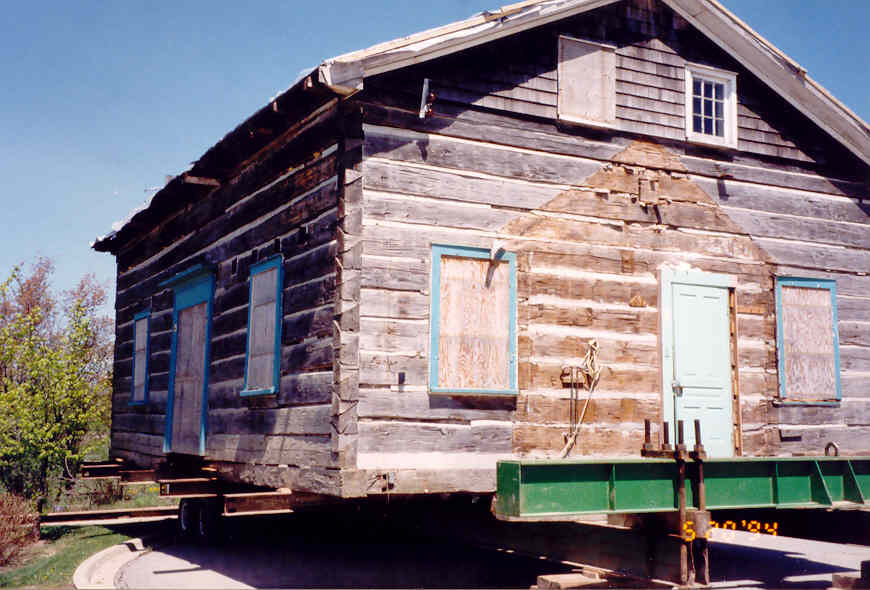
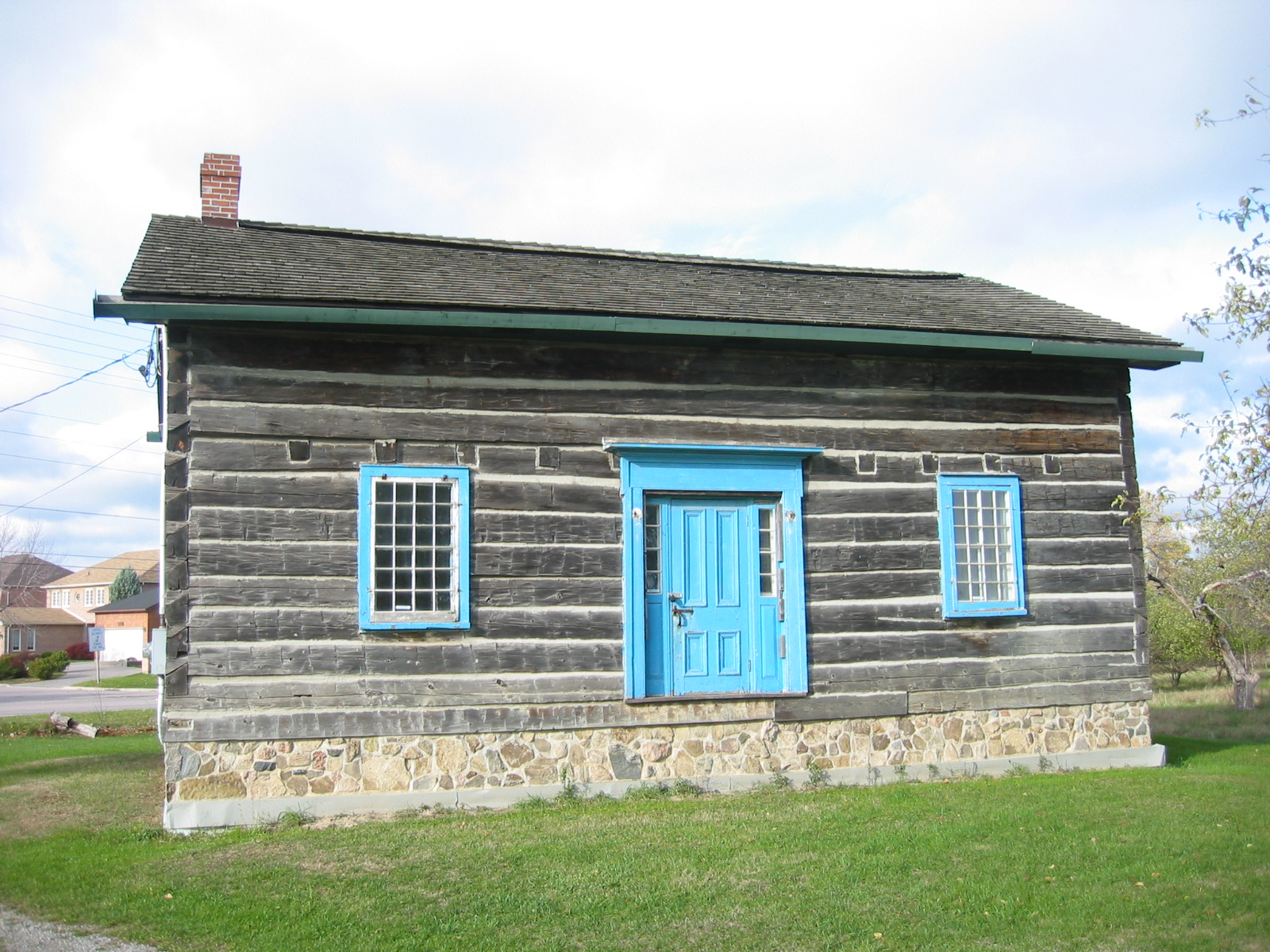
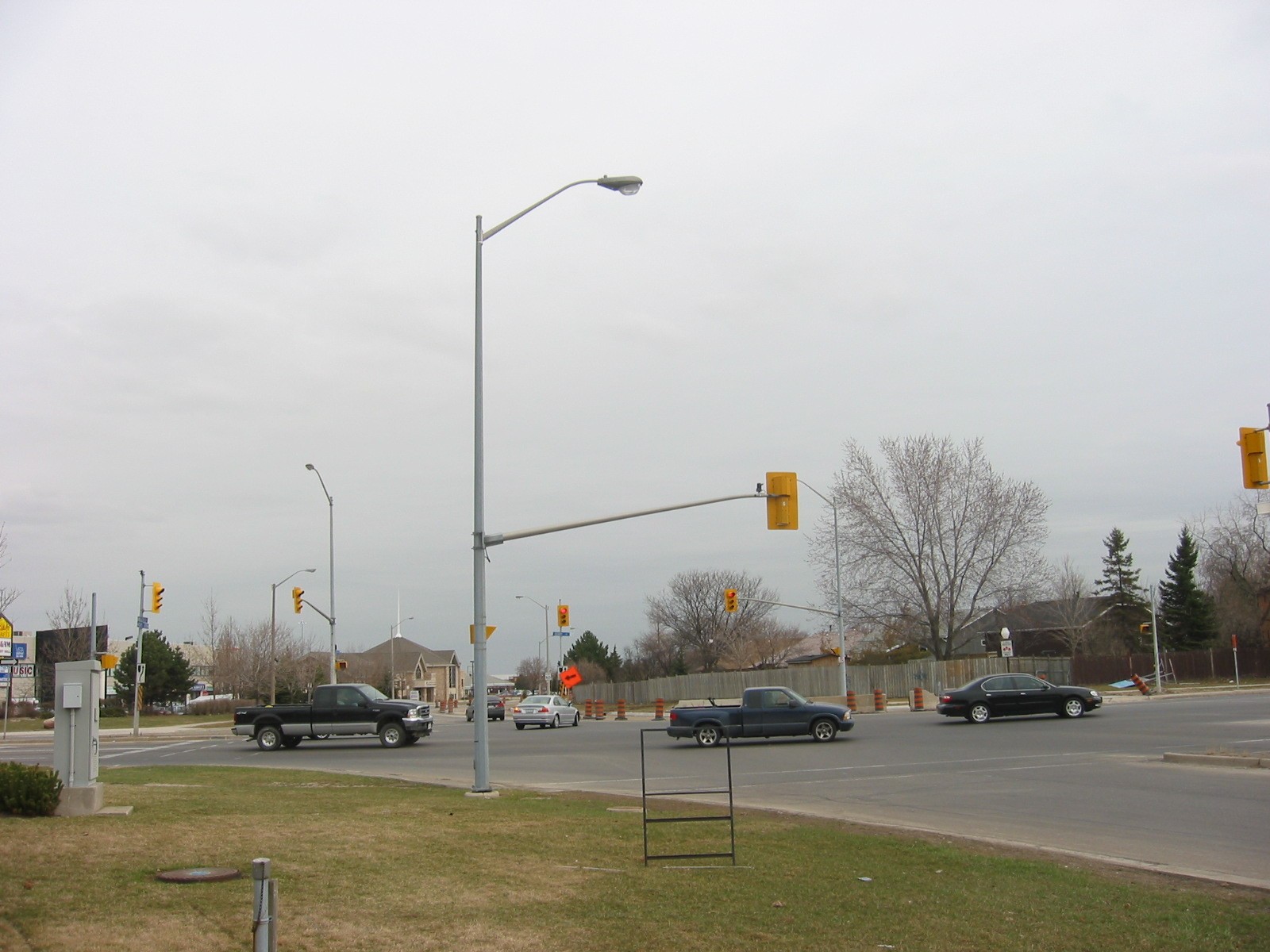
Today, with the rerouting of Derry Road in the early 1990s, the intersection of Harris’ Corners no longer exists. However, a few remnants remain. Still surviving from Harris’ Corners is the McClure house on the DuPont Property, and the Leslie Log house, although it is no longer in its original location. Today industrial parks and office buildings mark the place where the Grand Hotel and the old Birdsall homestead once stood. The buildings, such as the Grand Hotel, which made Harris’ Corners the thriving community that it once was, may be long gone, but the essence of Harris’ Corners’ heritage need not be forgotten. The names of the families that made the small hamlet home can live on, those of Birdsall, Crozier, Eakins, Harris, Leslie, Mason, McClure, Rowe, and Rutledge to name a few. Please share your stories and memories of Harris’ Corners with us.