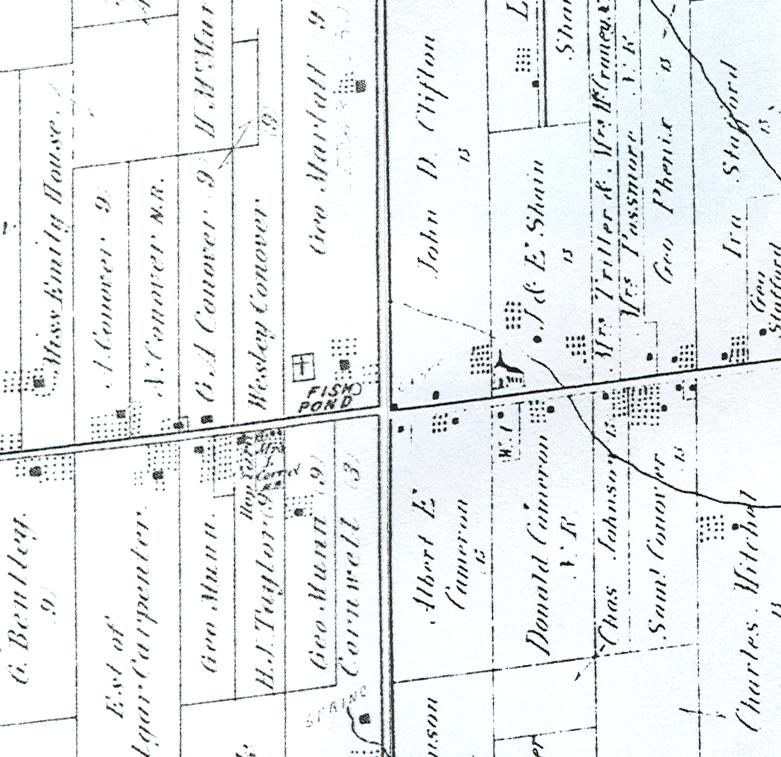
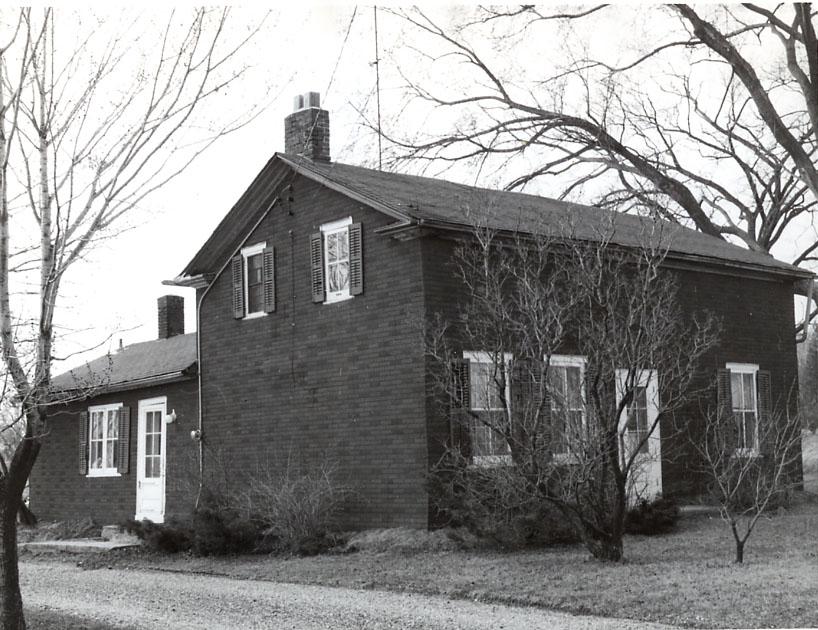
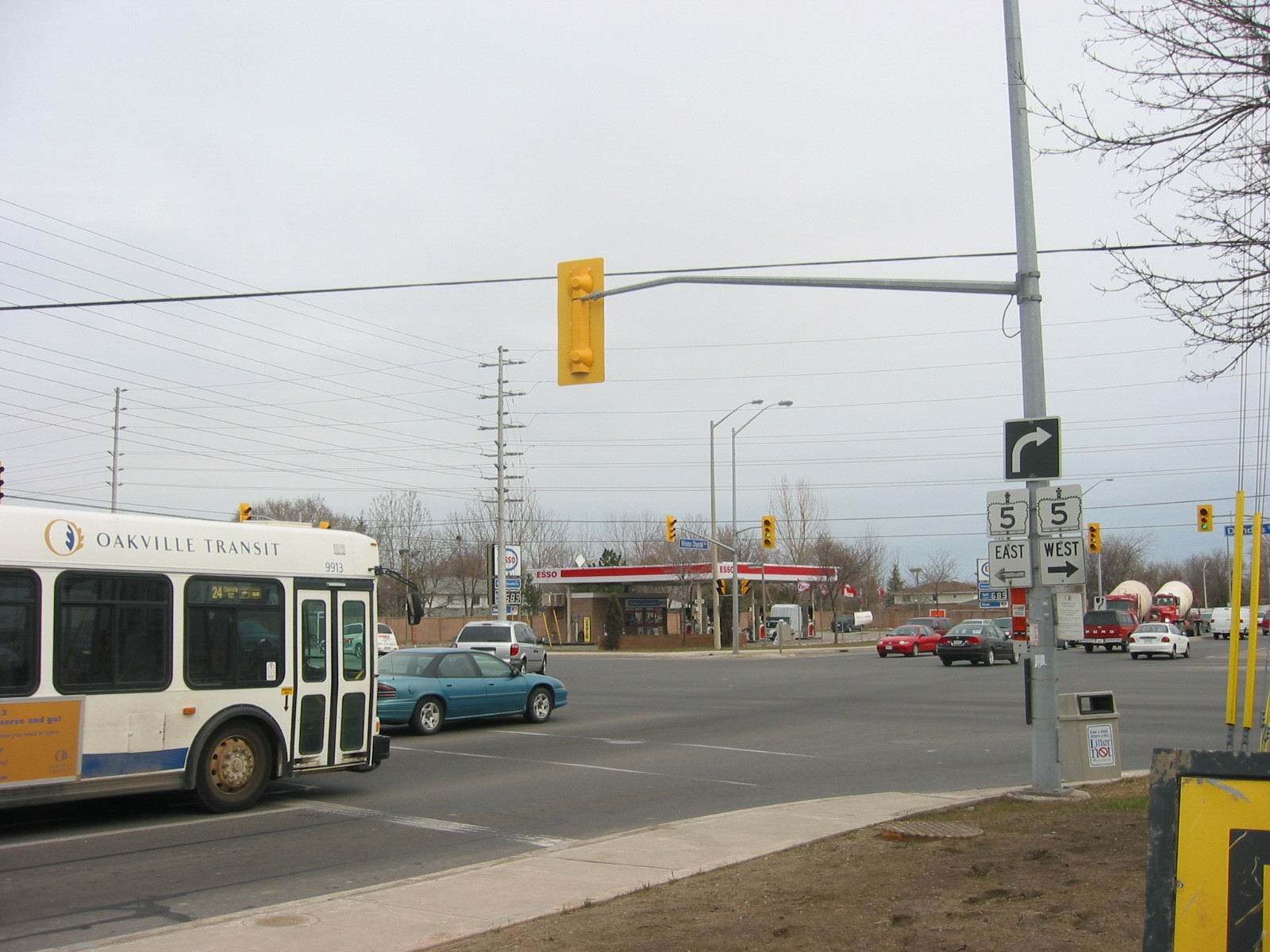
How many of us have heard of Frogmore? Certainly to some residents and busy passersby’s-by of today, the name probably has little recognition value. The small hamlet of Frogmore was located on the town line of Toronto Township (Mississauga) and Trafalgar Township (Oakville), around what is today the intersection of Winston Churchill Boulevard and Dundas Street. Legend has it that the first postmaster, Mr. B. Anderson, dubbed the hamlet “Frogmore” due to the overwhelming amount of frogs that could be heard in the nearby marsh. However, it may have been named in honour of Queen Victoria’s favourite country retreat.
The store and post office were located on the northeast corner of the modern intersection while a school (which operated from about 1870 – 1922) was located on the south side of the intersection. The post office was only in operation from 1863 to 1874, prior to and afterwards the mail came to the Sheridan. The small Methodist congregation at Frogmore would gather at George Falconer’s home (once located at the corner of the Fifth Line and Dundas Street) to listen to services given by traveling Methodist Preachers.
In 1857 the Freeman Congregation built the Zion Wesleyan Methodist Church (1857 – 1884) in Frogmore, located just to the east of the crossroads and on the north side of Dundas. Jonathan Scott is listed as one of the early ministers at the Zion Chapel in Frogmore. When the Methodist and Presbyterian Churches joined in 1884, the residents of Frogmore either traveled to Erindale or to Munn’s United Church in Trafalgar Township. The Zion Chapel sat empty until 1890 when it was purchased by the Sons of Temperance and moved to the Village of Sheridan, only to be torn down a short time later. Also in Frogmore, directly across Dundas Street from the church, was Cameron’s Wagon Shop (shown on the 1859 Tremaine Map).
The other claim to fame for this crossroads community was Samuel Conover’s brewery (just to the east of the wagon shop). Conover was the anglicized version of the Dutch surname Covenhoven, and the family originally hailed from the Sleepy Hollow area of what is now New Jersey, before fleeing during the American Revolution of 1776 and resettling in Toronto Township as United Empire Loyalists.
The Marlatt family had extensive apple orchards and notable Erindale merchants Christopher and Truman Miles Boyes also called Frogmore home for a time. Frogmore’s post office only operated for a short period of time: the first post master, in 1863, Mr. Anderson was succeeded by John Raur and William Axford between 1866 and 1872. They were followed in turn by Edward Axford and Henry Cartledge in 1873, and then by John Clinton before the post office quietly closed in 1874. By then most of the areas’ settlers were considered “official” residents of either Sheridan (to the south) or Erindale (to the east). Once Frogmore lost it post office (to Sheridan) and its congregation (to Erindale) it seems that it had little reason to remain and slowly disappeared from official recognition. Some of the names associated with Frogmore bare witness to its memory in the form of tombstones at the Cosmopolitan Cemetery at St. Peter’s Church in Erindale: names like Boyes, Cameron, Carpenter, Conover, Falconer, Marlatt, Shain and Stafford.