Have you ever stood in the terminal of Pearson International Airport, staring out at the vast tarmac, and wondered what was there before the airport? After all, Airport construction only began in the 1930s. Have you ever noticed that Britannia Road abruptly halts once it reaches the airport grounds? Have you ever wondered where it once led?
In our not to distant past, before the Malton Airport was even conceived, the intersection of Britannia Road and Fifth Line marked the little community of Elmbank. The land in the immediate vicinity had begun to be cleared and farmed in the mid 1820s. Little more than a rural crossroads farming hamlet, Elmbank developed some traditional pioneer businesses – a corner store and post office, a blacksmith, a carriage maker and a cheese factory.
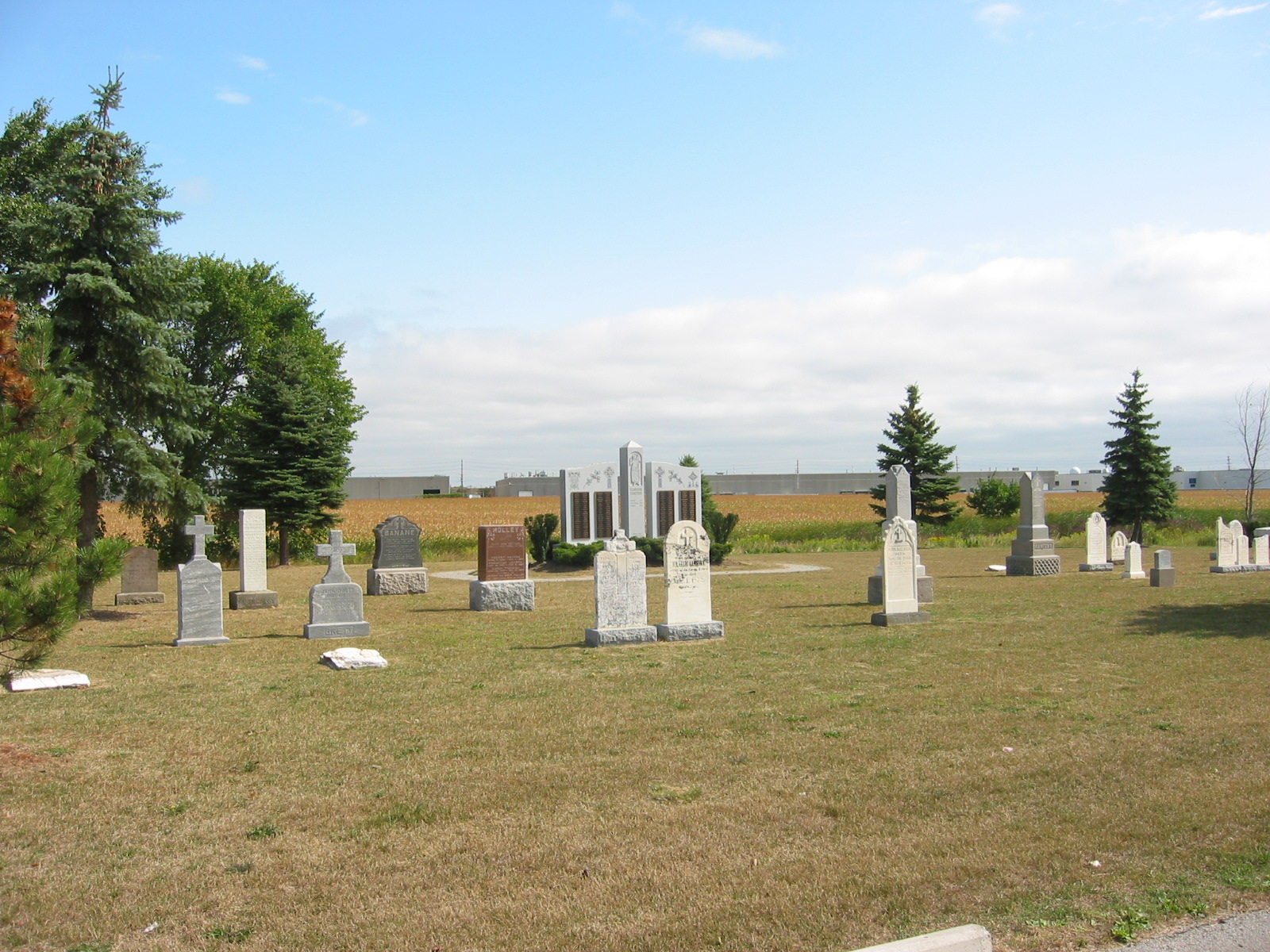
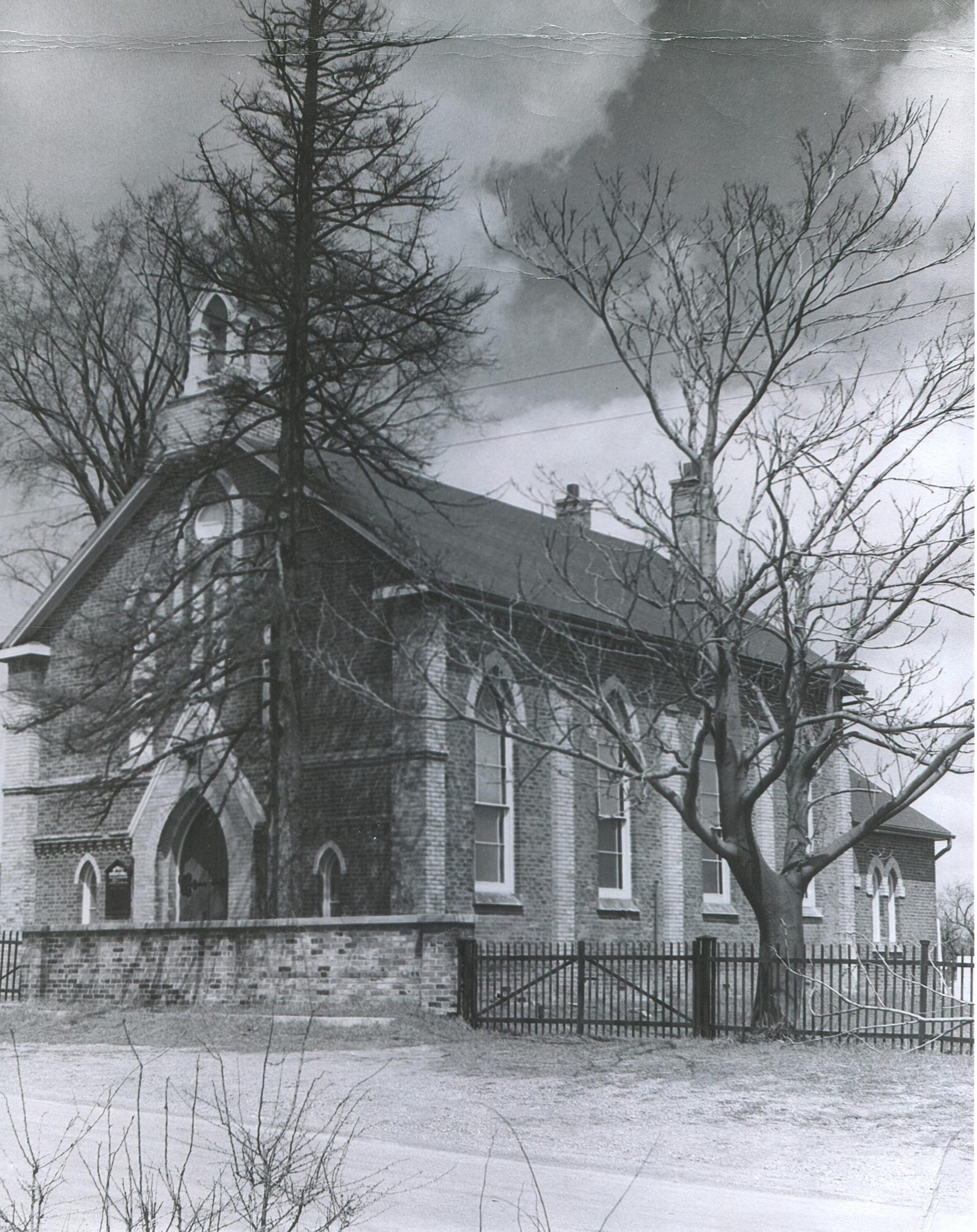
The Elmbank post office operated from April 1, 1873 and operated until July 1, 1915. However, Elmbank never acquired the more substantial industries such as mills, and as a result it remained a small rural hamlet. But what marked Elmbank as a centre of importance within Toronto Township was the Catholic Mission and Cemetery. Prior to the construction of St. Patrick’s Church in Dixie, St. Mary’s Star of the Sea in Port Credit and St. Joseph’s in Streetsville, Catholic parishioners from Toronto Township and beyond would travel to Elmbank for mass, baptism, marriage and burial. The little church, rectory and cemetery, located a slight distance North of the Britannia Road and Fifth Line intersection, was known by various names over its 100 years of existence – the Fifth Line Church, St. Bernard’s, St. Kevin’s and Church of the Sacred Heart. The missionary priest, Reverend Edward Gordon, who was based out of St. Paul’s Church in Toronto, led the Catholic Mission at Elmbank in its early years. Under the direction of Reverend Gordon, a small wooden church was constructed in 1833, the same year as the first recorded burial in the Catholic cemetery. This original log church was replaced in 1885 by a red brick church, which in turn was torn down in 1932. The cemetery grew to contain over 300 burials. For its first sixty years, the Elmbank Catholic Mission was vibrant with 400 people reported to attend mass regularly, with its parishioners coming from as far away as Port Credit, Bolton and Toronto.
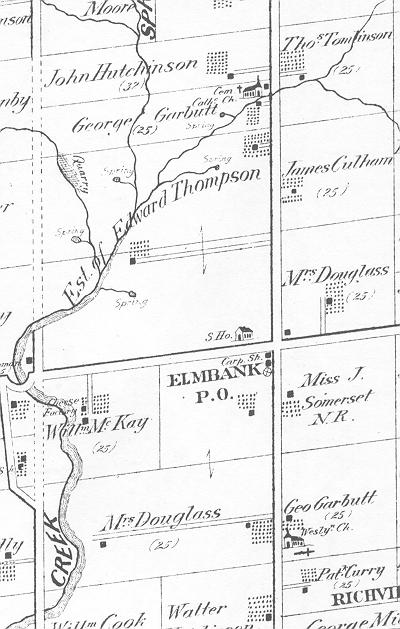
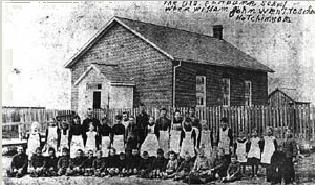
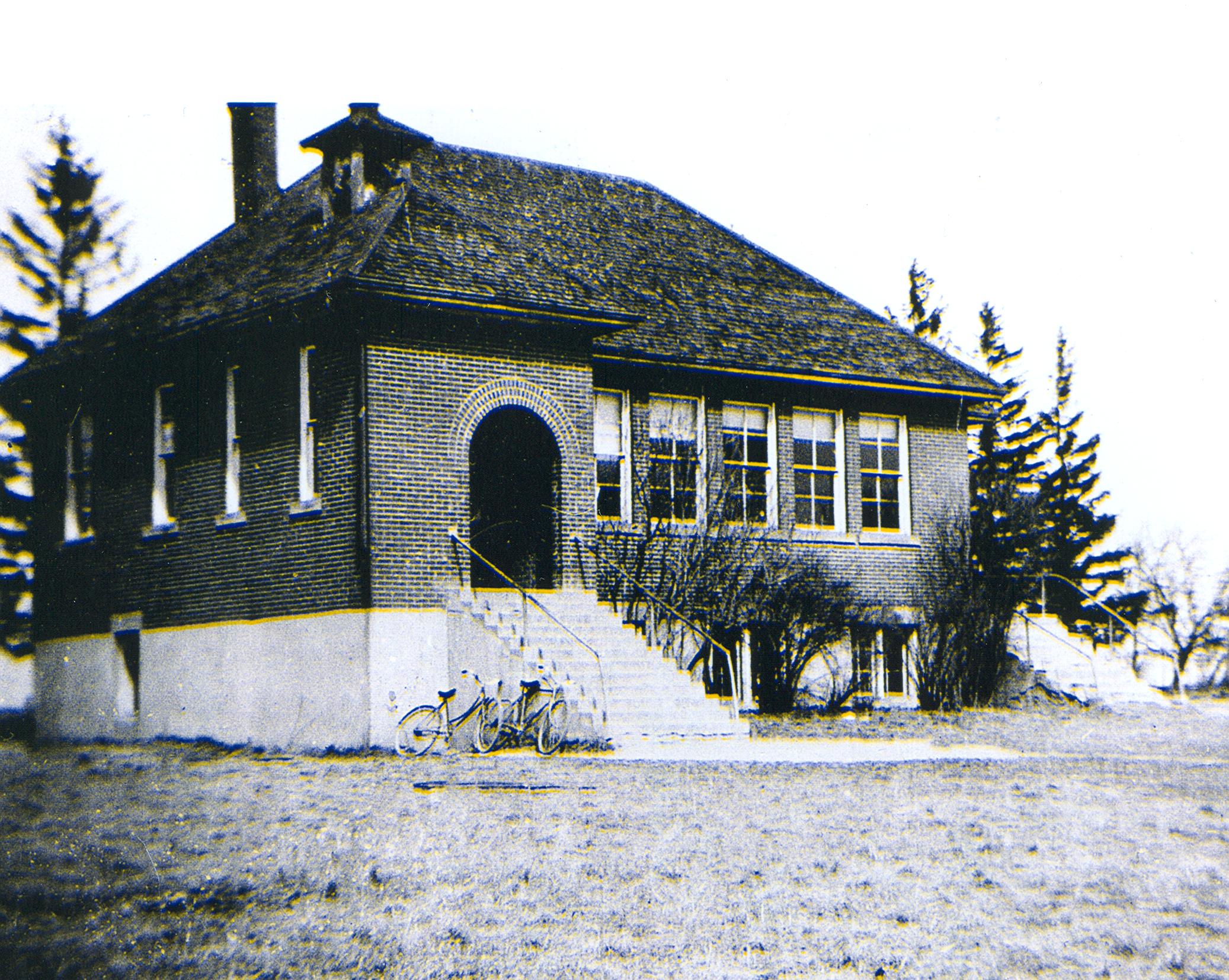
The hamlet of Elmbank also contained Robert Speers’ blacksmith shop, William MacKay’s store and a carriage factory on the Southwest corner of the intersection, an inn on the Northeast corner, while a little to the west on Britannia Road was a cheese factory on William MacKay’s property. There was also a schoolhouse on the Northwest side.
A short distance south on Fifth Line was the Bethany Wesleyan Methodist Church and Cemetery, The Bethany Church was originally built as Shell’s Chapel in 1831 and replaced with a brick structure around 1862. The final sermon was delivered by Reverend John J. Coulter of Islington in 1956 to its congregation. It was torn down in 1956 due to the diminishing congregation and airport expansion. The Methodist cemetery was relocated to the Riverside Cemetery in Toronto. Shell’s chapel was dedicated in 1824, was attended by Red. Egerton Ryerson, which diverted him 14 miles out of Toronto (during his missionary tour of Toronto). James Malcolm McKay was secretary-treasurer of the Cemetery board and his wife, Hilda, was superintendent of the Sunday School. James C. Aikens was also a superintendent of the Sunday School, he went on to become a lieutenant governor of Manitoba and a senator in Ottawa. Mrs. Lillian Garbutt was an organist. Edward Garbutt, George Garbutt, Edmund Garbutt, George Garbutt (II) and D.H. Garbutt were all trustees, also: Elwood Culham, Robert Dyer, Abraham Orth, John Hunt, Joseph Graham, James C. Aikens, John Aikens, William McKay, Daniel Garbutt, James Walker, Andrew Gregory, Thomas, Tomlinson, Walter Hutchinson, George Culham, Robert, Speer, H.E. Walker, Roy Hammerton, Percy Saunders, Frank Leuty, Fred Lawrence (amongst others).
The last vestiges of Elmbank began to disappear in the 1930s and 1950s with the expropriation of rural land and the expansion of the Malton Airport. For a time, the only reminder of Elmbank was the lonely Catholic cemetery isolated on the tarmac alongside a runway. In 2001 the cemetery was relocated to Assumption Cemetery in Mississauga, and with that all of the visible reminders of Elmbank are gone … or are they? If we look closely at a road map of the Airport grounds, was can find “Elmbank Road”, and many of the materials, stained glass windows, pews, and bricks from the Elmbank Catholic Church were reused in other neighbouring churches. So although every sign of the village, and even the crossroads itself, have disappeared, Elmbank continues to live on. There are also plans to rededicate the Elmbank Catholic Cemetery within the Assumption Cemetery grounds this fall. In an effort to stir a collective memory, we can look at the names from the historical maps that depict Elmbank help to lend a human face to this vanished village – names like Coulter, Culham, Curry, Garbutt, Irvin, McGuire, McKay and Speers, amongst many others. They are the names of people that have stories to tell and that deserve to be remembered even as the vestiges of their rural home have disappeared beneath the modern airport. Please share your stories and pictures of this vanished village with us and help to keep the memory of Elmbank alive.
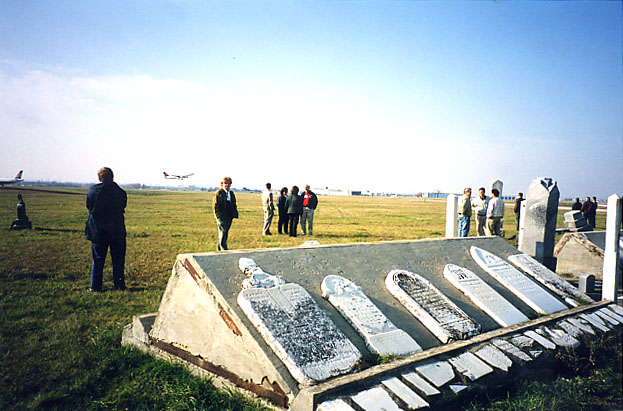
Elmbank Cemetery before relocation, c. 2000