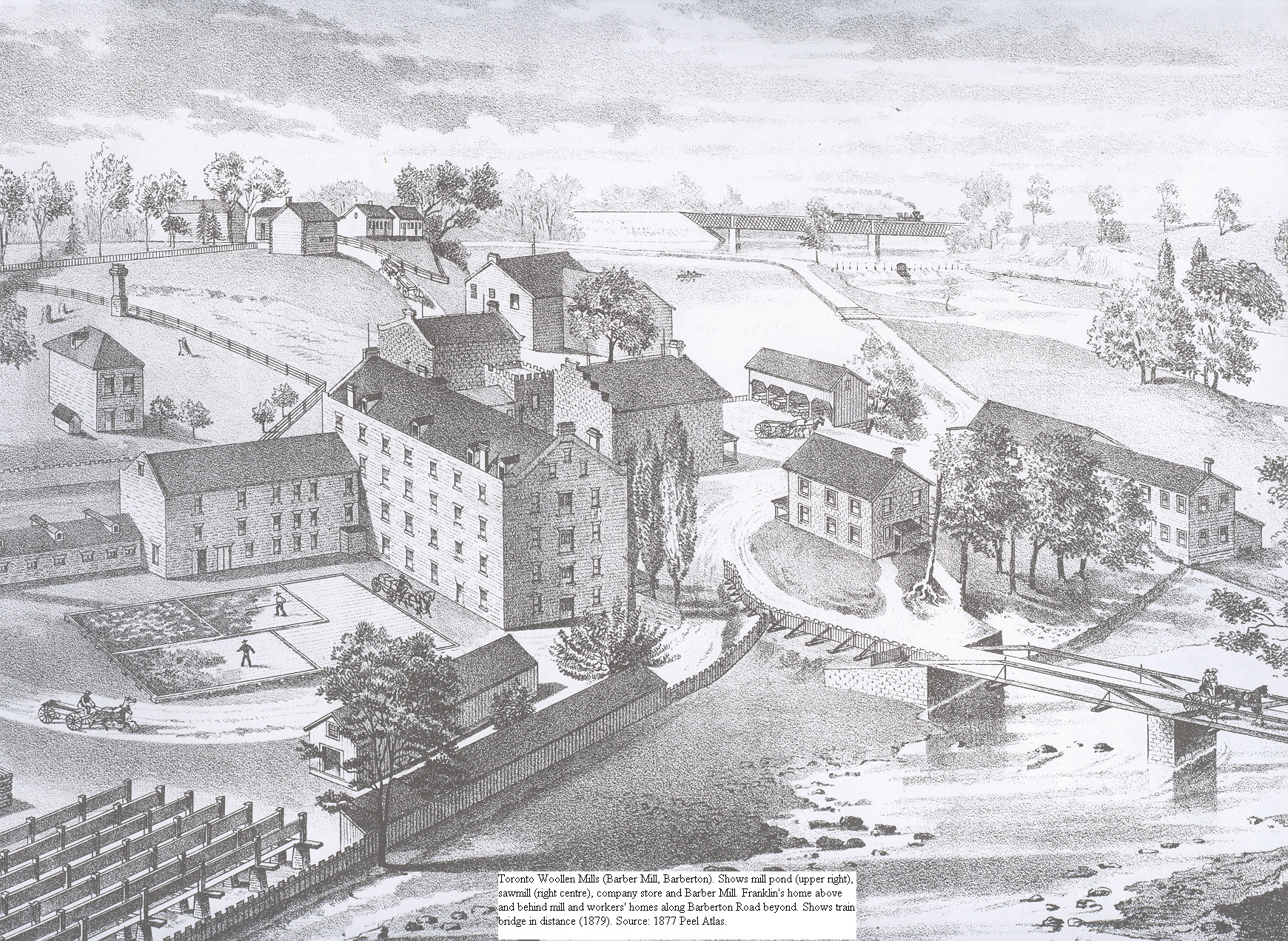
Toronto Woolen Mills, Streetsville, 1877 Peel Atlas
Indigenous peoples have inhabited this area for over 10,000 years. The archeological record gives us clues that hint at what early industries may have flourished prior to European contact. Tobacco, shells, copper and other luxury goods made their way into Southern Ontario by trade routes, which enhanced daily life and led to increased contact with other Indigenous peoples. In addition, the introduction of corn from Mexico, and later beans and squash, known as the “Three Sisters”, enabled the limited cultivation of domesticated crops. By the 1720s, the Mississaugas had followed the course of the Credit river to the shores of Lake Ontario and established a permanent presence here. The Mississaugas were renowned for their swift bark canoes and ability to swiftly carry information over long distances as messengers.
Trade between the Mississaugas and European settlers began in the 18th century when Europeans arrived and traded their goods on credit at the mouth of the Credit River to be repaid with furs the next spring. As the wave of early settlers continued throughout the 1800’s, premium land was in demand, specifically when located close to water. The Mississauga Purchase of 1805 opened up more land for cultivation, but the Mississaugas chose to retain control of one mile on either side of the Credit River. It was not until further treaties signed 1818-20, known as the Second Purchase, that early settlers began to have access to water enabling grist and lumber mills to be established; prior to this date, all local lumber had to be cut by hand.
By 1847 when the Mississaugas moved to the New Credit Reserve in Hagersville, near Brantford, water was more accessible and mills had become widespread. Since they supplied most of the early settler’s immediate needs, soon houses, stores, inns and blacksmiths began to be established around them and small villages emerged. Land was fertile and forest, game and fish were plentiful; new roads and communication links were required to allow for trade and the movement of goods. Construction of the major roads of Dundas and Hurontario, in addition to the government’s development of the Port Credit harbour in 1834, allowed grain and other goods to be traded. Hotels and lodgings also grew as farmers transported their crops for sale and stopped off overnight; breweries grew up to furnish taverns with liquor and another industry was born.
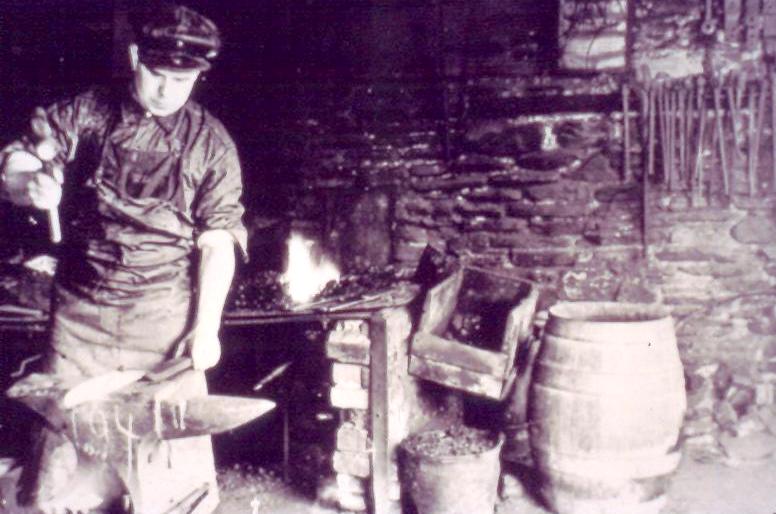
Blacksmith Robert Parton, Summerville
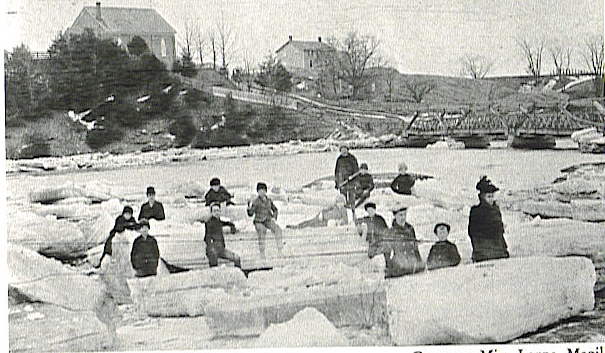
Ice Harvesting on the Credit
The railway boom in the 1850’s signaled a period of decline for the shipping industry as goods could now be transported by rail to Toronto for onward transmission to European ports. The local lumber industry also began to decline as the British Navy had already stripped the best trees for ships masts, and traders had to look further inland for supplies. After sawdust from the lumber mills had polluted the harbour and destroyed the salmon run, Port Credit then became known for stone hooking which reached its peak in 1881. By this time, other industries had also emerged: brickyards and potteries in Streetsville and Erindale; shingle making in Cooksville; a tannery near Dixie, in addition to a small dyeing and weaving industry and many grist, saw and woolen mills throughout the Township of Toronto (now Mississauga).
However while the mid-19th century was a period of growth, the latter years were one of recession. On a local level, a large fire was disastrous for Cooksville and Port Credit with many destroyed businesses which were never rebuilt. On a global level, the end of the Crimean War caused wheat prices to crash and as the Industrial Revolution forged ahead, the emergence of steam power over water enabled the City of Toronto to thrive when it had previously been restricted due to a lack of water powered mills. The final nail was hammered into the industrial “coffin” when Gooderham & Worts, a large employer in the town, moved their business empire to Toronto in 1882. This was particularly significant since society had begun to move away from a private sphere of working the land and staying within the family unit, to a more public one of seeking paid employment outside of the home. It has been said that the long shadow of Toronto was felt by the township and local villages up to the 1950’s when industry began to be lured back to the local area by tax incentives although for a while, their workforce commuted daily, earning Toronto Township the nickname of “Cinderella Township”.
Today the city is thriving once again, educational standards are high and jobs are plentiful with the head offices of many Fortune 500 companies located within the city. Mississauga has one of the largest multicultural populations in the world. People no longer commute, arts, culture and heritage thrive and property is much in demand. The City is no longer a small collection of villages with a precarious economy, its potential for growth is strong and its future is bright. Mississauga is no longer seen as Cinderella between its two ugly sisters, but has come of age and stepped out onto the world’s stage as a leading economic powerhouse in her own right.


