Contrary to older cities like Toronto and Hamilton which have evolved over time, Mississauga has been purposely planned largely influenced by City Council, urban planners and property developers. While it is true to say that the City is constantly evolving, the critical planning and “place-shaping” period was obviously in the late 1960’s and 1970’s at the beginning of development. It was visionaries like McLaughlin, Hancock, Shipp and Kaneff that saw the dream, and leaders like McCallion, Speck and Fix who provided the impetus for change. Lucrative tax incentives attracted business leaders who provided jobs, housing and infrastructure that transformed Mississauga from a bedroom community into the destination city that it is today.
Square One
Acknowledged as the Father of the City of Mississauga, builder of Square One Shopping Centre and constructor of the Mississauga City Core, S. Bruce McLauglin (1926-2012) had a vision. He was a visionary with compassion for his fellow man. In the late 1950s McLaughlin believed that an empty field at the corner of Highway 10 and Burnhamthorpe Road was the perfect spot to create a brand new city – “a shining example of how planning, public and private-sector partnerships, a little futuristic thinking and lots of hard work, could turn Toronto Township – then a collection of disparate communities – into a mega-metropolis, a utopian urban landscape” (Rick Drennan, Mississauga News, 10 Oct. 2014).
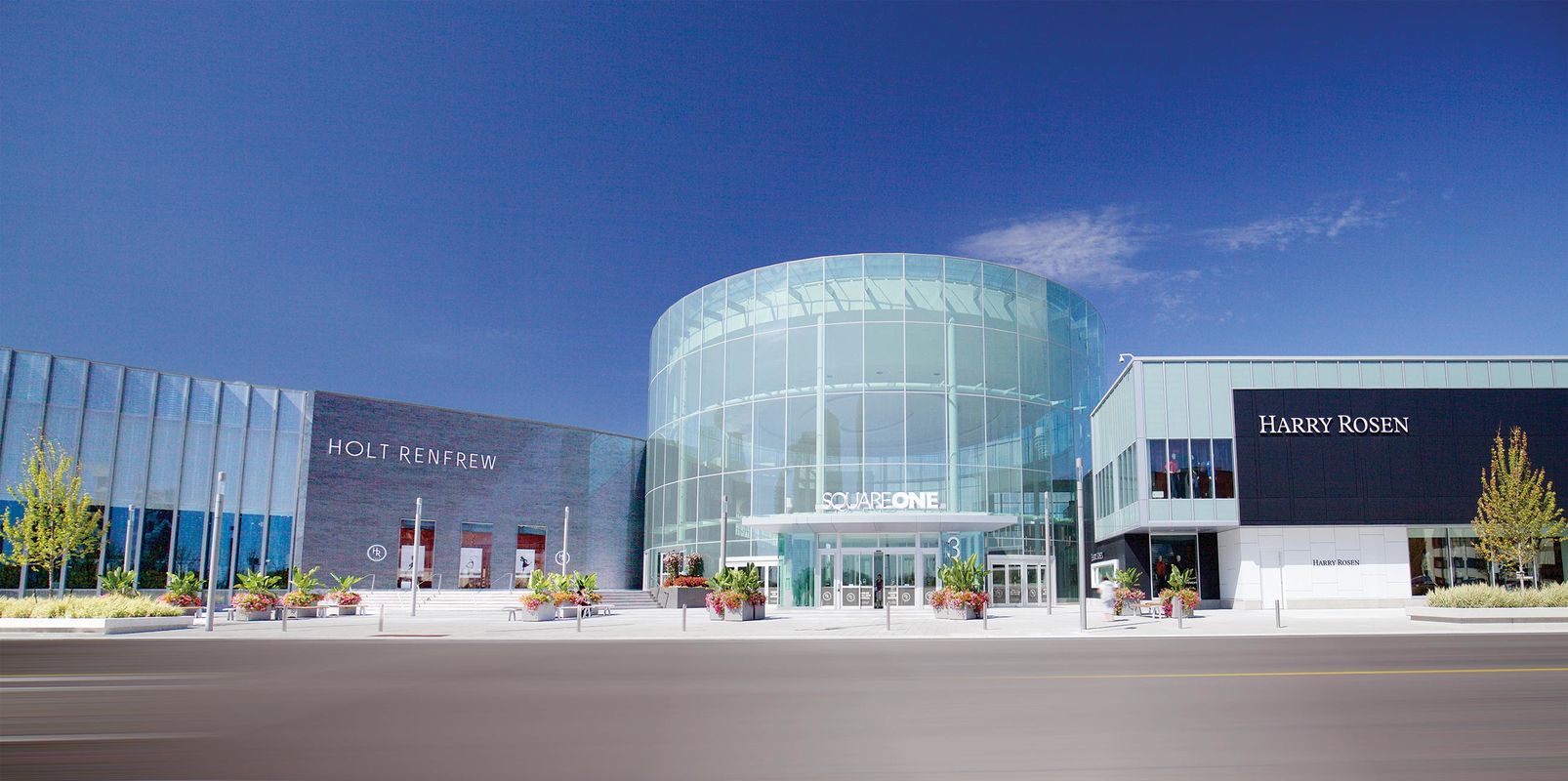
In 1969 Bruce McLaughlin, one of the biggest visionaries for Mississauga began building the Square One Shopping Centre. McLaughlin had large land holdings around the intersection of Burnhamthorpe Road and Hurontario Street which led to this being the chosen location for the shopping centre. The mall was completed in 1973 and Mississauga officially became incorporated as a city in 1974.
Mayor Hazel McCallion took leadership as mayor in 1978. Interestingly many people believed that Hurontario and Dundas Streets would become the downtown Mississauga core. This would have been likely, but a fire had destroyed the city hall in that location and Bruce McLaughlin, being the smart businessman that he was encouraged the city to relocate the construction of the new City Hall to Square One. He even provided the land for free. This officially cemented Square One as the new downtown Mississauga location. Complimenting the ever-modern approach of the city, the service and utility construction was placed underground, beneath the Square One region which was not common practice at the time. Bruce had explained that this was so future high-rises, and high-density buildings could populate the area. It’s this combination of ingenious forward thinking that allowed downtown Mississauga to blossom into what it is today at such an extraordinary pace.
Square One became a magnet for shoppers and a city landmark. City Hall was built next door. Corporations fell into line, moving into the gleaming new office towers on City Centre Dr. But it isn’t exactly how McLaughlin envisioned it. He wanted tighter streets, and walkways over Burnhamthorpe Road and he wanted to create the leafy feel of a city core.
McLaughlin did build the Mississauga Valley housing development in the early 1970s. On farmland with a few scattered houses, McLaughlin built a neighbourhood that seems inspired by Hancock’s vision with a circular boulevard and a linked system of parks that run throughout the development.
Over the years as the downtown Mississauga area gained popularity and as condo living entered the real estate space, a surge in Square One condos began and businesses started migrating to the area.
From 160 original stores, the mall is now the largest in Ontario covering 2.2 million square feet. Over 320 retailers offering shopping, dining, entertainment and other services, are managed by Oxford Properties. In keeping with current trends, there has been a recent move away from just shopping and towards providing a total experience; Square One now promotes itself as a “lifestyle destination” where the whole family can spend time together and be entertained as they shop. It is now recognized as one of the top 10 malls in Canada and is an officially designated tourist destination.
Read More:
A Look Back at Square One 40 Years Ago
Meadowvale New Town
Macklin Leslie Hancock (1925-2010), the son of Leslie and Dorothy Hancock, was born in Nanking, China. He settled in Cooksville, Ontario and was the man who revolutionized urban planning in the second half of the 20th century. Only in his twenties he made his mark by designing the ‘new town’ of Don Mills between 1952 and 1956. The former World War II fighter pilot had just graduated from the Harvard School of Design when he got the assignment. In 1956 Hancock formed his own company, Project Planning Associates Limited, Toronto. He was president for 43 years, and was involved in the planning and construction of Ontario Place and the Canadian Pavilion at Expo 67. Hancock and his team also created the master plan and the main campus design for the University of Guelph in addition to many other projects across the globe.
Hancock would eventually design two major towns in Mississauga in the 1970s: Meadowvale and Erin Mills.
“Meadowvale was ‘the’ place when we designed it,” says Macklin Hancock. “People came from Australia and around the world to see it. It was the cat’s meow.” He helped build modern-day Mississauga. The Meadowvale development took up 11,000 acres of fields and was designed to house 70,000 people. Macklin Hancock designed Lake Aquitaine as a recreation area which cost $2 million when it was created.
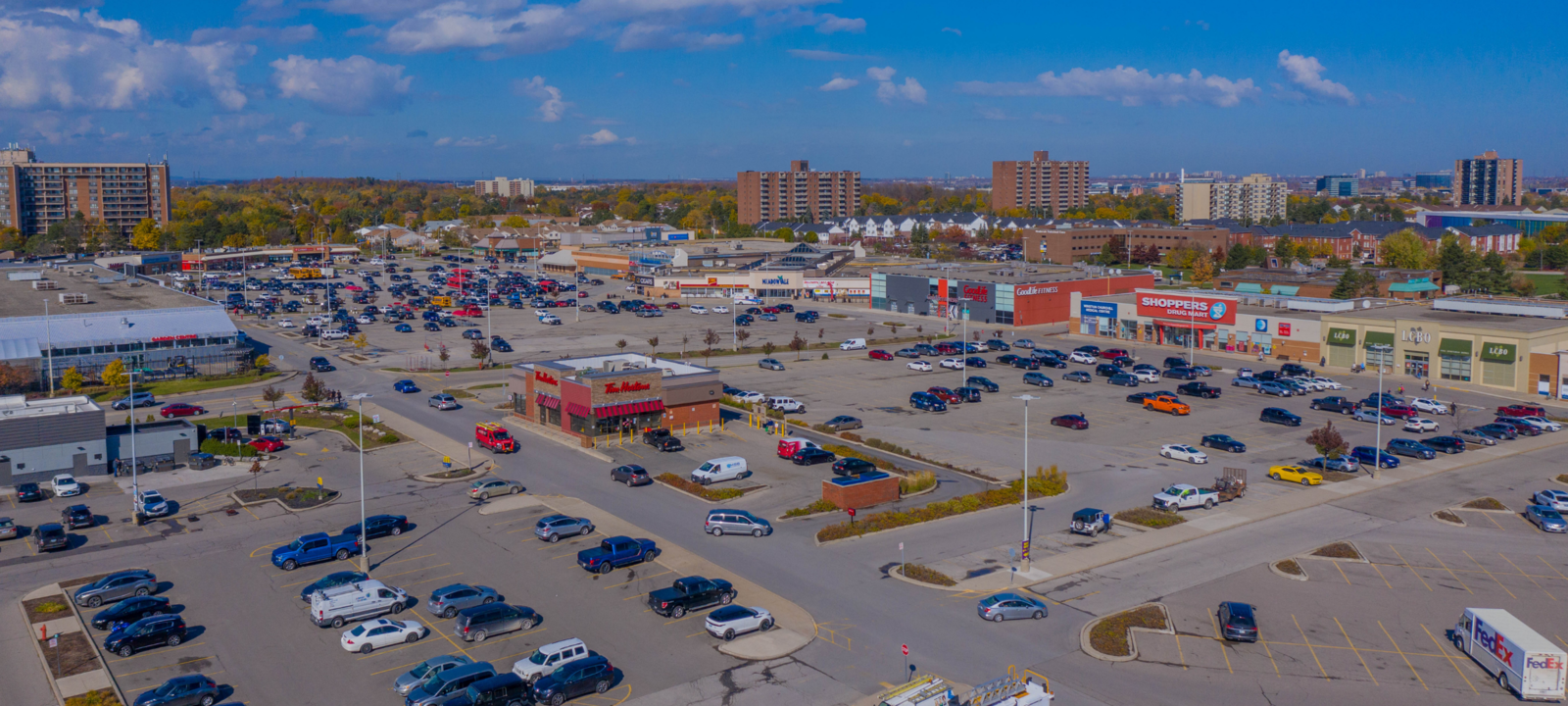
Meadowvale Town Centre, located at 6677 Meadowvale Town Centre Circle on 40 acres, opened on 25 January 1978. This deluxe shopping mall was built by Markborough Properties, the company that built Meadowvale West, where the Town Centre is located, South and North subdivisions. There were 21 stores in the indoor mall, which included the largest Dominion Supermarket in Canada. On the first anniversary a three-dimensional 40-foot clock tower was unveiled in January 1979.
Phase two took place in 1980 when the Centre was expanded to 51 stores, clothing outlets, a bakery, Woolco, an Appleby’s Restaurant and Fast Food Court. This section was opened in 1980. The next redevelopment took place in 2002 and the existing mall was converted into a dominate retail centre that boasted 387,000 square feet. In December 2003, the Town Centre was acquired by First Capital (Meadowvale) Corp. Today Meadowvale Town Centre is home to 88 stores and almost 400,000 square feet of retail space.
Hancock was a visionary, raised with a love of horticulture and the environment. He dedicated his life to living with beauty in an urban setting. The Macklin L. Hancock/Project Planning Associates Collection, consisting of over 100 project files, is housed at the University of Guelph Library Archives.
Erin Mills Town Centre
Another of Hancock’s successes was the Erin Mills Town Centre. Along with Meadowvale, these “new towns” were designed to encompass everything a family could want. Each comprised of houses, schools, churches, employment, parks and recreation areas all designed for people to interact and form strong community bonds. The centre of the Erin Mills community was the shopping centre with a communal area at its heart.
Erin Mills Town Centre was built on a land that had been accumulated by E. P. Taylor’s “Don Mills Developments” in 1954. The mall opened in 1989 and was owned and managed by Cadillac Fairview until it was purchased by the Ontario Pension Board in 2010. Excavation for the mall was started in 1987, and completed in 1989; it was famous for the large clock tower which was visible from every aspect. It now has 185 stores plus a large Food Court and parking for more than 4,500 cars.
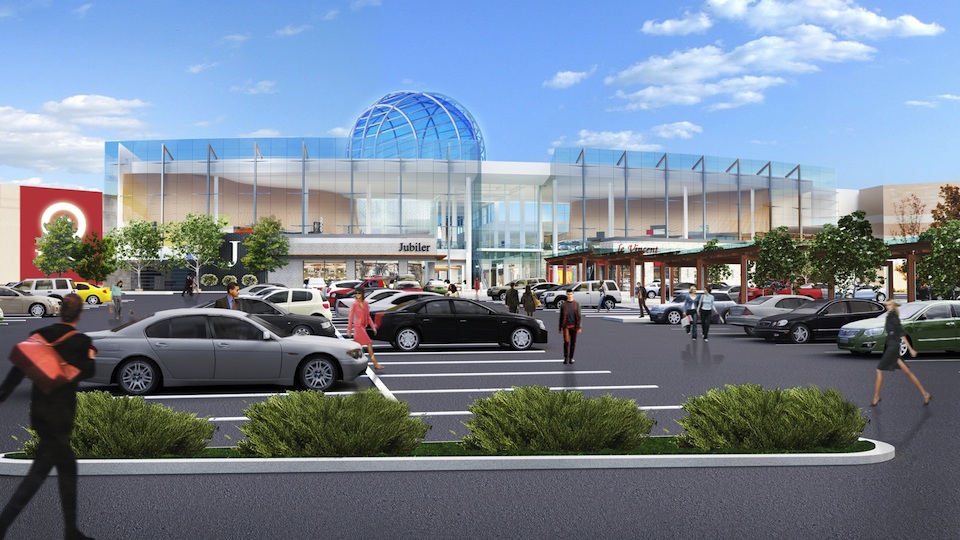
Over the years the Centre has fostered a strong sense of community, always open to holding community programs and events. The recent redevelopment costing $100 million, has transformed the shopping centre into an exciting new architectural landmark in Mississauga. A spectacular new architectural Sphere has been added to float over Centre Court and allow natural light to flood into the shopping centre. The Sphere is 283 ft in circumference and its double curved glass construction is one of its kind in the world. The new Centre Court and sparkling infinity fountain are the ultimate place to meet and greet!
Read More:
EMTC Newsletter Article Oct 2014
The Shipp Corporation
By the early 1950s, Gordon Shipp and his son Harold eyed up building a new upscale neighbourhood west of Dixie Road and south of the QEW. The Toronto-based Shipp Corporation cut its teeth building houses in Toronto, but when they paid $40,000 for 23 acres in Toronto Township in January 1951, a lot of people thought they were crazy. Who would ever want to live west of Dixie Rd? As it turned out, quite a few. The tract was not zoned, raw agricultural land that had been planted in apple orchards, and Harold Shipp, the recently deceased chairman and CEO of Shipp Corporation Ltd., said getting it rezoned “took an ungodly amount of time!” It was two months before Toronto Township rezoned the land for residential. Harold Shipp remembered hand-carrying plans into the township’s one-man planning department before noon to get building permits inked that afternoon. Now it commonly takes a year to get a permit.
When the Shipps built on the north side of the QEW in the spring of 1952, they set up what seemed like a carnival with a PA system, a big tent and 10 of their own salespeople. It paid off: they sold an unheard of 126 homes in ten days, and over 800 in all.
The Shipps built 853 houses in Applewood Acres, and went on to build houses, apartments and commercial buildings throughout the city. The company even begat another: Kaneff Corp., another great Mississauga builder.
The great builders probably never envisioned Mississauga becoming Canada’s sixth largest city. But the post-war housing shortage made it pre-ordained for growth, allowing men like Hancock, McLaughlin, the Shipps, and Kaneff to come along with the bricks and mortar.
Many might not even know them anymore, but they are a part of Mississauga’s DNA and their legacy will live on for years to come.
Additional articles courtesy of the Mississauga Library System:
Father & Son Town’s Early Builders (Mississauga News April 24, 1968)
Shipp Announces Major Commercial Development (Mississauga News, Dec 21 1977)
Applewood Landmark (Mississauga News March 22, 1978)
A Double Celebration (Mississauga Business Times March 22, 1978)
Work Begins on Big Shipp Centre (Mississauga Times August 23, 1978)
Shipp Breaks Ground on $20 million Building (Mississauga News August 23, 1978)
Gordon Shipp 89, Dies (Mississauga Business Times February 11, 1981)
Unique Award to Shipp Founder (Mississauga News Jan 27, 1988)
Kaneff
Ignat (Iggy) Kaneff was a young Bulgarian immigrant the Shipps hired to work on Applewood Acres not long after he arrived in Mississauga in 1951. After building his own house, Kaneff mortgaged it to buy two more lots and built houses on them. This was the beginning of the Kaneff Group of Companies. By 1957, Kaneff was managing his growing development company. He built his first apartment building in Mississauga in 1957 and his projects have ranged from subdivisions like Huron Heights to plazas and office buildings.
According to Mayor Bonnie Crombie, “Iggy Kaneff helped plant the seeds that would see Mississauga grow from farm fields and fruit trees into the vibrant, prosperous, and thriving place we now call home”.
During a slump in the building industry during the 1980s, Kaneff built his first golf course on land he had bought earlier for future development and now owns some of the most prestigious courses in Southern Ontario.
Mr. Kaneff and his wife “Didi” are great believers in giving back to the community and in addition to various philanthropic gifts both in Canada and abroad, they set up the I. Kaneff Charitable Foundation in 1986.
Read More:
https://en.wikipedia.org/wiki/Ignat_Kaneff
Iggy Kaneff Builder & Philanthropist (Mississauga News Jan 25, 2017)
http://www.kaneffgolf.com/about-us/