Legend of the Council Fire
By the 1790s, the British Crown recognized that the Mississaugas controlled a large amount of land at the western end of Lake Ontario, and entered into a series of negotiations to acquire the “Mississauga Tract” for settlement. At the end of July of 1805 Crown representatives met with the principal chiefs of the Mississauga near the mouth of Credit River. Prior to these negotiations, the Mississaugas called for a Council Fire gathering to choose a course of action...
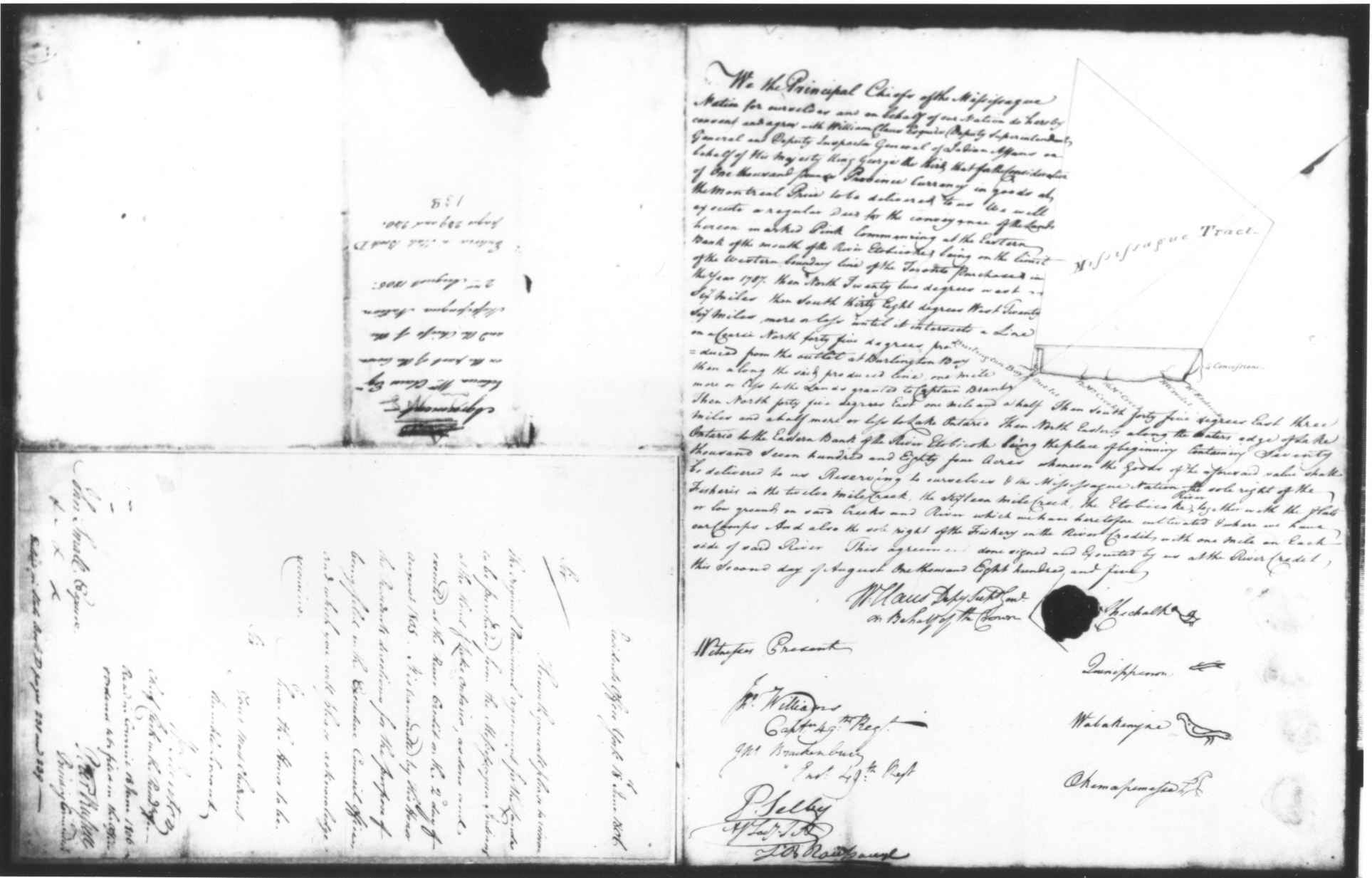
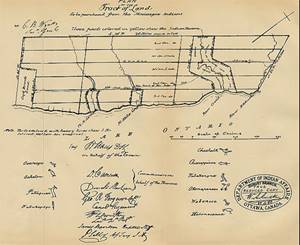
At the end of July of 1805 representatives of the British Crown met with the principal chiefs of the Mississauga near the mouth of Credit River. The Crown and the Mississaugas signed two treaties during this negotiation. On August 1, 1805, Treaty 13 was agreed upon, which clarified an earlier treaty from 1787 and involved land east of the Etobicoke Creek. The following day, on August 2, 1805, Provisional Agreement 13-A was signed. Referred to as the “First Purchase” or the “Mississauga Purchase”, this agreement involved 70,784 acres of land, involving all lands from the Etobicoke Creek to Burlington Bay to an approximate depth of 6 miles from the shoreline. The southern part of the City of Mississauga, from Lake Ontario to Eglinton Avenue, is located within this area. This agreement was ratified with the signing of Treaty 14 on September 5, 1806, also known as the “Head of the Lake Purchase”.
Provisional Agreement 13-A was signed by William Claus, Esq., Deputy Superintendent General of Indian Affairs on behalf of the Crown, together with Mississauga Chiefs Chechalk, Quenippenon, Wabukanyne and Okemapenesse. In this agreement, the Mississaugas reserved rights to the fisheries in the Twelve Mile Creek, Sixteen Mile Creek and the Etobicoke Creek, and sole right to the fishery in the River Credit along with one mile each side of the river. This area became known as the Credit Indian Reserve.
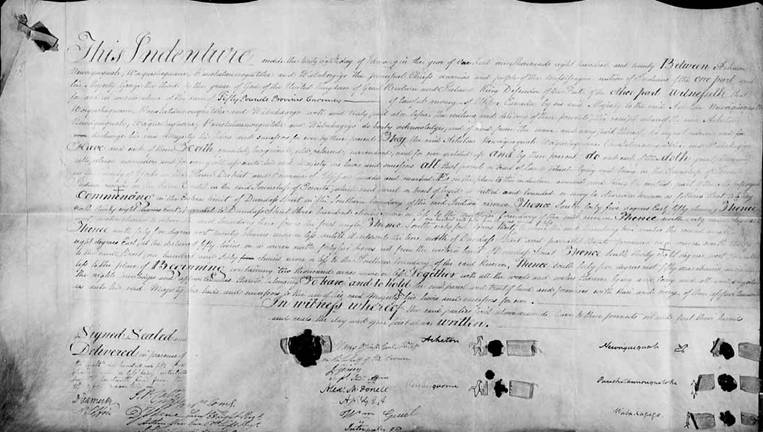
The “Head of the Lake Purchase”, or Treaty 14, was signed William Claus on behalf of The Crown, and Mississauga Chiefs Chechalk, Quenepenon, Wabukanyne, Okemapenesse, Wabenose, Kebonecence, Osenego, Acheton, Pataquan and Wabakagego. Treaty 14 reaffirmed the importance of the fisheries at Twelve Mile Creek, Sixteen Mile Creek, Etobicoke Creek and the Credit River to the Mississaugas’ way of life.
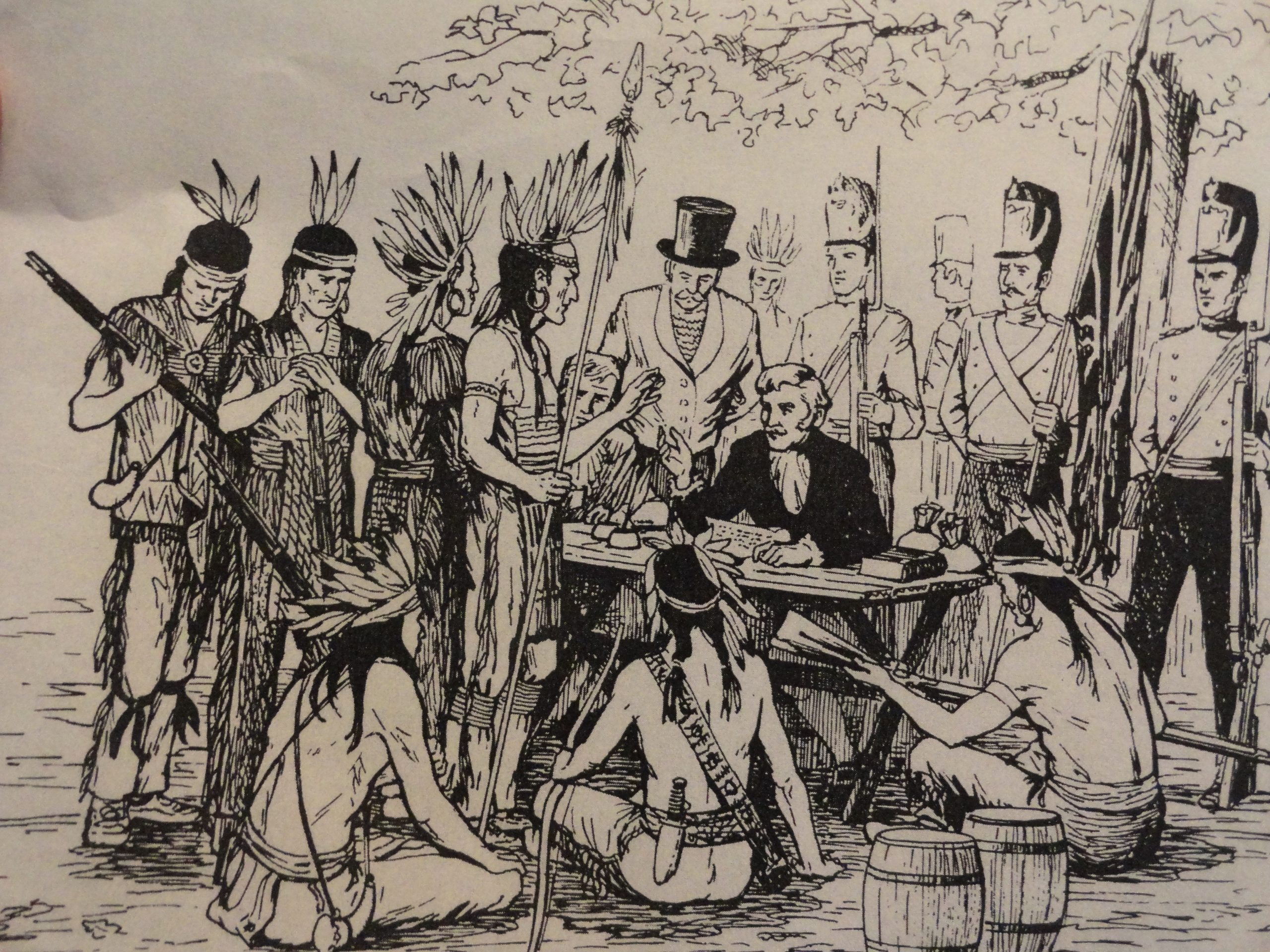
Depiction of a Treaty Signing, by C.W. Jefferys, c1920
On October 28, 1818 the Crown and the Mississaugas, signed Treaty 19, also known as the “Ajetance Treaty”, which involved 648,000 acres of land (all lands north of modern Eglinton Avenue). Treaty 19 was signed by William Claus, Deputy Superintendent General of Indian Affairs on behalf of the Crown and the principal chiefs of the Mississaugas: Adjutant (Ajetance), Weggishgomin, Cabibonike, Pagitaniquatoibe and Kawahkitahaquibe.
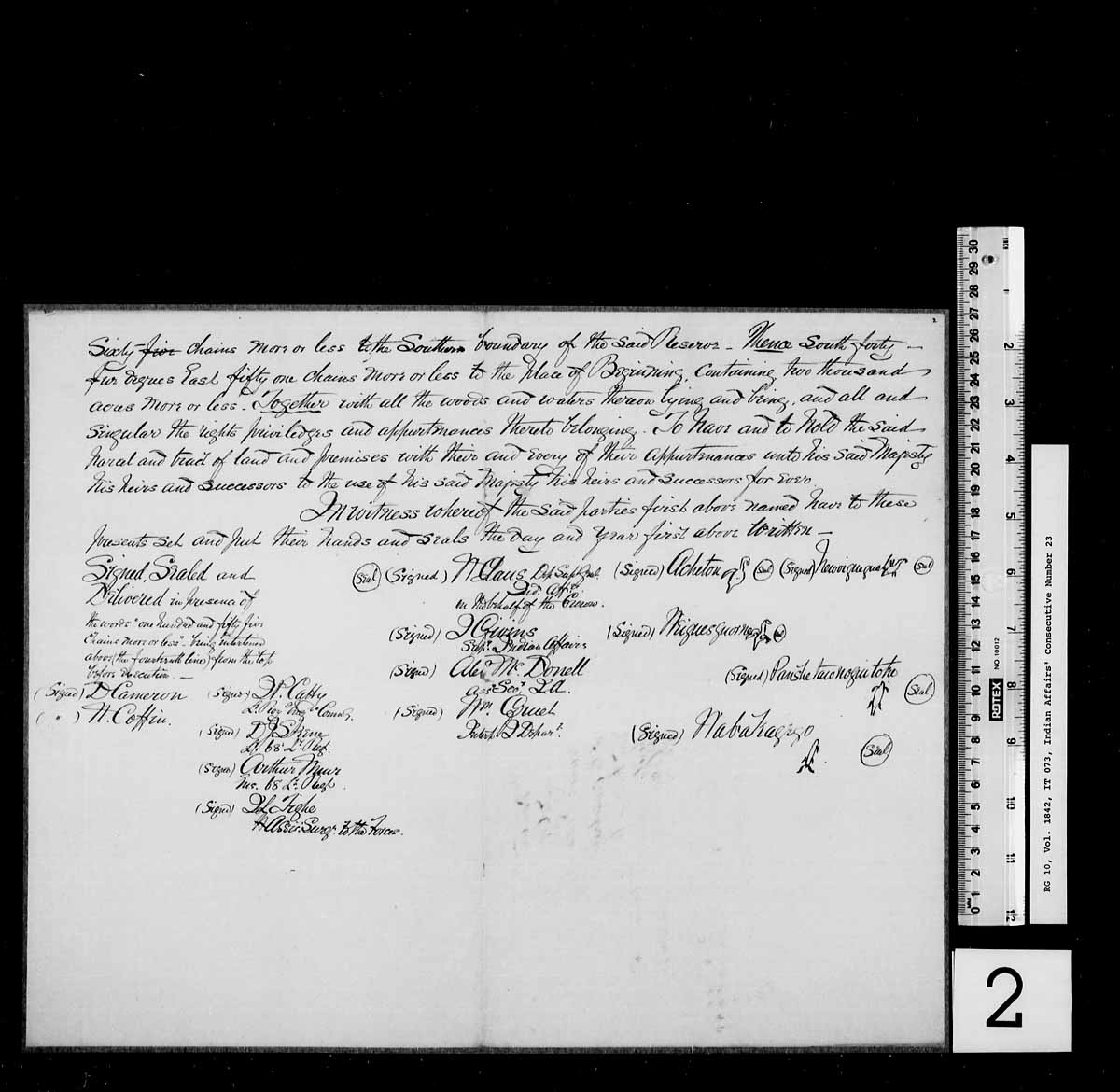
On February 28, 1820 Treaties 22 and 23, referred to as the “Credit Treaties”, were signed and the Crown acquired the reserve lands, which had been set aside in the 1805 agreement. According to the terms of Treaty 22, the Mississaugas acquiesced to the Crown’s demand for lands at 12- and 16-Mile Creeks along with northern and southern portions of the Credit River Reserve.
Treaty 23, negotiated later the same day, involved the central portion of the Credit River Reserve, along with its woods and waters. Treaties 22 and 23 were signed, once again, by William Claus, Deputy Superintendent General of Indian Affairs on behalf of The Crown, along with Mississauga Chiefs Acheton (Adjutant, Ajetance, “Captain Jim”), Woiqueshequome (Weggishgomin, Okemapenesse, “John Cameron”), Novoiquequah, Paushetaunonquitohe and Wabakagego. The Credit Indian Reserve at the Credit River were retained in trust by The Crown until March of 1846 when the lands were surveyed and put up for auction.