Toy Soldiers
Toy soldiers have long been a beloved childhood toy since ancient times. The first soldiers were made of wood, then metals, such as lead. Children could paint and customize their toys. After WWII, cheaper plastics began to dominate the markets and the earlier metal soldiers fell out of fashion.
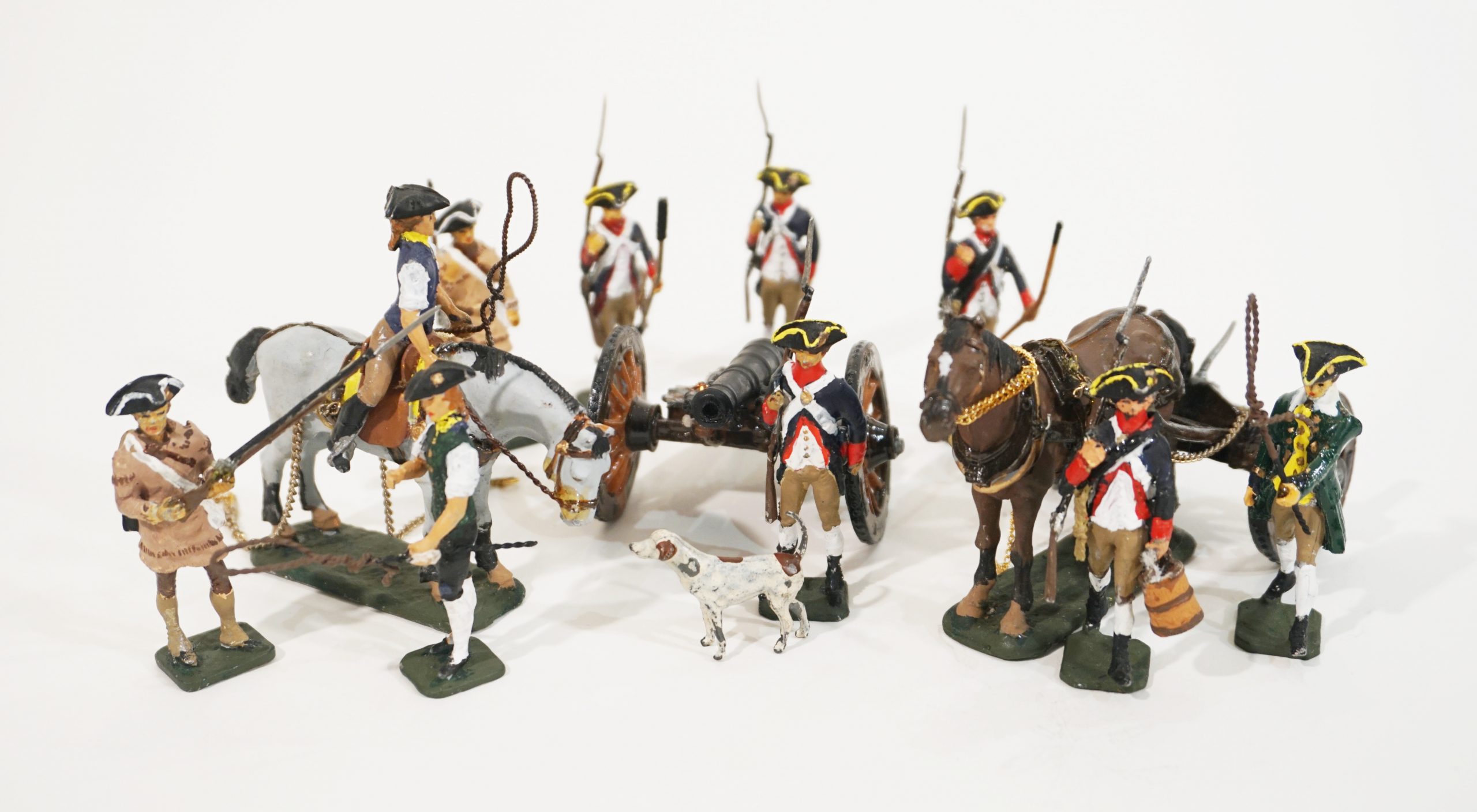
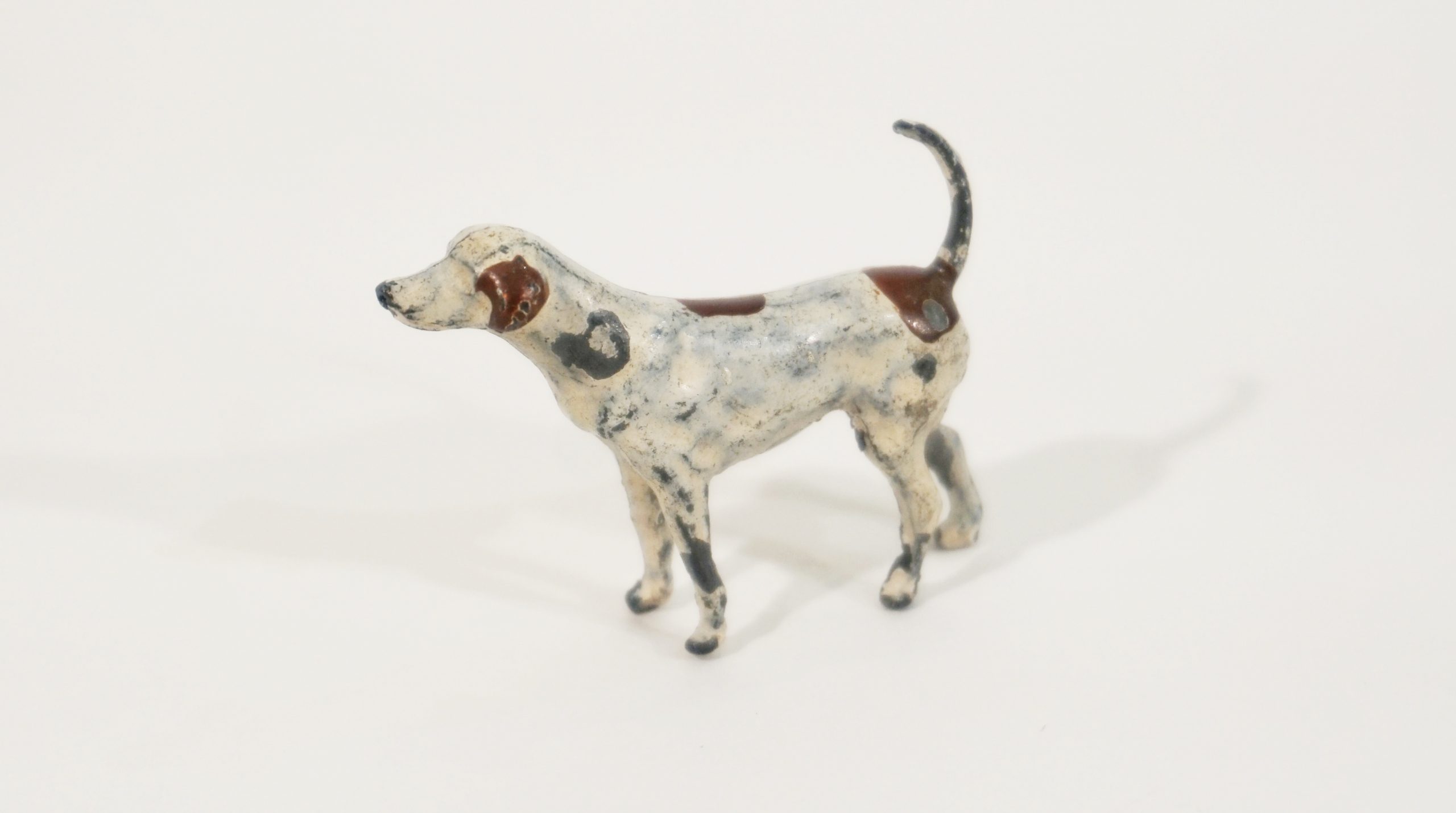
Toy soldier set painted by Ed Wigley
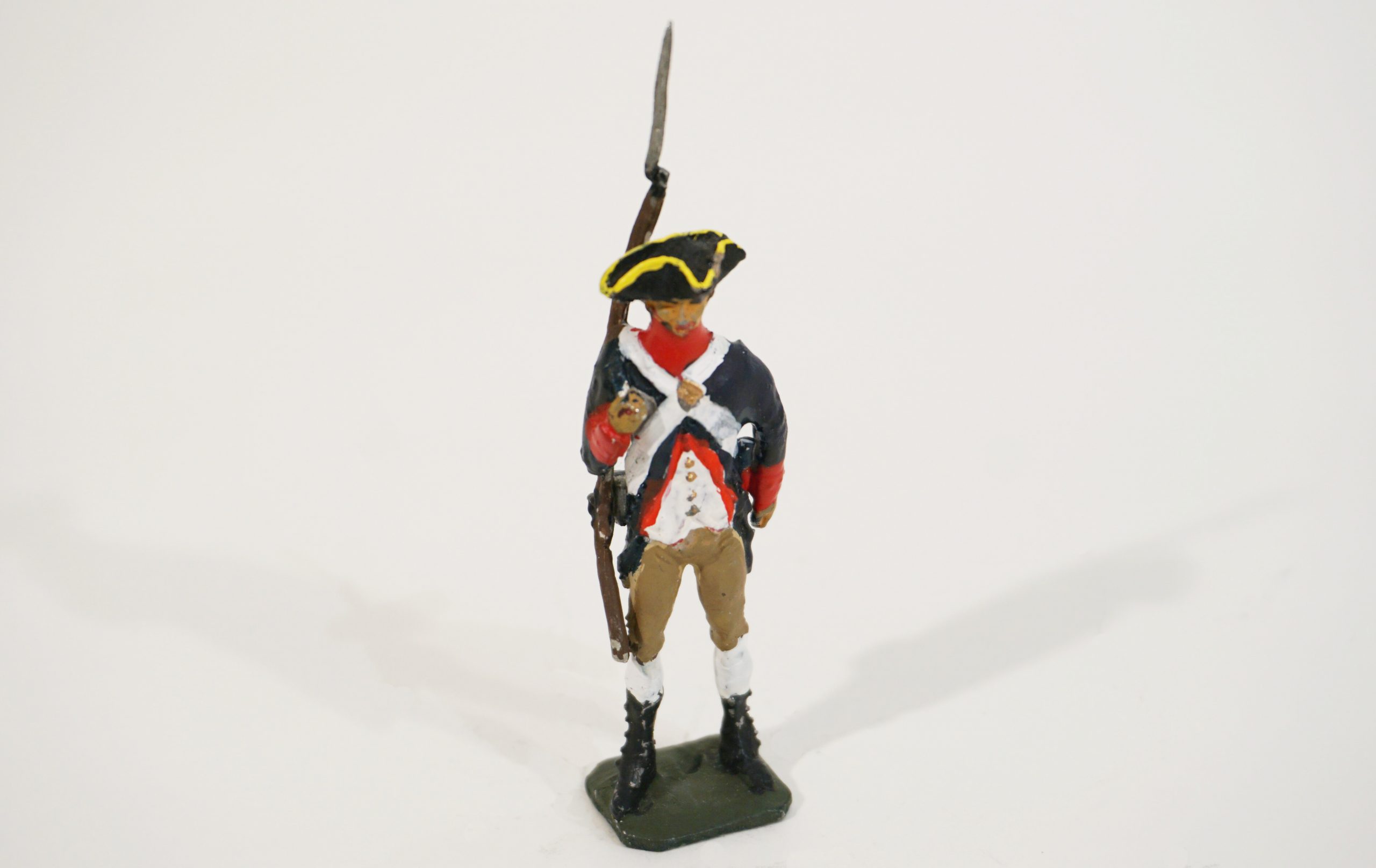
This set of toy soldiers was lovingly painted by Ed Wigley, a long-time resident of Lakeview whose lifelong hobby was painting toy soldiers and figurines. During the Second World War, Ed worked at Small Arms Limited. He also met a fellow worker at the plant, Linda, who later became his wife.
Full Steam Ahead!
This prewar Lionel Electric Model Train Set from the 1930s is a prime example of the Lionel Train manufacturer, founded in 1900. The “O Gauge” model was introduced in the 1930s to replace the more expensive standard gauge, which was discontinued in 1939. This train set was owned by William (Bill) Carr of Cooksville.
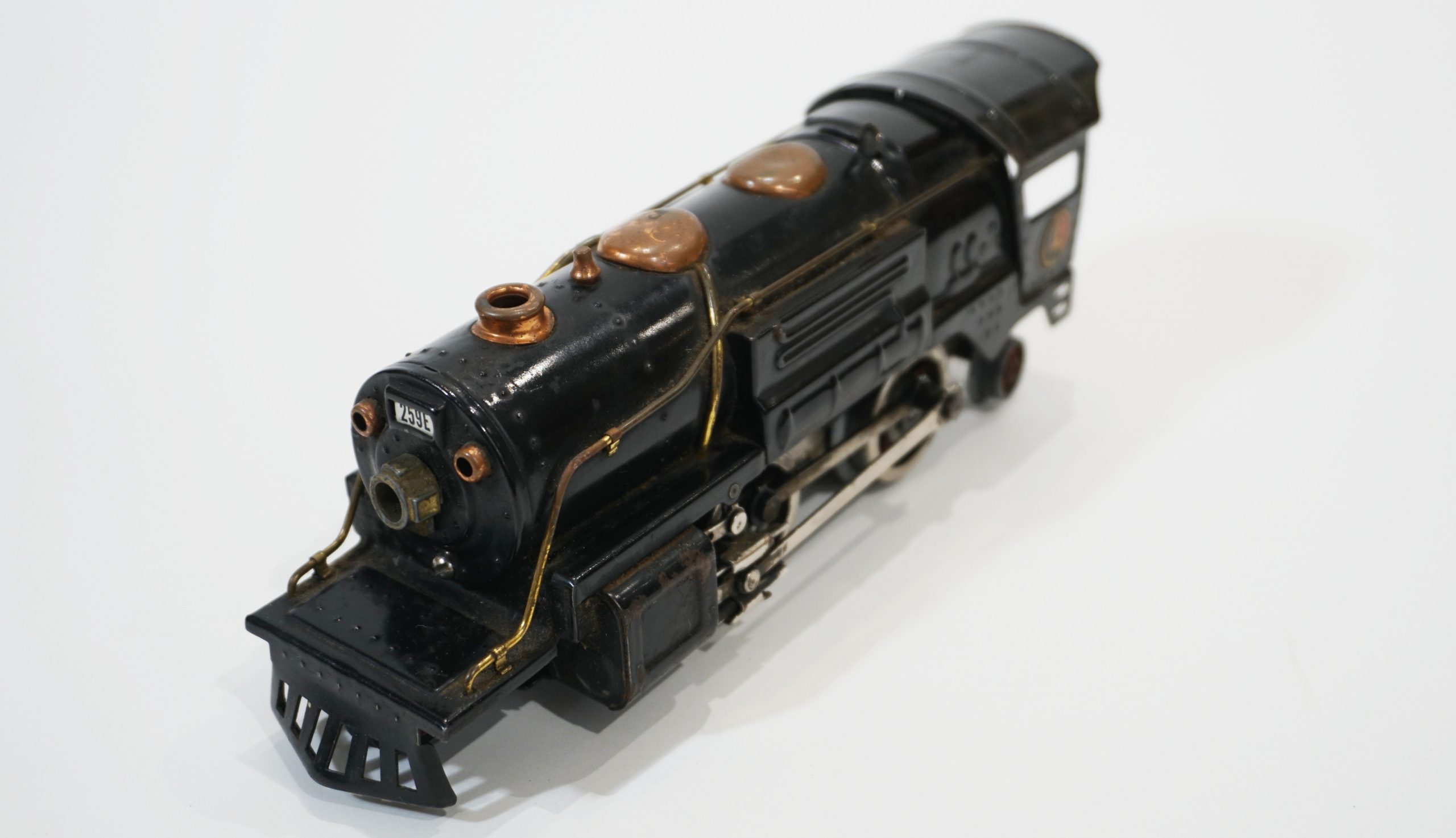
Lionel "O Guage" Train
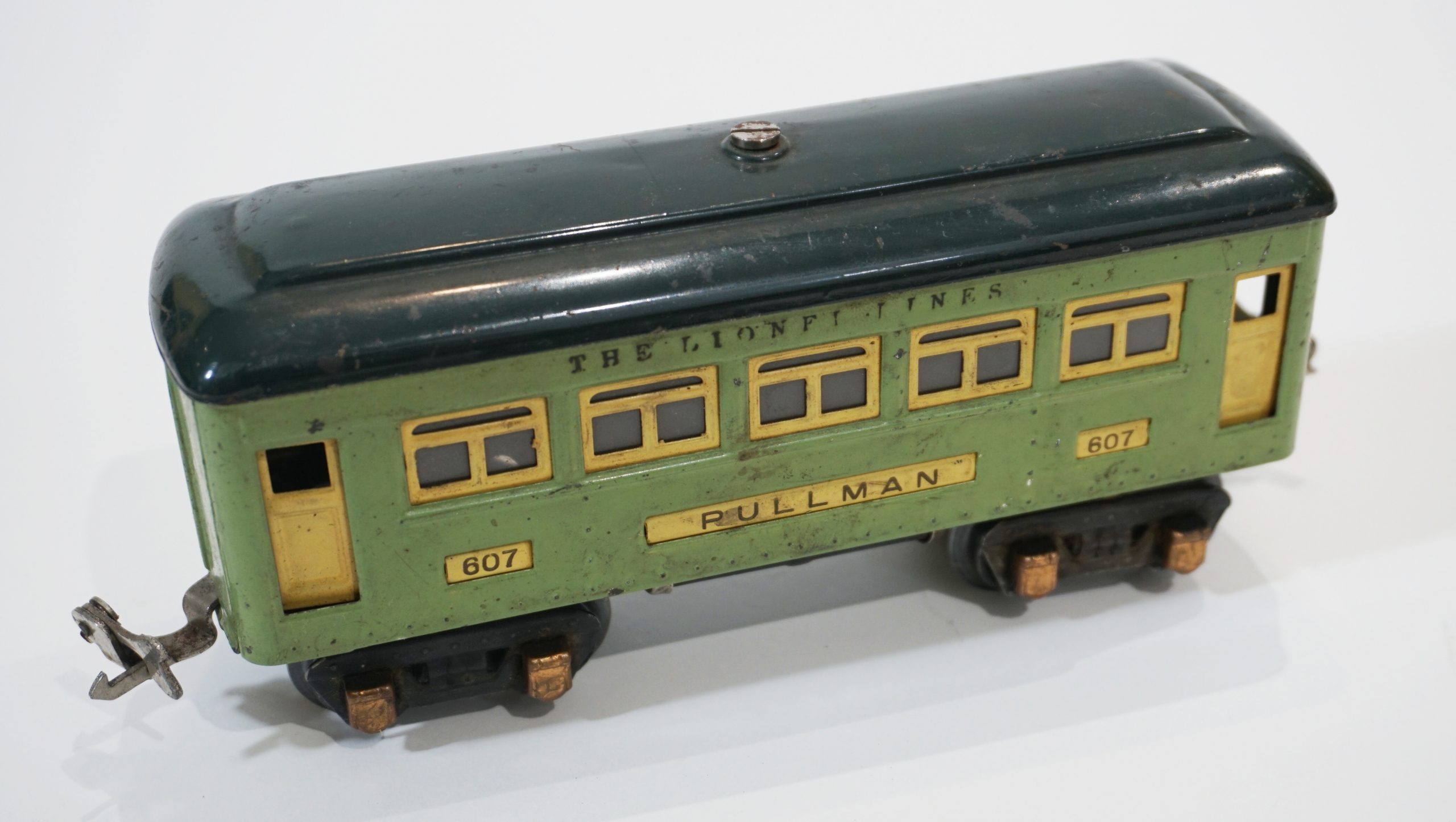
Lionel "O Guage" Pullman Caboose
Bill Carr’s family farm was located on the north-west corner of Burnhamthorpe Road and Highway #10 (then known as Centre Road). The Toronto Suburban Railway, which travelled from West Toronto to Guelph, went through the property from 1917-1931. Bill was born in 1931 and had only heard of the stories of trains filled with happy people rushing past their farm. Perhaps it was these stories that inspired Bill’s love of railroads.
You Made That?
Before the use of machines to make toys on mass, many people made their own toys. Toys were made from whatever they could find: corn husks, scrap wood, thread spools, old spoons, spare metal and wood. It became a hobby for people. Some people liked to sew clothes for their dollies, others liked to carve toys out of wood. Everyone had their hobbies, what’s yours?
For William “Bill” Carr of Cooksville, his childhood hobby was making paper models.
Growing up in the Great Depression, it was hard for for Bill and his family. There was little time for play outside of school and his farm chores. They were very poor and did not have any money to buy toys. But he made do. When his parents could not afford toys, he had to make his own.
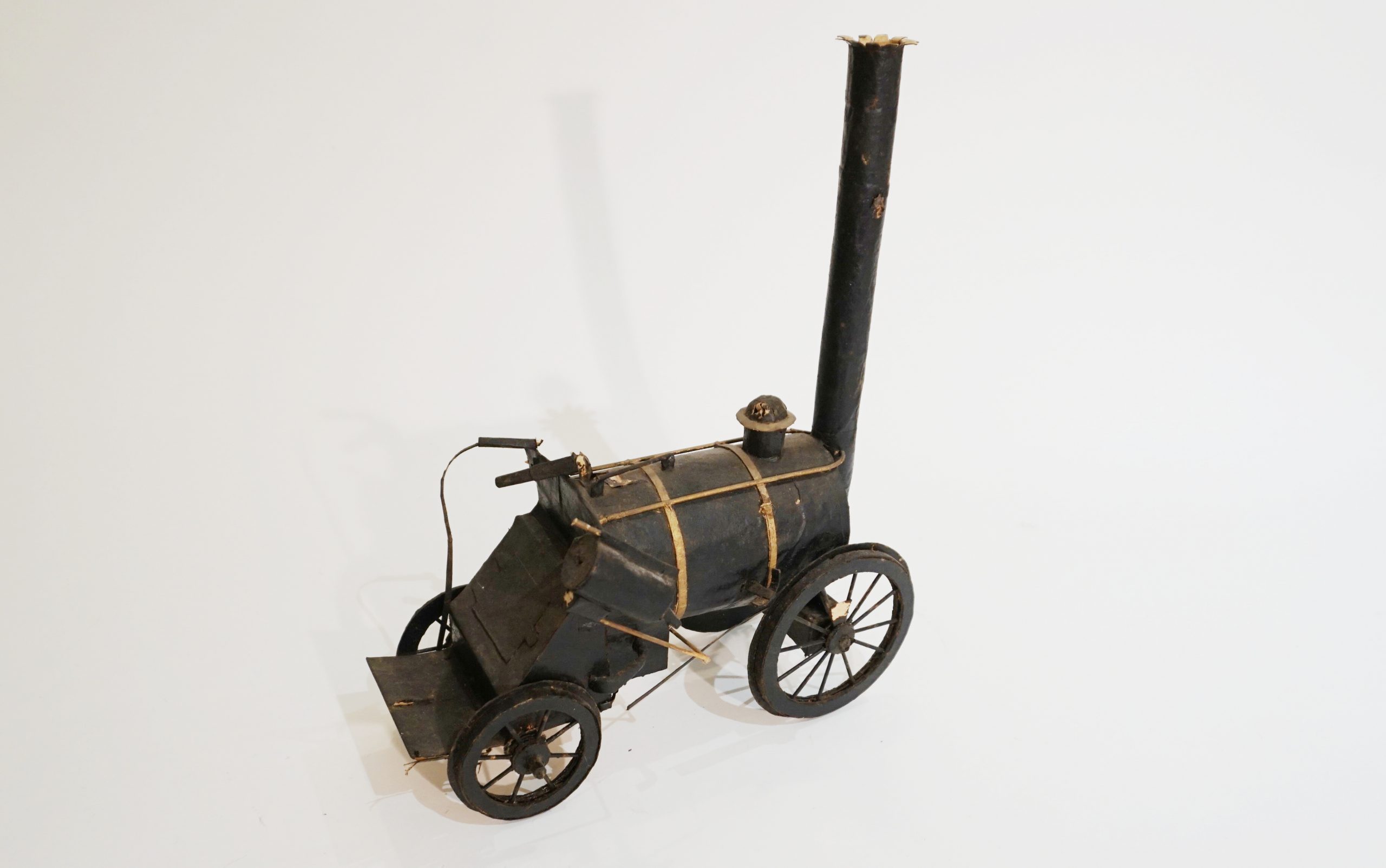
Stephenson’s “Rocket” Paper Model
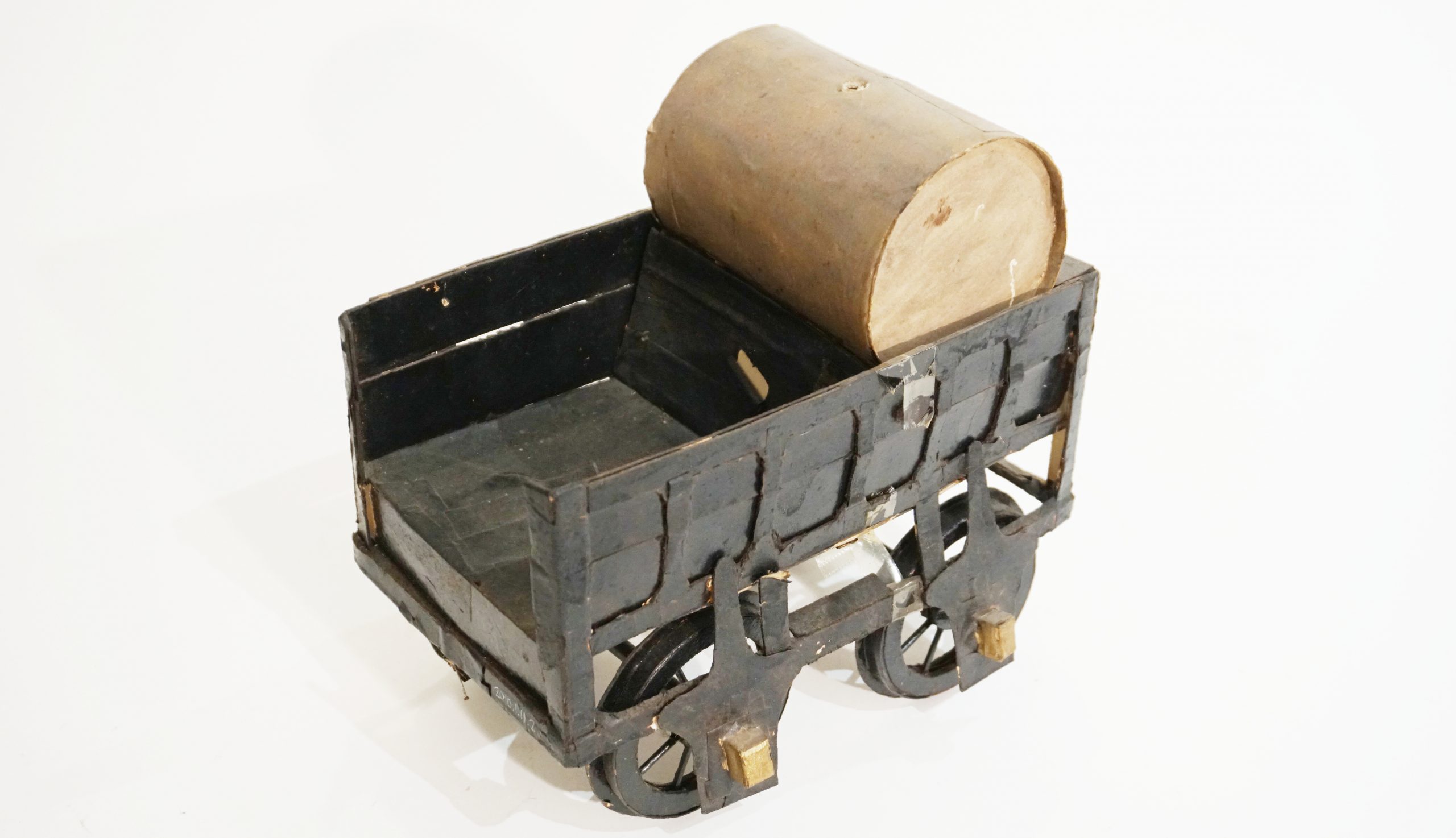
Caboose Paper Model
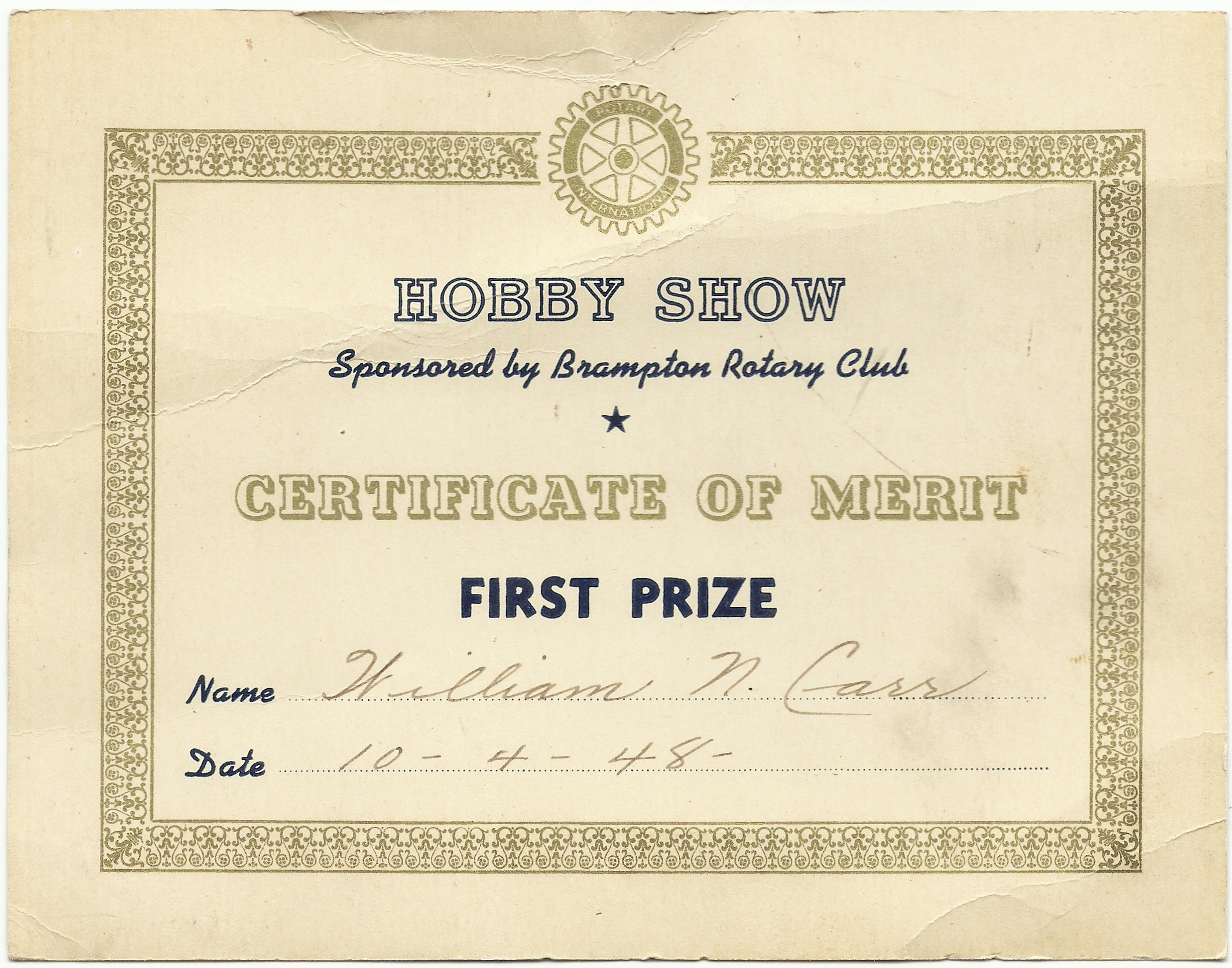
This paper model of Stephenson’s “Rocket” and Tender won first-place at the Hobby Show sponsored by the Brampton Rotary Club in 1948. It was made by Bill with pressed paper and application sticks from Dr. Speck that April. The model is of the first steam engine in Britain and is just as impressive as it was over 70 years ago.
Farm Play
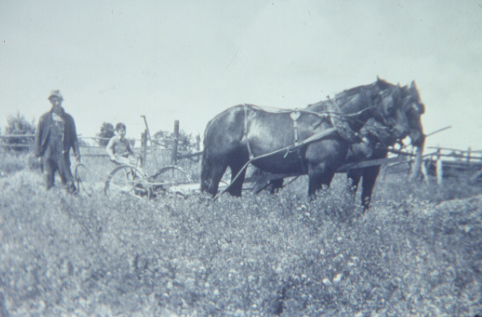
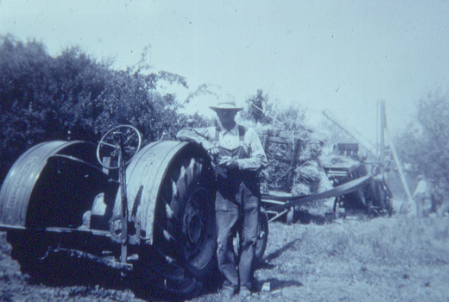
William “Bill” Carr lived on his family farm where Square One is now. Farming in the Great Depression was difficult as everything was done by horses until they got a tractor, though even this was difficult. In the 1920s, “after my two [uncles] came home from the war, my grandfather bought the tractor for the three boys. They were to share it. He bought ’em a tractor and he bought ’em a truck,” Bill recalled.
Tractors and other farm equipment were important to their survival and highly sought after.
“The only more modern thing we got, was we got a tractor in 1944- a rubber-tired tractor. That was the first rubber-tired tractor we ever had because you couldn’t get tractors in the war time.” -Bill Carr
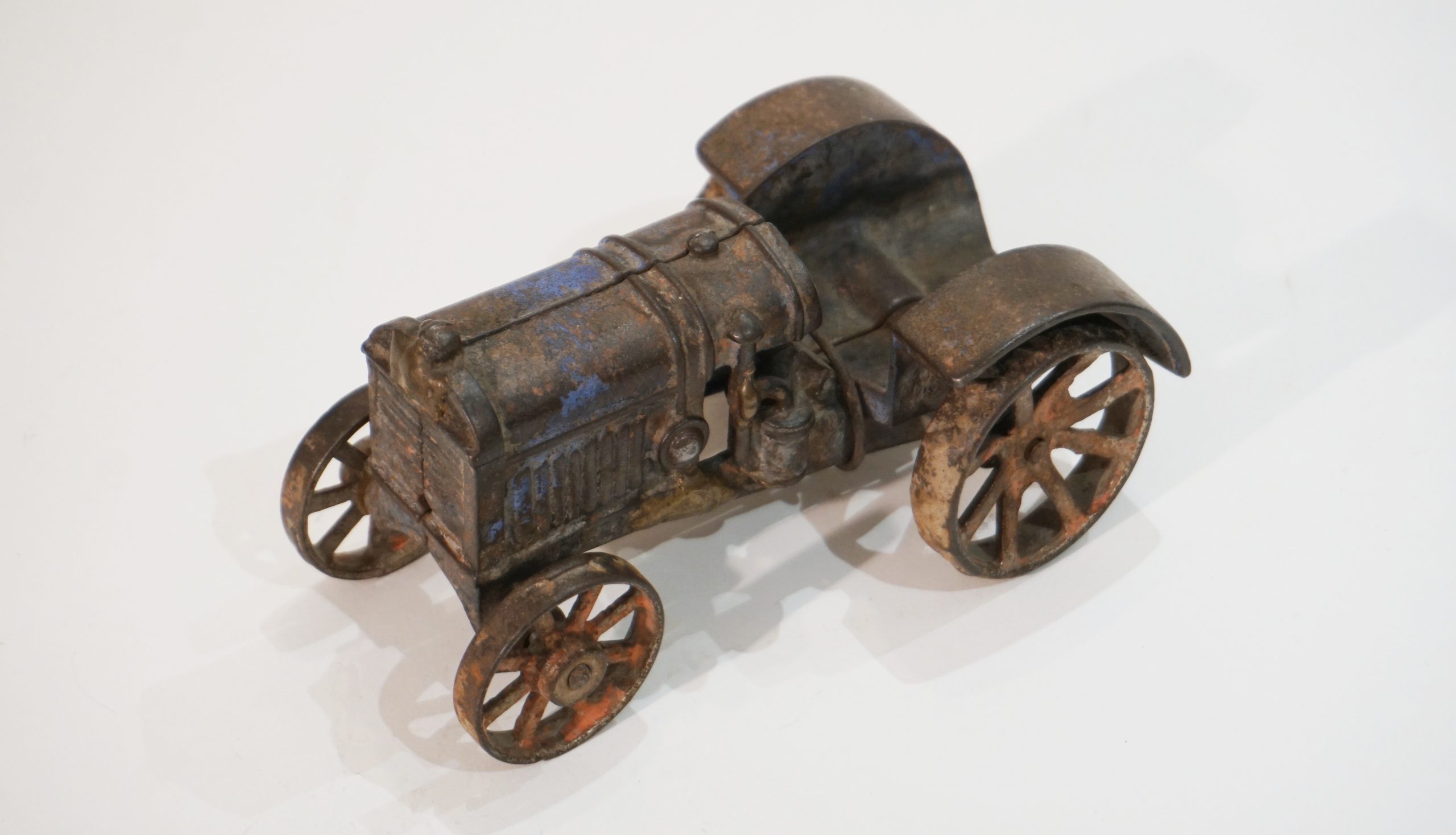
Bill's Tractor Toy
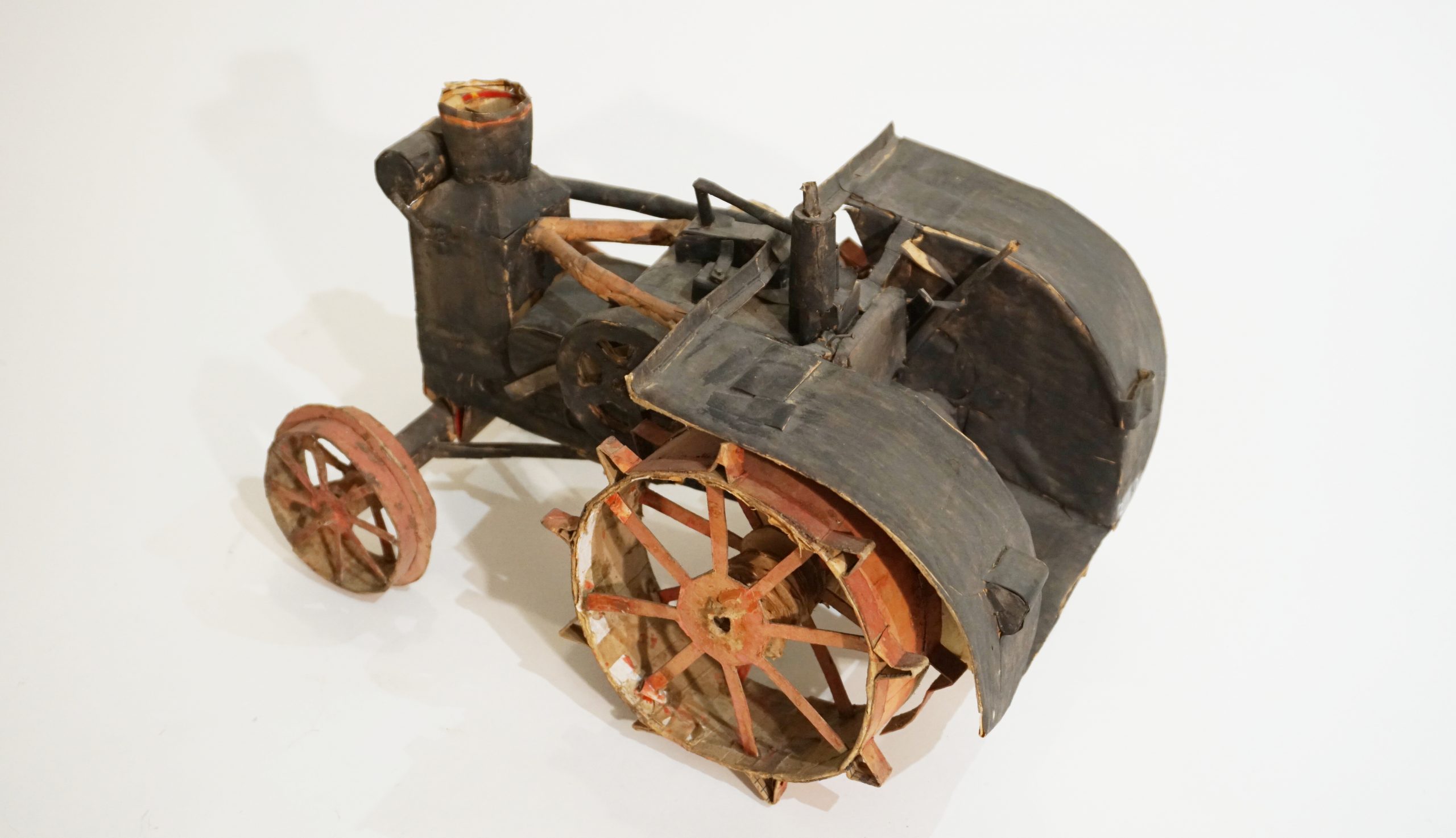
A Paper Model of a Farm Tractor made by Bill Carr
Playing with farm toys was an extension of every day life for these children. With farm toys, children could feel like they were mastering their own lives. What would have seemed like an insurmountable task for the children of farmers becomes easy peasy… if you just shrink your tools down. You could make pretend that you were planting crops and plowing fields without all the hard work!
Bet You Can’t Balance Me
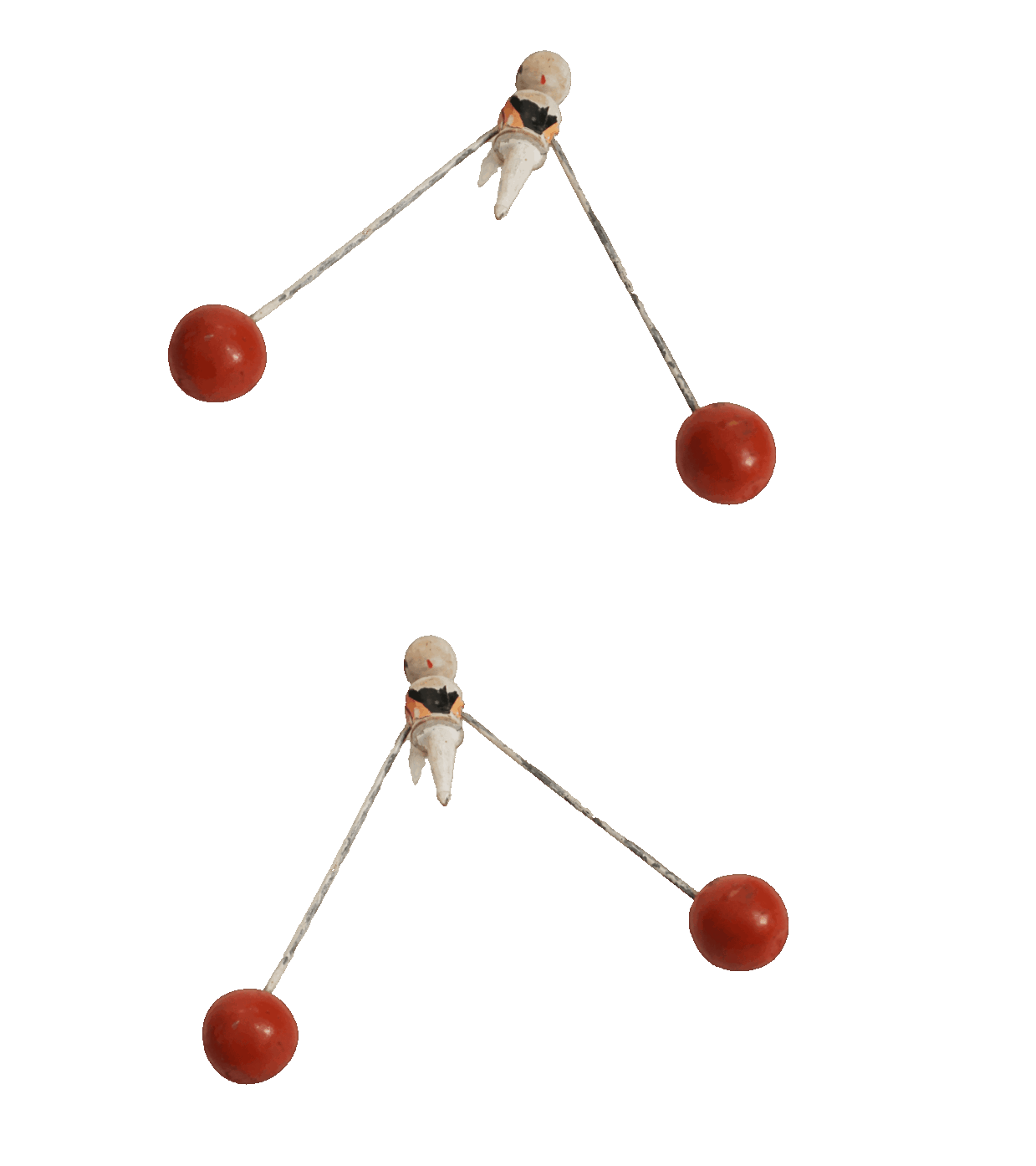
Balance Toy
Some toys like this one tested children’s minds and skills. Some were simple, others complex. Balance toys were first made to demonstrate the workings of counterweights. The concept of a toy that, when standing, seemed to defy the laws of gravity seemed simply magical!
Lawn Games
On a beautiful sunny day, there is nothing better than playing games on your lawn, but which will you choose?
Croquet
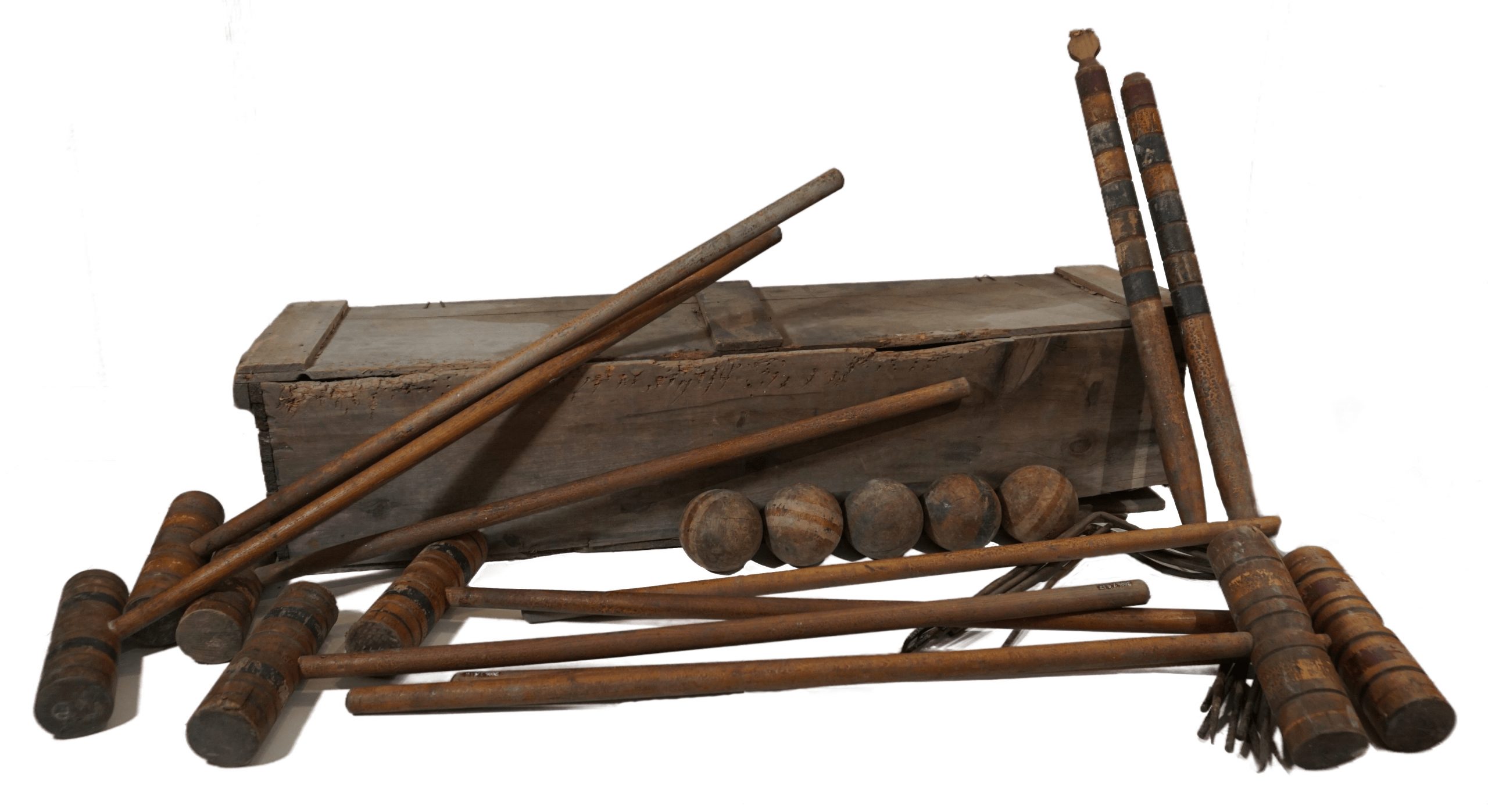
Croquet Set
Croquet is believed to have been first played by 13th century French peasants who used crudely fashioned mallets to whack wooden balls through hoops made of willow branches. These early origins mixed with “crooky”, an Irish game played since the 1830s. Its popularity grew to England in the 1850s and spread to her colonies by the 1870s in large part thanks to John Jaques who began manufacturing and selling croquet sets that anyone could play right in their own backyard.
After World War II, toy makers miniaturized the standard croquet set, simplified the rules and marketed croquet as a backyard “children’s game.” Truly a game for anyone and everyone!
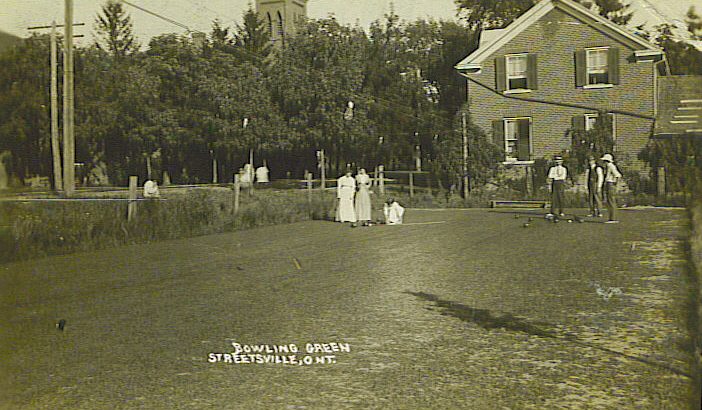
Lawn Bowling
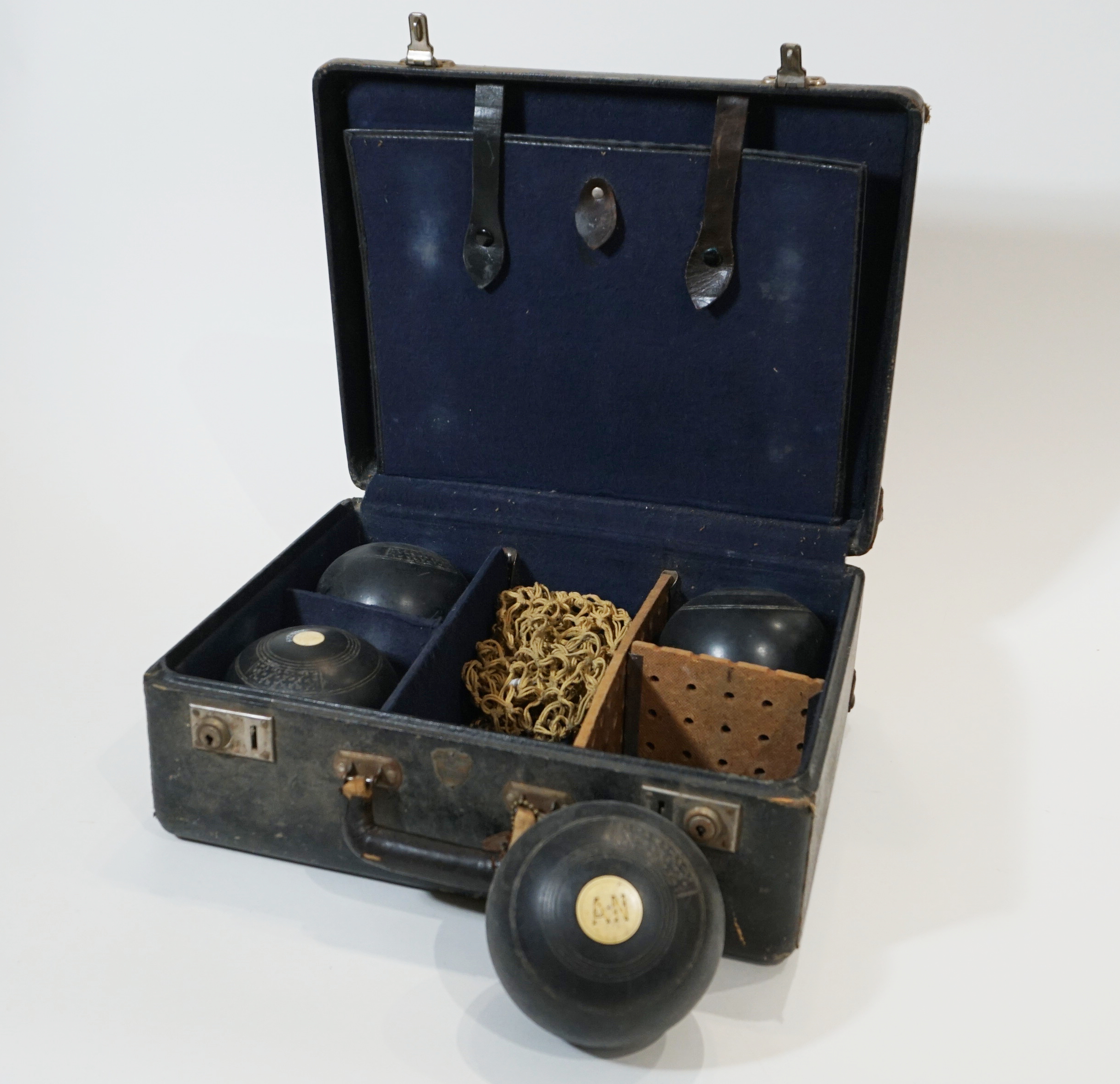
Lawn Bowling Set
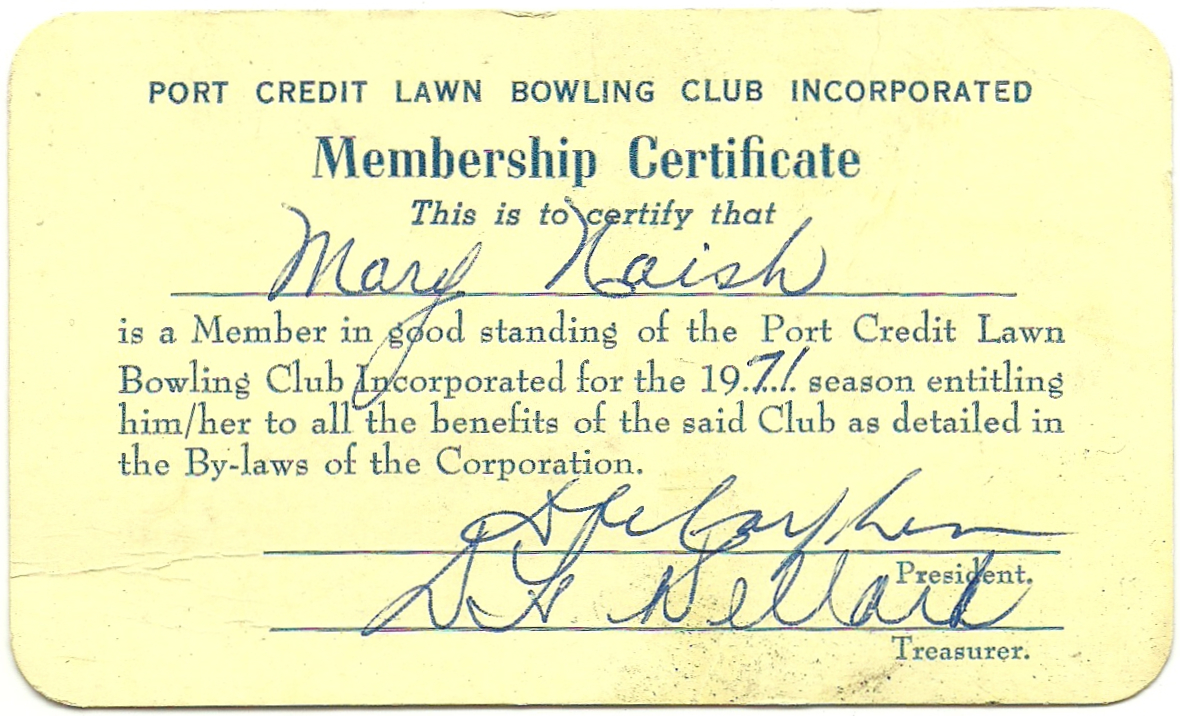
Mary Naish's Port Credit Lawn Bowling Club Card, 1971
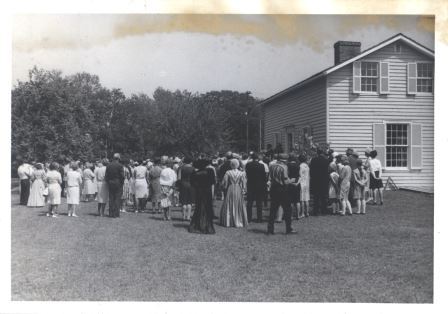
Bradley Museum opening, 1967
Games of Chance
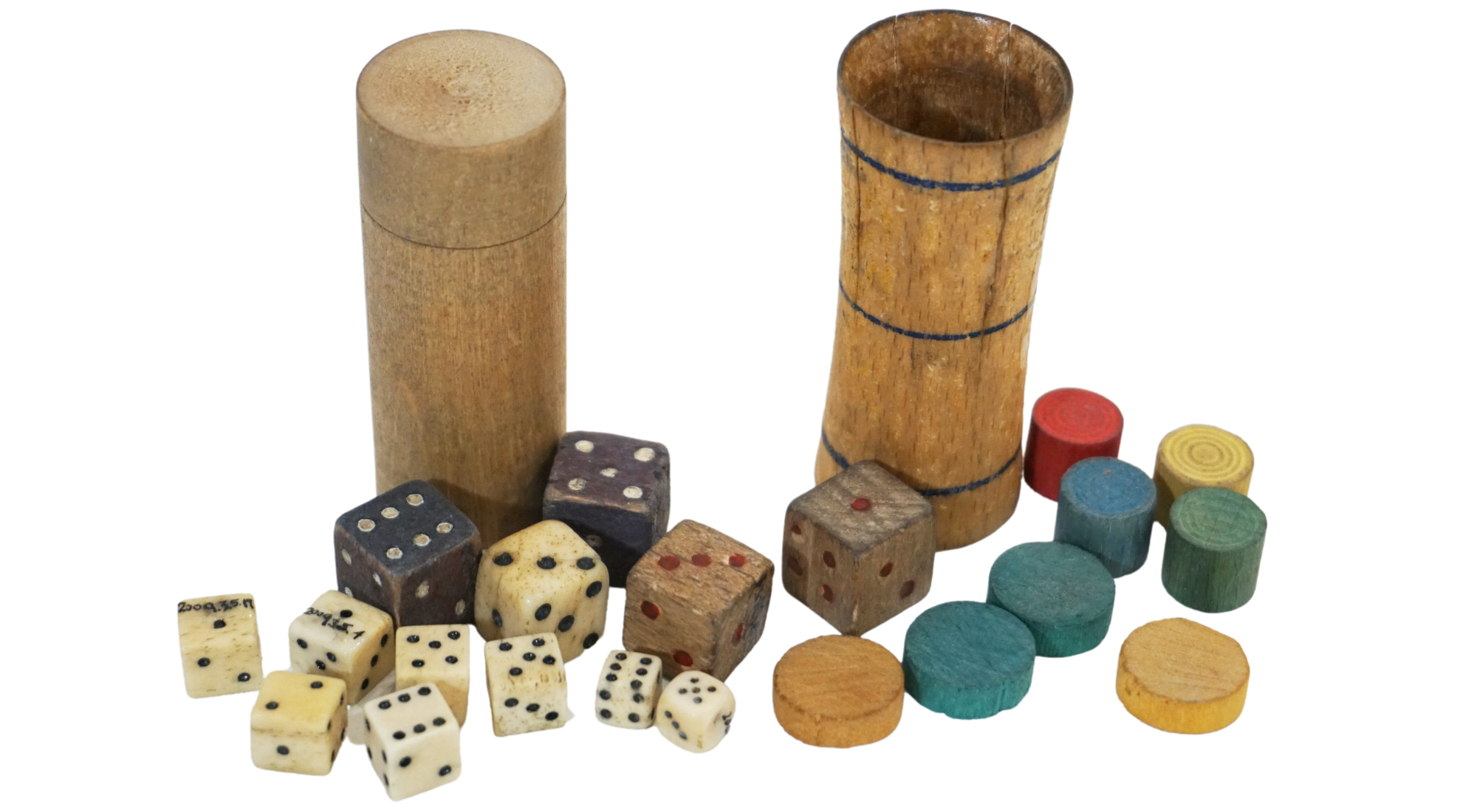
Dice Set
Dice are the oldest gaming implements known to man. Archaeological evidence shows that dice were used in many earlier societies including Ancient Greece, Rome, Egypt, China and India. By the Ancient Greek and Roman times, bone and ivory were the preferred material for dice.
In 1560, the Duke of Tuscany had a perplexing observation. He noticed that in a game in which three dice are tossed and the points added, number 10 appeared more often than number 9. However, both numbers can be obtained in six ways. Why? Was this evidence of an omniscient power pulling the strings?
Scientist Galileo was not so convinced. He counted all the possible outcomes and determined that there are 25 ways of obtaining the number 9 and 27 ways of obtaining the number 10- no wonder! The answer to the great dice problem was quite simple. It was simple math! Today, professional gamers and mathematicians alike have mastered the probability of dice. Can you?
What Will You Play Next?