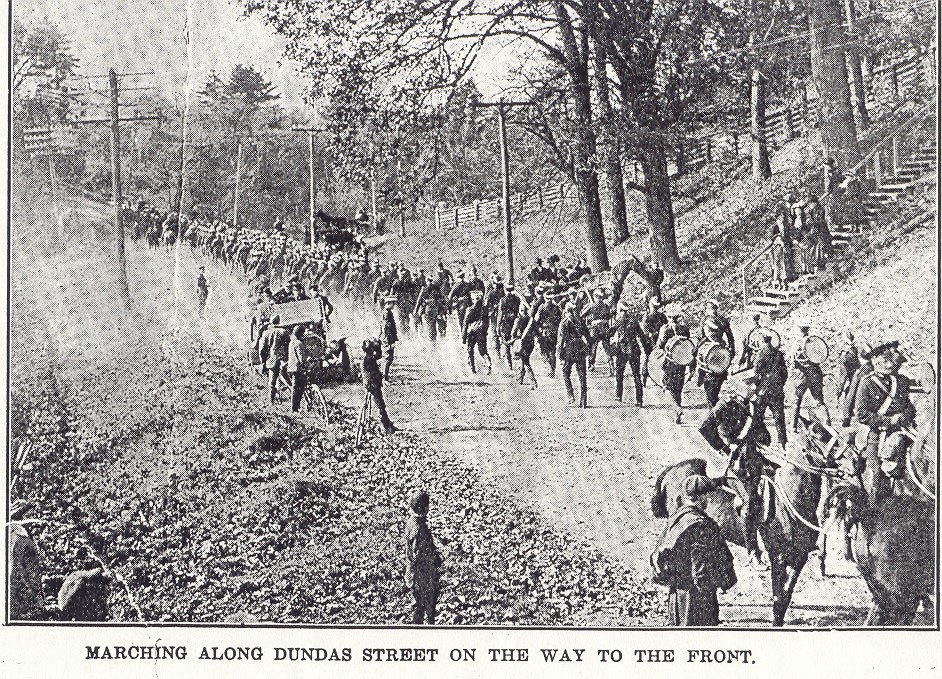
Marching Along Dundas on the Way to the Front, Erindale, Spring 1915
From the first settlers of Toronto Township to the present citizens of the City of Mississauga, many have answered the call and have put themselves in harm’s way. Some never returned home.
Many of our earliest settlers were veterans of, or children of veterans of, the American Revolution (1775-83), and settled here as Loyalists and refugees. Within a few short years, war again was upon them with the outbreak of the War of 1812 (1812-14), and many able-bodied men from historic Mississauga volunteered to serve in the Militia during the conflict. Several saw action on the Niagara frontier and defended Canada from American invasion.
Although armed conflict has never breached the borders of Mississauga, our citizens have been drawn to service in various theatres of war over time, including the Rebellion of 1837 (1837-38), the Fenian Raids (1866-71), the Northwest Rebellion (1885), the Second Boer War (1899-1902), the First World War (1914-18), the Second World War (1939-45), the Korean War (1950-53), the Gulf War (1990-91), Kosovo (1998-99), Afghanistan, and numerous other conflicts and peacekeeping initiatives.
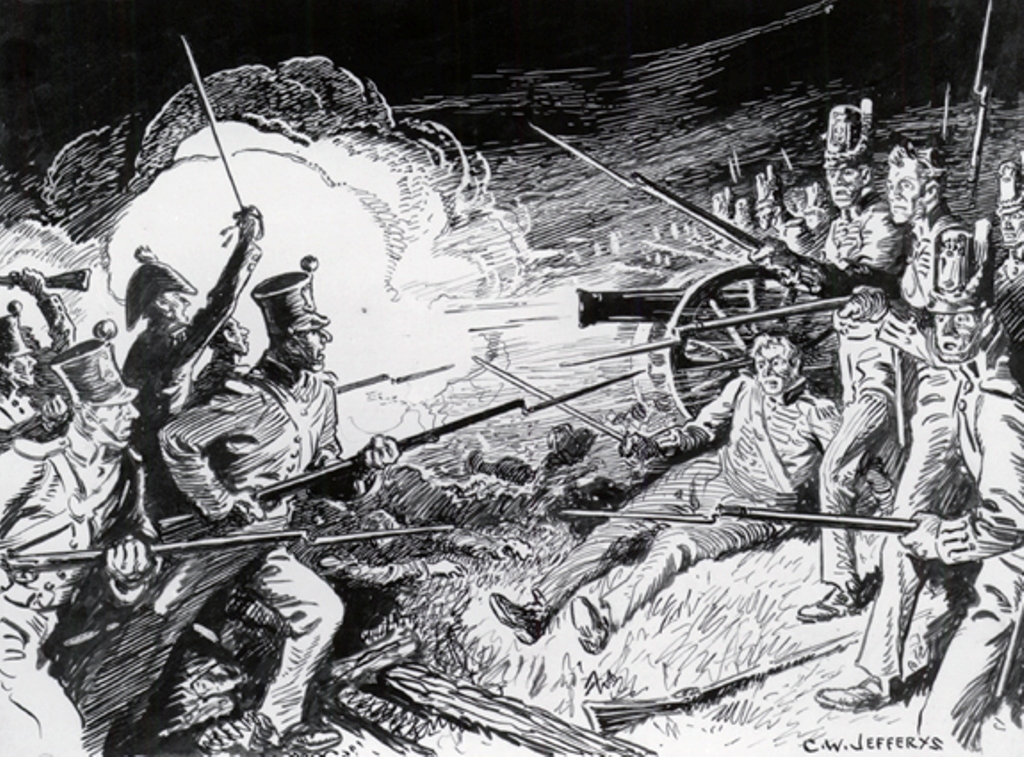
Battle of Lundy's Lane, War of 1812 - by CW Jefferys
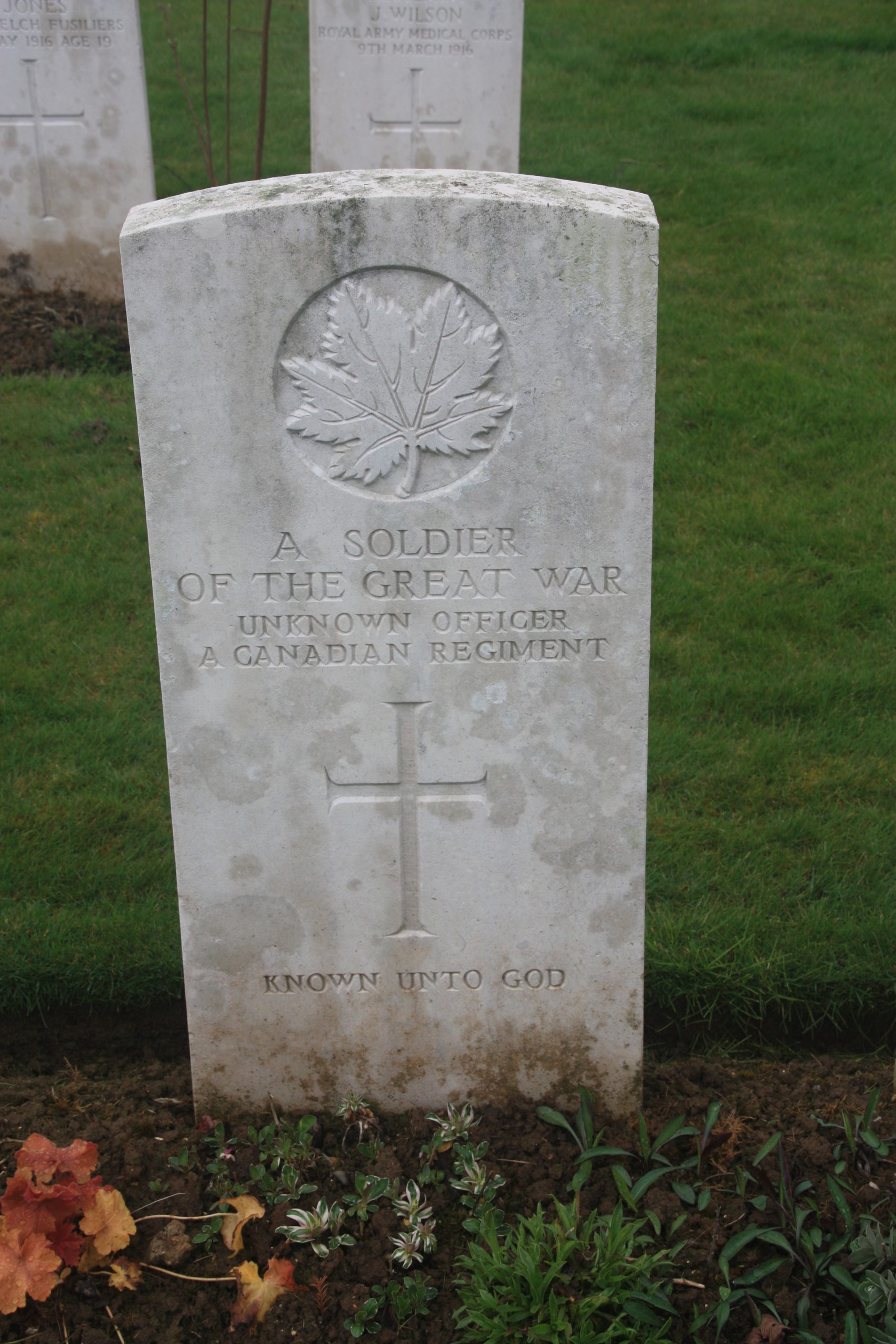
When the First World War began in 1914, volunteers from historic Mississauga enlisted and saw service overseas with many different battalions, including the 4th, 75th, 126th, 164th and 234th, amongst many others.nOn the homefront, families observed “Meatless Mondays”, “Wheatless Wednesdays” and “Heatless Fridays” to conserve resources at home in support of the war effort.
The 36th Peel Regiment amalgamated with the neighbouring 20th Halton Rifles in 1936, becoming the Lorne Scot Regiment. This was the central recruiting force when the Second World War began in 1939. At home, items like meat, butter and gasoline were rationed. Women were hired to manufacture small arms in Lakeview and bombers in Malton. The Lorne Scots and the Toronto Scottish regiments remain active in our community today.
Many of our fallen citizens are remembered at the many cenotaphs, honour rolls, and cemeteries located throughout Mississauga. Our oldest cenotaphs and memorials were created shortly after the First World War. The many cenotaphs and war memorials located throughout our city also to the evolution of the City from a collection of smaller villages, as most of our cenotaphs predate the City of Mississauga and are connected with a historic community and/or a local branch of the Royal Canadian Legion or military service club. Additionally, many places of religious and community assembly are home to their own honour rolls, tributes and symbols of remembrance.
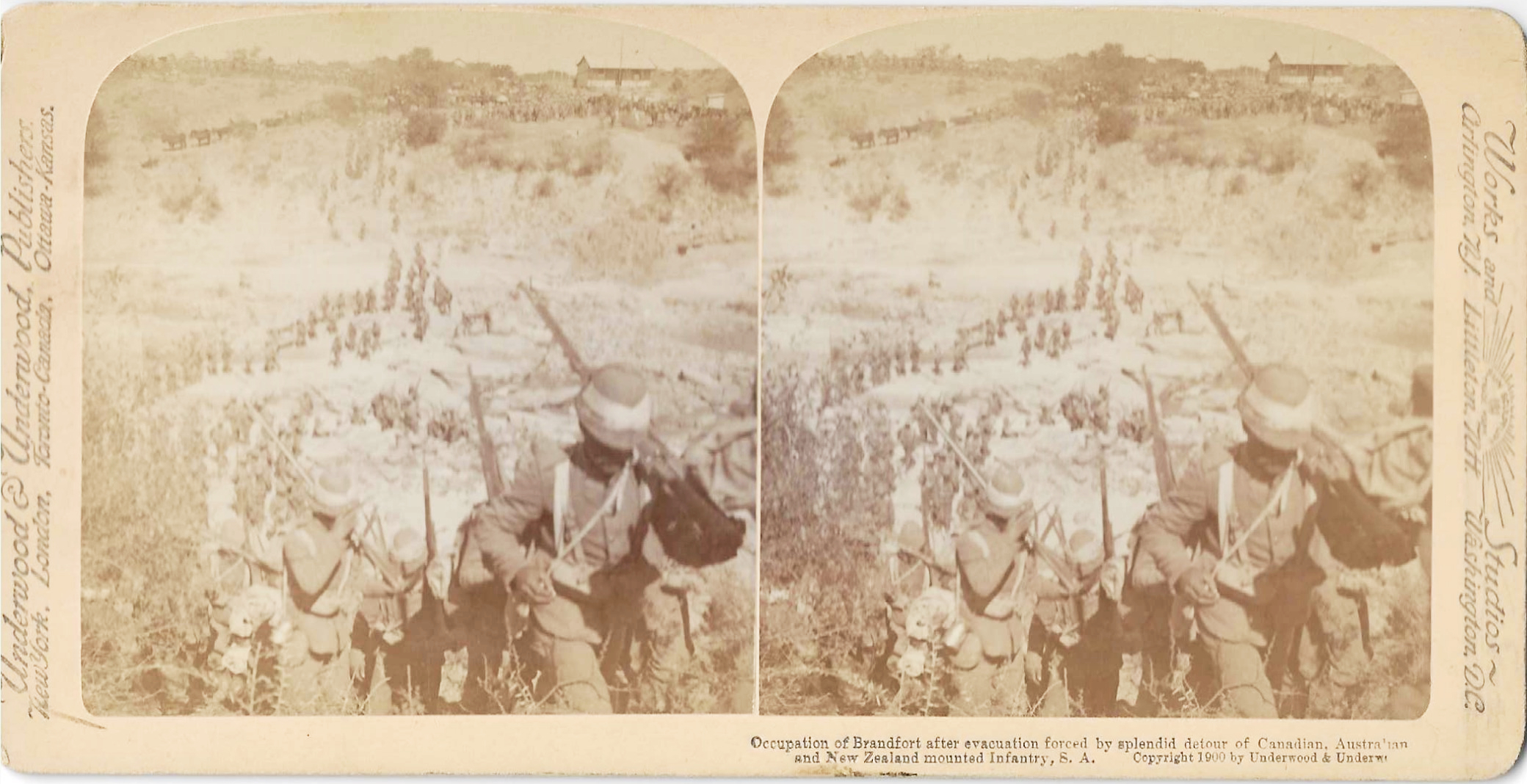
Second Boer War
The Second Boer War, also known as the South African War was fought between the British Empire and Afrikaaners from 1899 to 1902. It would be the first time Canadian soldiers fought overseas.
Learn more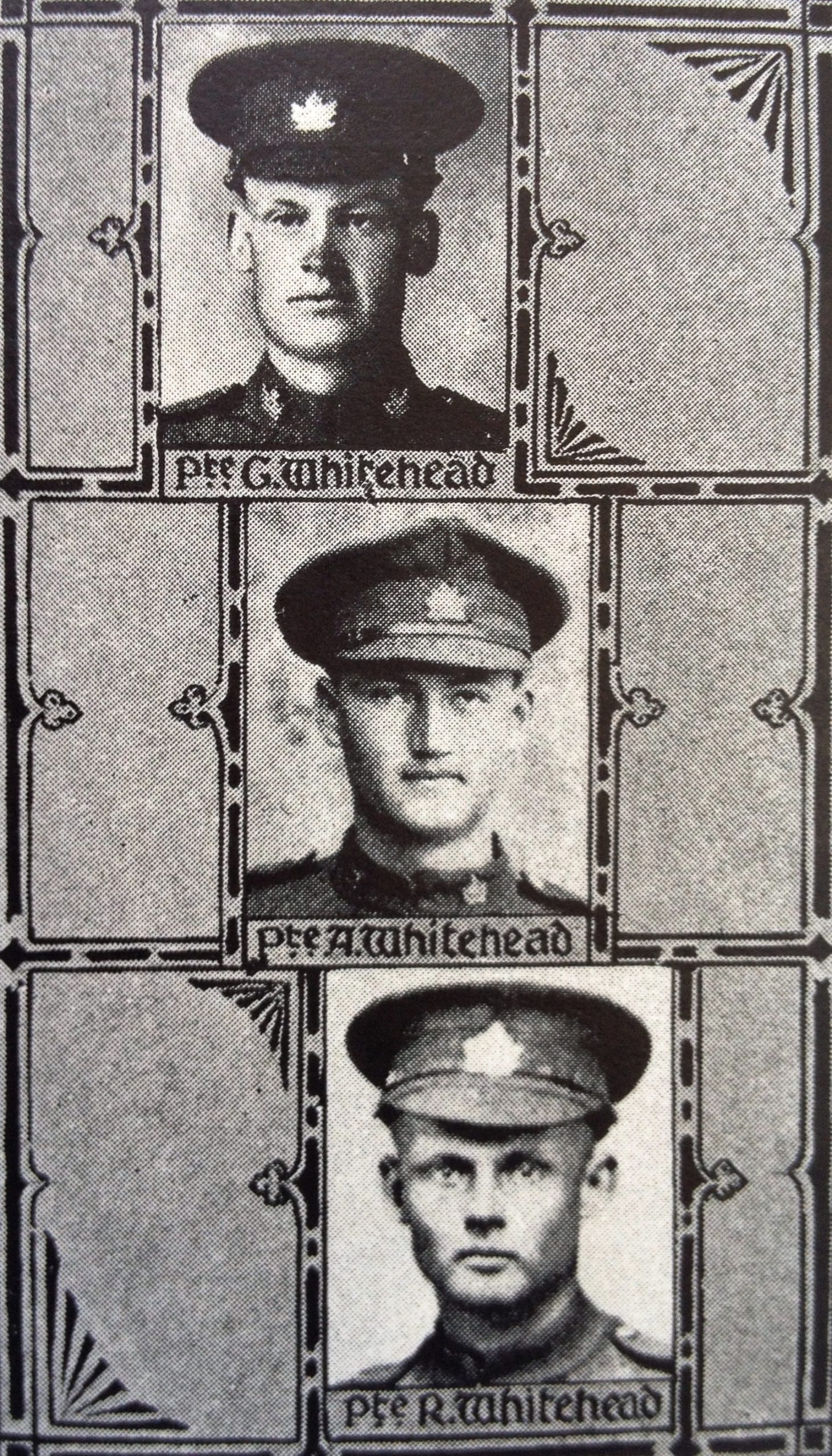
Whitehead Brothers, First World War
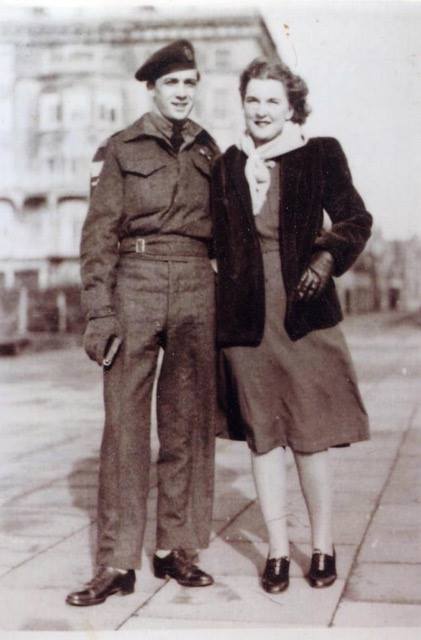
Craftsman Edward John Brewster & Private Winnifred Lilian Brewster (nee Wright), c. 1946
Cemeteries
The City of Mississauga is home to numerous cemeteries. This section of our website will be expanded over time. Cemetery stone transcriptions are available through the Halton-Peel Branch of the Ontario Genealogical Society, and many of the informational repositories in our community have copies of the transcription records provided by Halton-Peel OGS for your perusal. Additionally, some organizations have compiled limited heritage profiles for some of people buried in our historic cemeteries.
For more information on the historic cemeteries within the City of Mississauga, please visit:
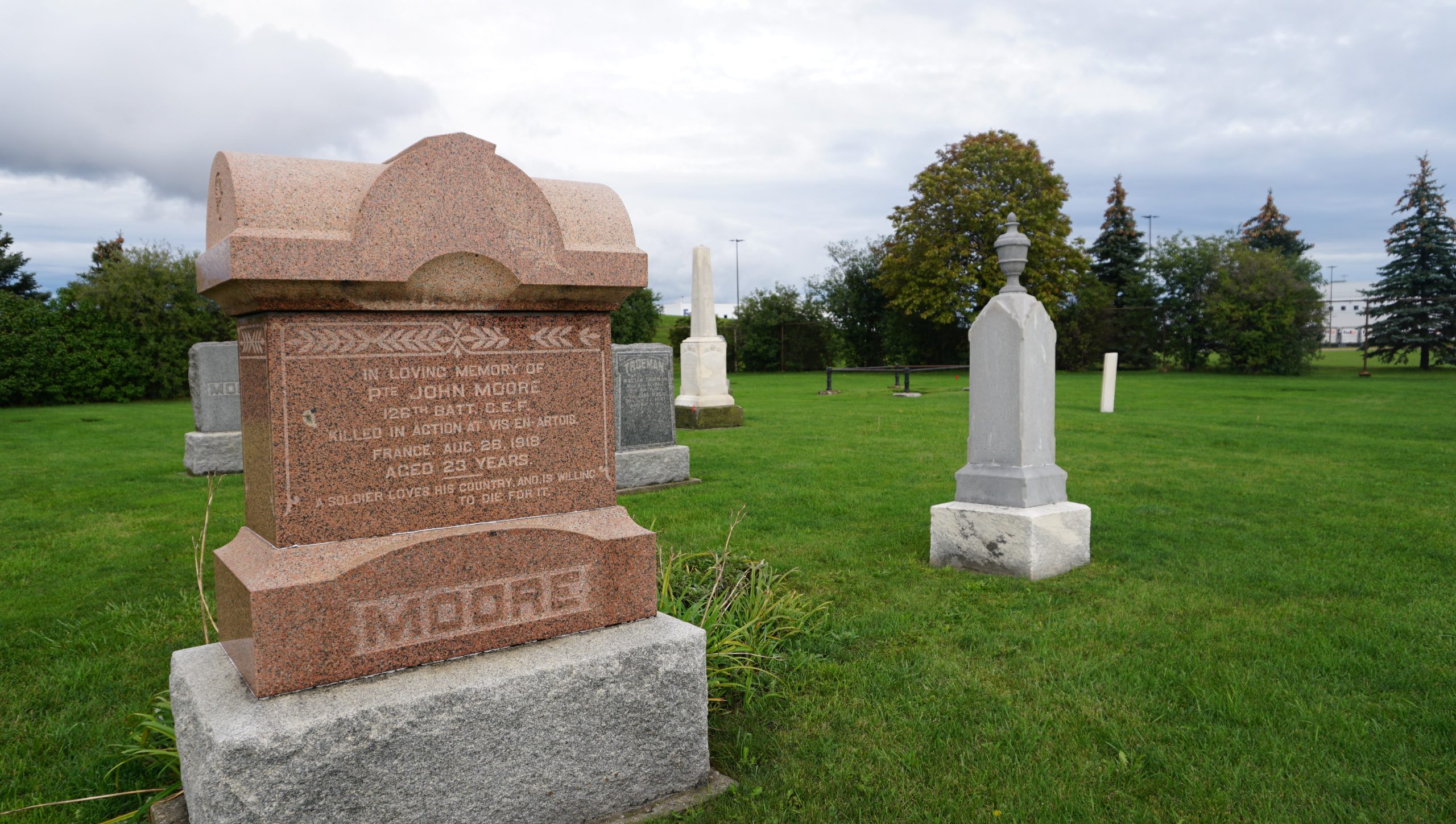
As you visit our city’s many cemeteries and cenotaphs, we invite you to take a moment for self-reflection in remembrance of all those whom have given their lives for our country and our freedom. We encourage you to learn more about these local fallen soldiers on the right-hand side of this page. Each name was a person who lived in our city, who had a life here, who had hopes and dreams that ended with their sacrifice. We will always remember.
In Flanders Fields
By: John McCrae
In Flanders fields the poppies blow
Between the crosses, row on row,
That mark our place; and in the sky
The larks, still bravely singing, fly
Scarce heard amid the guns below.
We are the Dead. Short days ago
We lived, felt dawn, saw sunset glow,
Loved and were loved, and now we lie,
In Flanders fields.
Take up our quarrel with the foe:
To you from failing hands we throw
The torch; be yours to hold it high.
If ye break faith with us who die
We shall not sleep, though poppies grow
In Flanders fields.